 Chemistry Diagrams & Practical Skills — Speed Round
A fast, all-multiple-choice GCSE Chemistry Speed Round on reading diagrams. Beat the clock solo, or play with up to 6…
GCSE Chemistry ⏱ 45m
Quiz
· 45m
PAID
Open resource →
Chemistry Diagrams & Practical Skills — Speed Round
A fast, all-multiple-choice GCSE Chemistry Speed Round on reading diagrams. Beat the clock solo, or play with up to 6…
GCSE Chemistry ⏱ 45m
Quiz
· 45m
PAID
Open resource →
QuizPaid subscriptionIncludes a check
Chemistry Diagrams & Practical Skills — Quiz Game
Prefer not to join? Buy just this resource
One-off price: £0.49
This resource is also included with eligible paid plans.
Buy this resource — £0.49Create a free Learning Locker first; the exact resource and price are confirmed before payment.
Related modules
Chemistry Diagrams & Practical Skills — Speed Round
A fast, all-multiple-choice GCSE Chemistry Speed Round on reading diagrams. Beat the clock solo, or play with up to 6…
GCSE Chemistry ⏱ 45m
Quiz
· 45m
PAID
Open resource →
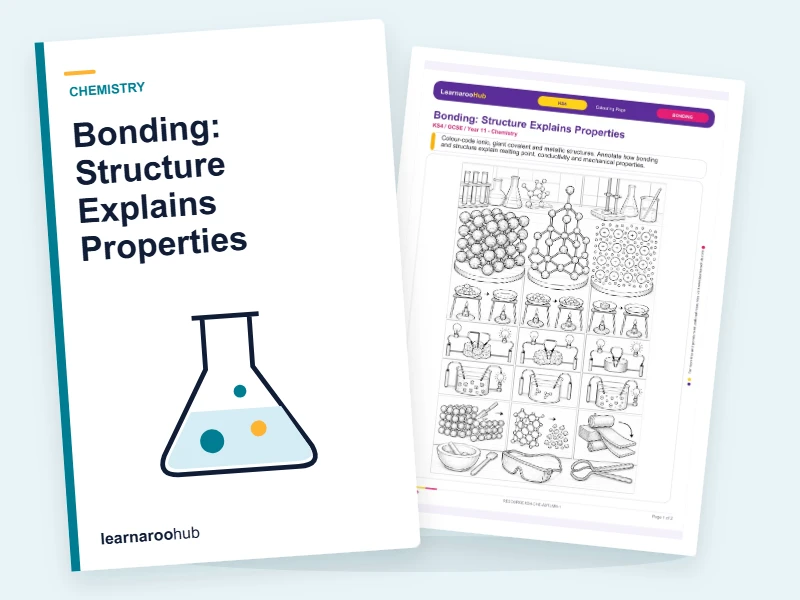 Bonding: Structure Explains Properties
A GCSE Chemistry colour-and-observe sheet on Bonding: Structure Explains Properties for use at home or in class.
GCSE Chemistry ⏱ 20m
Colour and Observe
· 20m
PAID
Open resource →
Bonding: Structure Explains Properties
A GCSE Chemistry colour-and-observe sheet on Bonding: Structure Explains Properties for use at home or in class.
GCSE Chemistry ⏱ 20m
Colour and Observe
· 20m
PAID
Open resource →
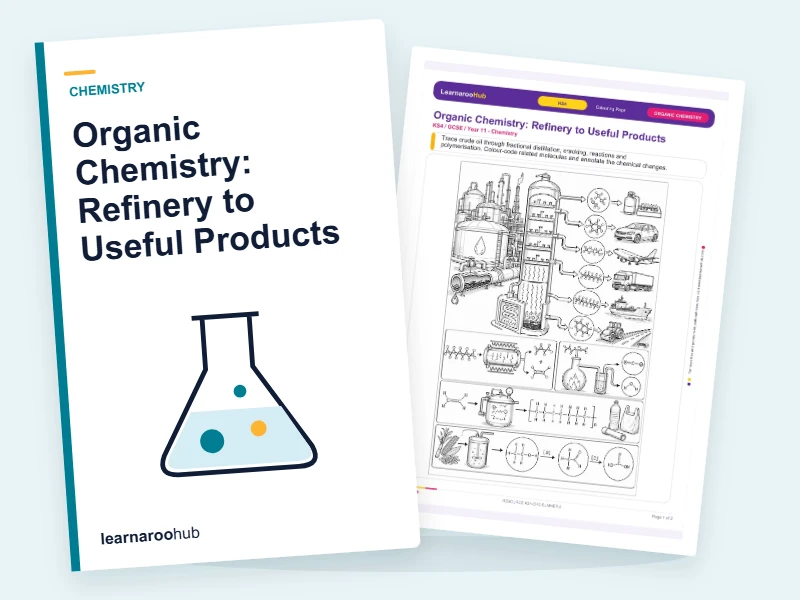 Organic Chemistry: Refinery to Useful Products
A GCSE Chemistry vocabulary and facts sheet on Organic Chemistry: Refinery to Useful Products for use at home or in c…
GCSE Chemistry ⏱ 20m
Vocabulary and Facts
· 20m
PAID
Open resource →
Organic Chemistry: Refinery to Useful Products
A GCSE Chemistry vocabulary and facts sheet on Organic Chemistry: Refinery to Useful Products for use at home or in c…
GCSE Chemistry ⏱ 20m
Vocabulary and Facts
· 20m
PAID
Open resource →
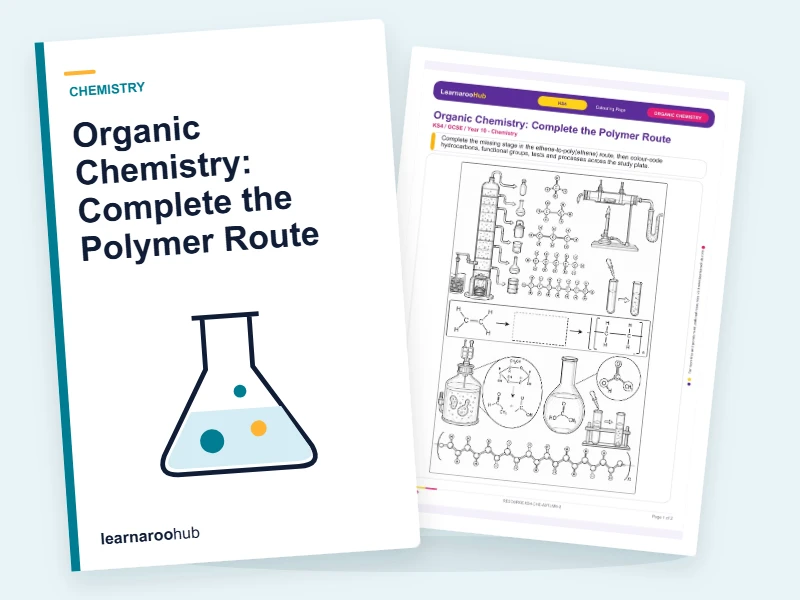 Organic Chemistry: Complete the Polymer Route
A GCSE Chemistry activity challenge on Organic Chemistry: Complete the Polymer Route for use at home or in class.
GCSE Chemistry ⏱ 20m
Activity Challenge
· 20m
PAID
Open resource →
Organic Chemistry: Complete the Polymer Route
A GCSE Chemistry activity challenge on Organic Chemistry: Complete the Polymer Route for use at home or in class.
GCSE Chemistry ⏱ 20m
Activity Challenge
· 20m
PAID
Open resource →
