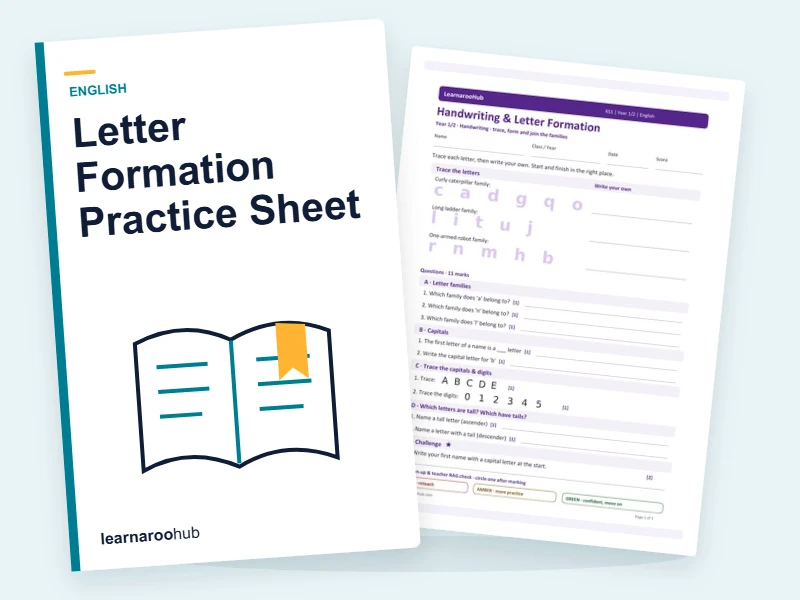
 Letter Formation Practice Sheet
Trace-and-write practice for letters grouped into handwriting families — curly caterpillars (c-family), long ladders …
Key Stage 1 English ⏱ 15m
Printable / PDF
· 15m
PAID
Open resource →
Letter Formation Practice Sheet
Trace-and-write practice for letters grouped into handwriting families — curly caterpillars (c-family), long ladders …
Key Stage 1 English ⏱ 15m
Printable / PDF
· 15m
PAID
Open resource →
E-Learning ModulePaid subscription
Letter Families: A Guide
Prefer not to join? Buy just this resource
One-off price: £1.29
This resource is also included with eligible paid plans.
Buy this resource — £1.29Create a free Learning Locker first; the exact resource and price are confirmed before payment.
Related modules
Letter Formation Practice Sheet
Trace-and-write practice for letters grouped into handwriting families — curly caterpillars (c-family), long ladders …
Key Stage 1 English ⏱ 15m
Printable / PDF
· 15m
PAID
Open resource →
 For Parents: Supporting Handwriting
4 slides for parents on grip, posture, when to worry, and fun fine-motor activities.
Key Stage 1 English ⏱ 6m
E-Learning Module
· 6m
PAID
Open resource →
For Parents: Supporting Handwriting
4 slides for parents on grip, posture, when to worry, and fun fine-motor activities.
Key Stage 1 English ⏱ 6m
E-Learning Module
· 6m
PAID
Open resource →
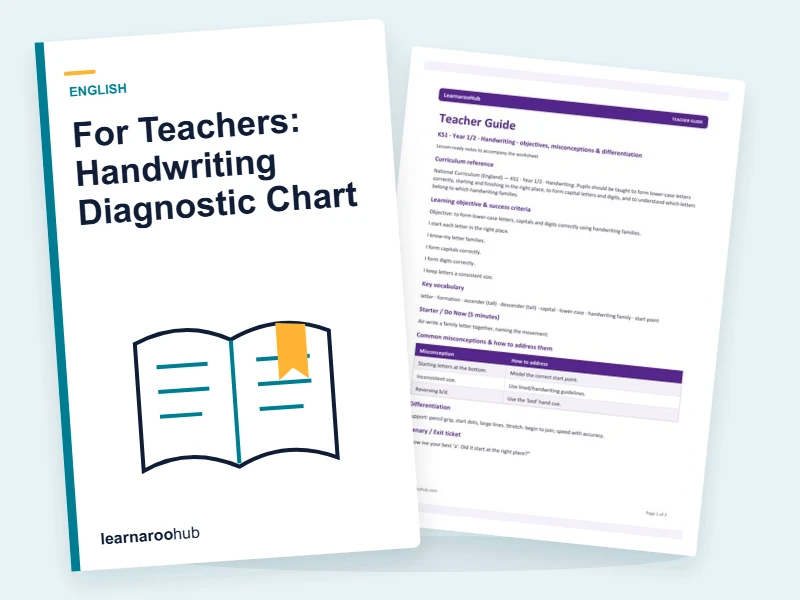 For Teachers: Handwriting Diagnostic Chart
A diagnostic chart for assessing letter formation across the four families — note which letters each pupil forms secu…
Key Stage 1 English ⏱ 15m
Printable / PDF
· 15m
PAID
Open resource →
For Teachers: Handwriting Diagnostic Chart
A diagnostic chart for assessing letter formation across the four families — note which letters each pupil forms secu…
Key Stage 1 English ⏱ 15m
Printable / PDF
· 15m
PAID
Open resource →
 KS1 Reading & Sentences — Warm-up
A fun, colourful quiz game for KS1 English — reading & sentences. Great for little learners! Questions reshuffle ever…
Key Stage 1 English ⏱ 20m
Quiz
· 20m
PAID
Open resource →
KS1 Reading & Sentences — Warm-up
A fun, colourful quiz game for KS1 English — reading & sentences. Great for little learners! Questions reshuffle ever…
Key Stage 1 English ⏱ 20m
Quiz
· 20m
PAID
Open resource →
