 Chemistry — Full Mock Quiz Game
A mixed, exam-style mock quiz covering the whole Chemistry course. Solo to track progress, or pass-and-play with up t…
GCSE Chemistry ⏱ 45m
Quiz
· 45m
PAID
Open resource →
E-Learning ModulePaid subscriptionIncludes a check
Master Photosynthesis & Respiration
Prefer not to join? Buy just this resource
One-off price: £1.29
This resource is also included with eligible paid plans.
Buy this resource — £1.29Create a free Learning Locker first; the exact resource and price are confirmed before payment.
Related modules
Chemistry — Full Mock Quiz Game
A mixed, exam-style mock quiz covering the whole Chemistry course. Solo to track progress, or pass-and-play with up t…
GCSE Chemistry ⏱ 45m
Quiz
· 45m
PAID
Open resource →
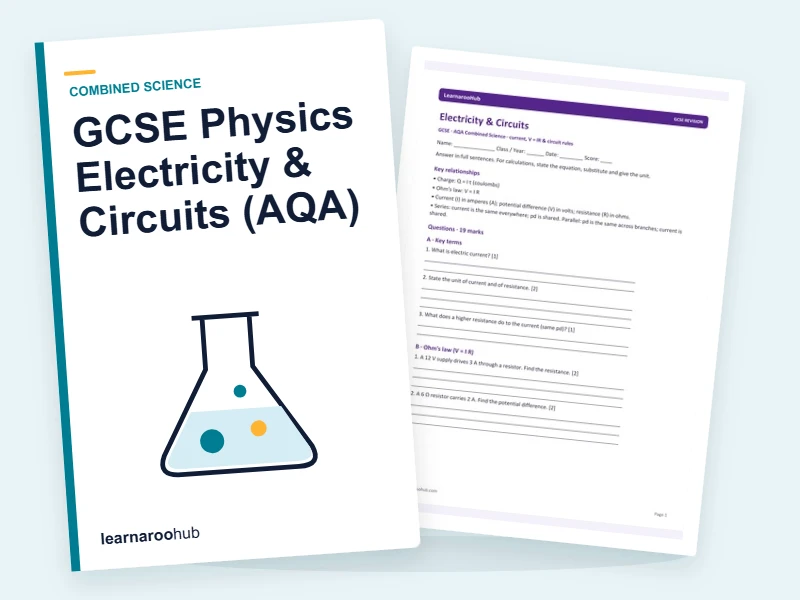 GCSE Physics Electricity & Circuits (AQA)
GCSE AQA electricity and circuits revision worksheet (Physics): current, V=IR, charge and series/parallel rules, with…
GCSE Combined Science ⏱ 20m
Printable / PDF
· 20m
PAID
Open resource →
 GCSE Chemistry (AQA 8462) — Paper 1, Higher (2023 series)
Original GCSE Chemistry Paper 1 Higher practice paper, AQA style, 100 marks, with pupil guide, revision checklist and…
GCSE Chemistry ⏱ 105m
Mock Practice Paper
· 105m
PAID
Open resource →
 GCSE Rates of Reaction True or False Quiz (AQA)
Printable AQA GCSE Combined Science true or false for revision.
GCSE Combined Science ⏱ 30m
Printable / PDF
· 30m
PAID
Open resource →
