 GCSE Biology (AQA 8461) — Paper 1, Foundation (2025 series)
Original GCSE Biology Paper 1 Foundation practice paper, AQA style, 100 marks, with pupil guide, revision checklist a…
GCSE Biology ⏱ 105m
Mock Practice Paper
· 105m
FREE
Open resource →
GCSE Biology (AQA 8461) — Paper 1, Foundation (2025 series)
Original GCSE Biology Paper 1 Foundation practice paper, AQA style, 100 marks, with pupil guide, revision checklist a…
GCSE Biology ⏱ 105m
Mock Practice Paper
· 105m
FREE
Open resource →
E-Learning ModulePaid subscriptionIncludes a check
Master Waves: Amplitude, Wavelength & Wave Speed
Prefer not to join? Buy just this resource
One-off price: £1.29
This resource is also included with eligible paid plans.
Buy this resource — £1.29Create a free Learning Locker first; the exact resource and price are confirmed before payment.
Related modules
GCSE Biology (AQA 8461) — Paper 1, Foundation (2025 series)
Original GCSE Biology Paper 1 Foundation practice paper, AQA style, 100 marks, with pupil guide, revision checklist a…
GCSE Biology ⏱ 105m
Mock Practice Paper
· 105m
FREE
Open resource →
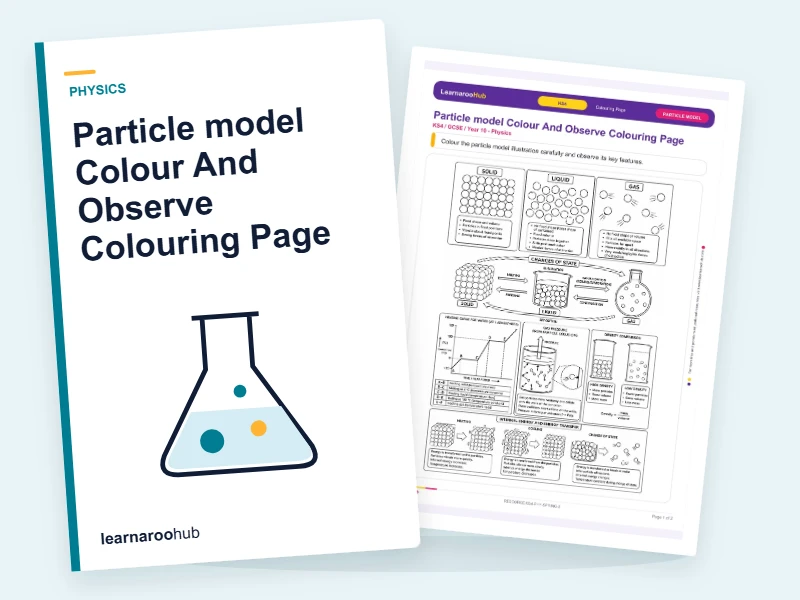 Particle model Colour And Observe Revision Diagram
A GCSE Physics colour-and-observe sheet on Particle model for use at home or in class.
GCSE Physics ⏱ 20m
Colour and Observe
· 20m
PAID
Open resource →
Particle model Colour And Observe Revision Diagram
A GCSE Physics colour-and-observe sheet on Particle model for use at home or in class.
GCSE Physics ⏱ 20m
Colour and Observe
· 20m
PAID
Open resource →
 GCSE Combined Science (Trilogy) — Physics Paper 2, Foundation (2025 series)
Original GCSE Combined Science (Trilogy) Physics Paper 2 Foundation practice paper, AQA 8464 style, 70 marks, with pu…
GCSE Combined Science ⏱ 75m
Mock Practice Paper
· 75m
PAID
Open resource →
GCSE Combined Science (Trilogy) — Physics Paper 2, Foundation (2025 series)
Original GCSE Combined Science (Trilogy) Physics Paper 2 Foundation practice paper, AQA 8464 style, 70 marks, with pu…
GCSE Combined Science ⏱ 75m
Mock Practice Paper
· 75m
PAID
Open resource →
 GCSE Chemistry (Edexcel 1CH0) — Gated Series — Module 7: Consolidation Test (timed)
The final timed, mixed test drawing on all six modules — 16 fresh questions with full answer review. Unlocks after Mo…
GCSE Chemistry ⏱ 45m
Quiz
· 45m
PAID
Open resource →
GCSE Chemistry (Edexcel 1CH0) — Gated Series — Module 7: Consolidation Test (timed)
The final timed, mixed test drawing on all six modules — 16 fresh questions with full answer review. Unlocks after Mo…
GCSE Chemistry ⏱ 45m
Quiz
· 45m
PAID
Open resource →
