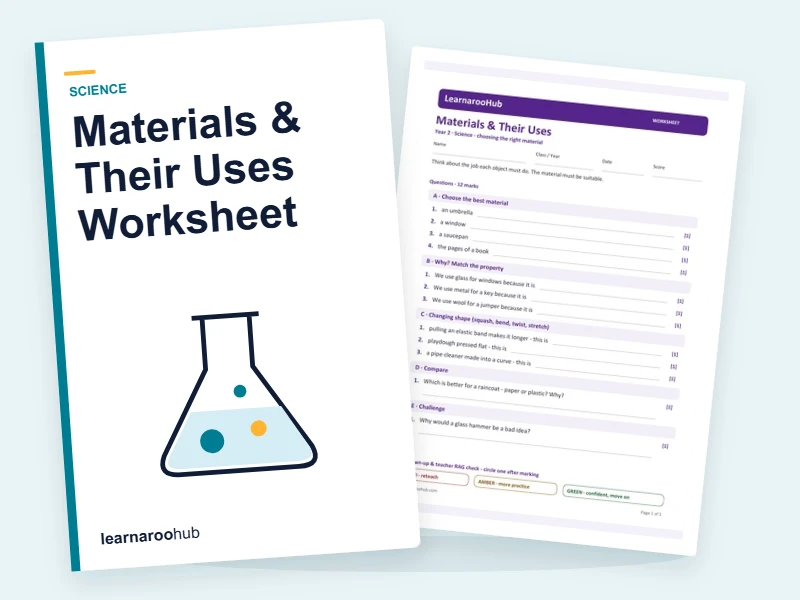
 Materials & Their Uses Worksheet
One-page, 12-mark Year 2 materials question sheet: choose materials for everyday objects, match useful properties and…
Key Stage 1 Science ⏱ 15m
Printable / PDF
· 15m
PAID
Open resource →
QuizPaid subscriptionIncludes a check
Materials Quiz: Suitability & Shapes
Prefer not to join? Buy just this resource
One-off price: £0.49
This resource is also included with eligible paid plans.
Buy this resource — £0.49Create a free Learning Locker first; the exact resource and price are confirmed before payment.
Related modules
Materials & Their Uses Worksheet
One-page, 12-mark Year 2 materials question sheet: choose materials for everyday objects, match useful properties and…
Key Stage 1 Science ⏱ 15m
Printable / PDF
· 15m
PAID
Open resource →
 Materials at Work: How Things Are Made
6 slides on why we pick certain materials for certain jobs, how shapes can be changed, and three real inventors who c…
Key Stage 1 Science ⏱ 10m
E-Learning Module
· 10m
PAID
Open resource →
 Material Properties: Flashcards
12 cards covering the words that describe what materials do: hard, soft, stretchy, brittle, waterproof, absorbent, tr…
Key Stage 1 Science ⏱ 15m
Flashcard Deck
· 15m
PAID
Open resource →
 Materials at Home: A Guide for Grown-Ups
Three simple Year 2 materials activities using household objects, safe packaging or pictures, and soft kitchen materi…
Key Stage 1 Science ⏱ 5m
E-Learning Module
· 5m
PAID
Open resource →
 Materials Investigator: 5-Page Lab Book
A self-marking Year 2 science activity book — name everyday materials, sort their properties, match them to the right…
Key Stage 1 Science ⏱ 60m
Activity Book
· 60m
PAID
Open resource →
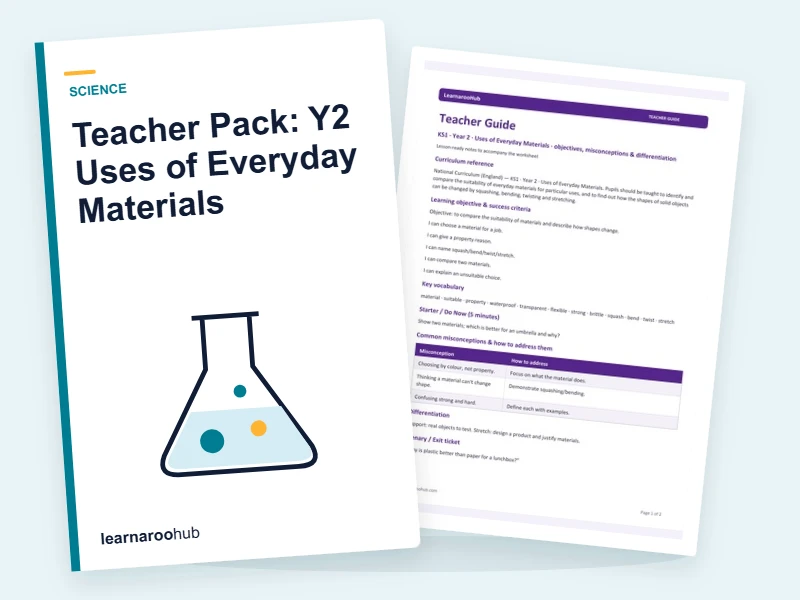 Teacher Pack: Y2 Uses of Everyday Materials
NC mapping (both Y2 statutory requirements + working scientifically links), misconceptions to pre-empt, key vocabular…
Key Stage 1 Science ⏱ 25m
Printable / PDF
· 25m
PAID
Open resource →
