 Nutrition & Food Safety — Recall
A varied quiz on GCSE Food Preparation & Nutrition — nutrition & food safety. Questions and answers reshuffle every p…
GCSE Food Preparation and Nutrition ⏱ 45m
Quiz
· 45m
PAID
Open resource →
QuizPaid subscriptionIncludes a check
Nutrition & Food Safety — Practice (Quiz Game)
Prefer not to join? Buy just this resource
One-off price: £0.49
This resource is also included with eligible paid plans.
Buy this resource — £0.49Create a free Learning Locker first; the exact resource and price are confirmed before payment.
Related modules
Nutrition & Food Safety — Recall
A varied quiz on GCSE Food Preparation & Nutrition — nutrition & food safety. Questions and answers reshuffle every p…
GCSE Food Preparation and Nutrition ⏱ 45m
Quiz
· 45m
PAID
Open resource →
 Nutrition & Food Safety — Challenge
A varied quiz on GCSE Food Preparation & Nutrition — nutrition & food safety. Questions and answers reshuffle every p…
GCSE Food Preparation and Nutrition ⏱ 45m
Quiz
· 45m
PAID
Open resource →
 Nutrition & Food Safety — Speed Round
A rapid Speed Round on GCSE Food Preparation & Nutrition — nutrition & food safety. Questions and answers reshuffle e…
GCSE Food Preparation and Nutrition ⏱ 45m
Quiz
· 45m
PAID
Open resource →
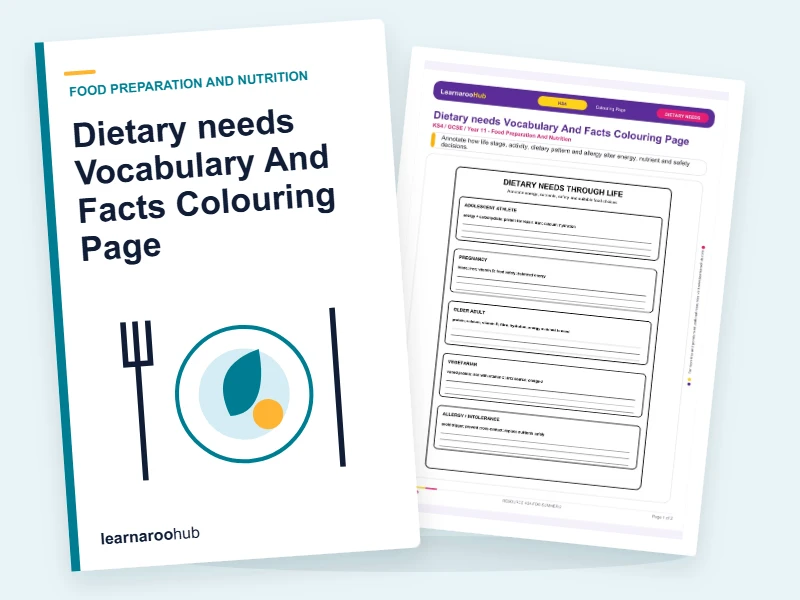 Dietary needs Vocabulary And Facts Revision Diagram
A GCSE Food Preparation and Nutrition vocabulary and facts sheet on Dietary needs for use at home or in class.
GCSE Food Preparation and Nutrition ⏱ 20m
Vocabulary and Facts
· 20m
PAID
Open resource →
