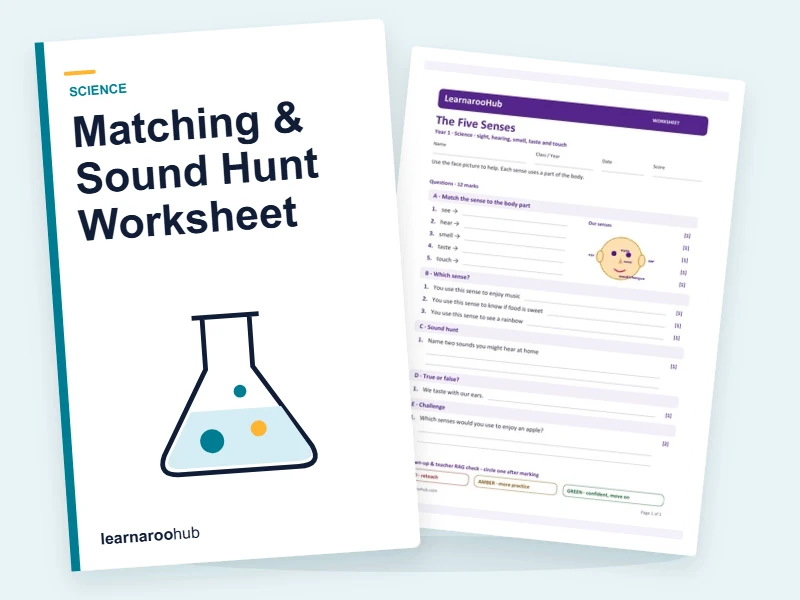
 KS1 Senses: Matching & Sound Hunt Worksheet
Year 1 science worksheet matching senses to body parts, exploring sound, and a real-world sense-walk Explorer Task.
Key Stage 1 Science ⏱ 15m
Printable / PDF
· 15m
PAID
Open resource →
KS1 Senses: Matching & Sound Hunt Worksheet
Year 1 science worksheet matching senses to body parts, exploring sound, and a real-world sense-walk Explorer Task.
Key Stage 1 Science ⏱ 15m
Printable / PDF
· 15m
PAID
Open resource →
E-Learning ModulePaid subscription
KS1 Senses: Interactive Lesson
Prefer not to join? Buy just this resource
One-off price: £1.29
This resource is also included with eligible paid plans.
Buy this resource — £1.29Create a free Learning Locker first; the exact resource and price are confirmed before payment.
Related modules
KS1 Senses: Matching & Sound Hunt Worksheet
Year 1 science worksheet matching senses to body parts, exploring sound, and a real-world sense-walk Explorer Task.
Key Stage 1 Science ⏱ 15m
Printable / PDF
· 15m
PAID
Open resource →
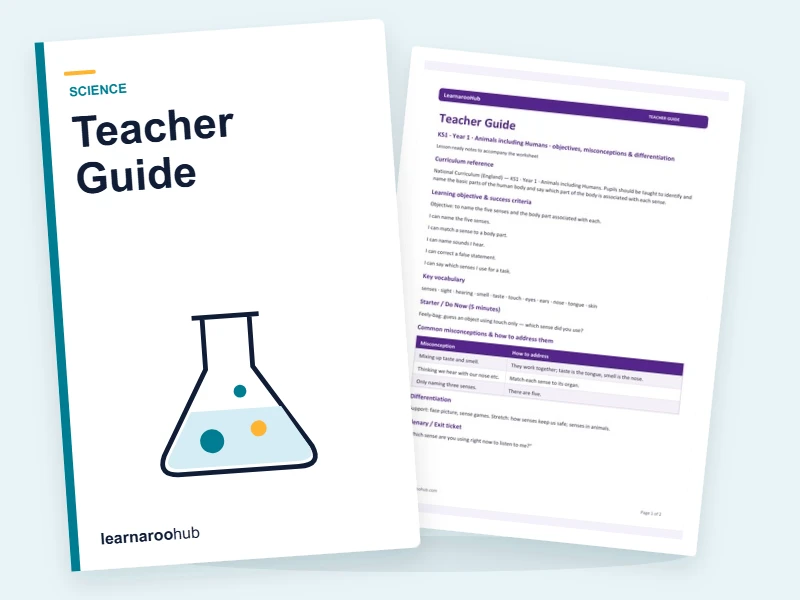 KS1 Senses: Teacher Guide
Teaching notes for KS1 senses: learning objectives, vocabulary, common misconceptions, differentiation and classroom …
Key Stage 1 Science ⏱ 15m
Printable / PDF
· 15m
PAID
Open resource →
KS1 Senses: Teacher Guide
Teaching notes for KS1 senses: learning objectives, vocabulary, common misconceptions, differentiation and classroom …
Key Stage 1 Science ⏱ 15m
Printable / PDF
· 15m
PAID
Open resource →
 KS1 Senses: Five Senses Flashcards
5 science cards for Year 1 practice, with clear prompts, explanations and adult checks.
Key Stage 1 Science ⏱ 15m
Flashcard Deck
· 15m
PAID
Open resource →
KS1 Senses: Five Senses Flashcards
5 science cards for Year 1 practice, with clear prompts, explanations and adult checks.
Key Stage 1 Science ⏱ 15m
Flashcard Deck
· 15m
PAID
Open resource →
 KS1 Science: Living Things and Their Habitats — Quick Burst
A fast, self-marking KS1 science warm-up on living/dead/never-alive things, animals and plants in their habitats, mic…
Key Stage 1 Science ⏱ 20m
Activity Book
· 20m
FREE
Open resource →
KS1 Science: Living Things and Their Habitats — Quick Burst
A fast, self-marking KS1 science warm-up on living/dead/never-alive things, animals and plants in their habitats, mic…
Key Stage 1 Science ⏱ 20m
Activity Book
· 20m
FREE
Open resource →
