Helping a Reluctant Reader Fall in Love With Books
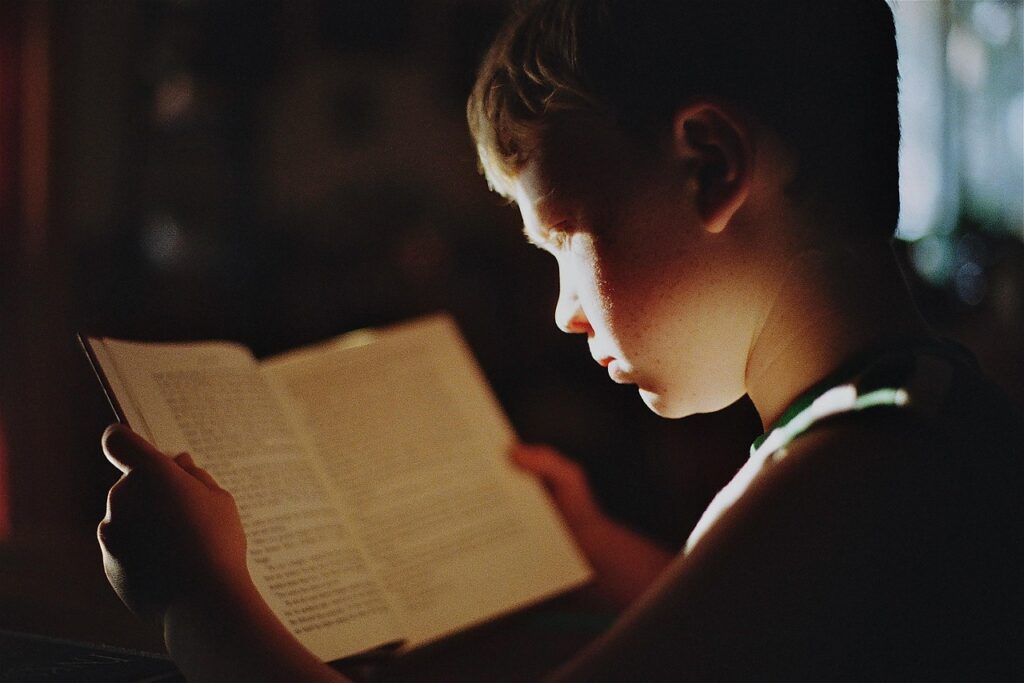
If bedtime involves more negotiation than actual reading, you are not doing anything wrong, and neither is your child. Reading enjoyment among children and young people in the UK has been sliding for two decades. The National Literacy Trust’s most recent survey of over 125,000 children found that just 32.7% of 8 to 18 year olds said they enjoyed reading in their free time in 2025, the lowest figure the Trust has recorded since it started asking the question in 2005. The most recent data, from early 2026, shows a modest recovery to 36.1%, but the Trust is clear that engagement levels remain “concerningly low.” The drop has been sharpest among boys aged 11 to 16 and, worryingly for anyone with a younger child, among primary-aged readers too.
None of that is meant to alarm you. It is meant to say: this is common, it is not a verdict on your parenting or your child’s intelligence, and there is a lot you can actually do. What follows are strategies that come from real UK reading organisations, not vague encouragement to “just read more.”
Why “reluctant” usually means “mismatched,” not “won’t”
It helps to drop the idea that your child either likes reading or doesn’t. When the National Literacy Trust asked children what actually gets them reading, the answers were specific. Around 38% said they were motivated by material connected to a favourite film or TV series, 37% by things that matched their existing interests or hobbies, 31% by an interesting cover or title, and a quarter said simply having the freedom to choose what they read mattered to them. Notice what is missing from that list: nobody said “being assigned a book” or “reading something above my level to prove I can.”
Most reluctant readers aren’t reluctant about story. They’re reluctant about the specific book in front of them, the pressure of being watched while they stumble over words, or the sense that reading is something done to them rather than something they choose. Even children who say they don’t enjoy reading still engage with song lyrics, comics, news articles about things they care about and fan fiction, according to the same research. The instinct to follow a story is usually intact. The job is finding the version of it that works for this particular child.
Choosing books for the reader you actually have
Follow the obsession, not the reading list
If your child can recite football transfer news, dinosaur facts or Minecraft lore from memory, that is reading behaviour, just not from a book yet. BookTrust’s advice to parents is blunt on this point: let children choose their own books, across every genre, including “fantasy, non-fiction, sports books, graphic novels and spy thrillers,” based on what actually interests them rather than what you think they should be reading. A branded book connected to a video game or a football annual might not be the book you’d have picked, but if it gets a reluctant reader turning pages voluntarily, it has done its job.
Let comics and graphic novels count, properly
If you grew up hearing that comics “aren’t real reading,” it’s worth updating that belief. The National Literacy Trust’s research on comics found that 59% of children who read graphic novels in their free time said they enjoyed reading for pleasure, compared with 33% of children who didn’t read them, and that graphic novel readers were more likely to read daily (36% versus 23%). Comics are read by a large slice of the child population too: 40.7% of 8 to 18 year olds read comics or graphic novels at least monthly, and they’re particularly popular with boys (44.6%, against 34.8% of girls), which matters given that boys are the group whose reading enjoyment has fallen furthest. Decoding panels, following visual pacing and inferring meaning from pictures and text together is genuine reading work. Treat the graphic novel shelf at the library as a legitimate first stop, not a consolation prize.
Give permission to reread and to abandon books
Rereading a familiar, comfortable book isn’t a child stalling. BookTrust specifically lists this as fine: if a child wants the same book “over and over again, as a comfort read,” that still counts. The flip side matters too. A child who has picked something that turns out to be the wrong fit should be allowed to put it down without a guilt trip about finishing what they started. Adults don’t finish every book they pick up either, and forcing it through tends to teach a child that books are an obligation rather than something you get to enjoy.
Audiobooks are a genuine on-ramp, not a shortcut
Audiobooks sometimes get treated as reading’s lesser cousin, but that undersells what they do. A child’s ability to understand and enjoy a story through listening runs well ahead of what they can decode on the page for most of primary school and into secondary, which is exactly why a story that would frustrate a child reading it solo can be thrilling when heard aloud. That gap is one of the clearest reasons audiobooks work so well for reluctant readers: they get access to the plot, the vocabulary and the emotional pull of a properly good story without the decoding effort getting in the way first.
The Reading Agency, which runs the UK’s Summer Reading Challenge through public libraries, has leaned into this directly, partnering with Spotify to offer children free audiobooks because, as they put it, audiobooks are “a powerful and inclusive way to support children’s reading, especially for those who may find traditional books challenging.” Libraries also lend audiobooks free through apps like BorrowBox, so this doesn’t have to cost anything.
In practice, audiobooks work best woven into ordinary life rather than treated as a separate “reading session”: a car journey, doing Lego, colouring, or winding down before lights out. Some children like following along in the physical book at the same time, which can help them connect the sounds of words to how they’re spelled; others just want to listen and picture it, which is fine too. Either way, it’s reading.
Don’t stop reading aloud, even once they can read alone
This is the single change most likely to move the needle, and it’s also the one most parents drop the earliest. Research commissioned by HarperCollins Children’s Books and Farshore, based on a NielsenIQ survey of over 1,500 UK parents in December 2024, found that reading aloud regularly falls off a cliff as children get older: 41% of 0 to 4 year olds are read to frequently, but that drops to 36% of 5 to 7 year olds and just 22% of 8 to 10 year olds. Separate UK research found that around one in five parents of 6 to 17 year olds stopped reading aloud before their child turned nine, and the reason given most often was that the child could now read independently. Yet nearly a third of 6 to 11 year olds whose parents had stopped said they didn’t want them to. One eight-year-old put it simply: “Reading time was comforting when I didn’t know how to read.”
Being able to decode words alone and being ready to enjoy a proper story alone are two different milestones, and there’s often a long gap between them. BookTrust’s advice to parents is straightforward: “don’t stop reading aloud,” and specifically suggests moving on to chapter books together as a way of pulling a reluctant reader into their own independent reading later. It’s also one of the strategies the Department for Education’s own Reading Framework points to for building a reading-for-pleasure culture, alongside informal book talk and library use.
A few things make this work better in practice:
- Read something slightly above what your child could manage alone. Being read to lets them enjoy plot and language they’d find frustrating to decode themselves.
- Don’t quiz them afterwards. A comprehension test at the end turns a treat into homework. Talk about it only if they want to.
- Keep it going past the age that feels natural to stop. There’s no cut-off where reading aloud stops working; ten, eleven and twelve year olds still get real value and real enjoyment from it, they just might not ask for it unprompted.
- Ten minutes, most nights, beats an hour once a fortnight. Consistency is what makes it a ritual rather than an event.
Make the library your unfair advantage
The National Literacy Trust has flagged a genuinely practical barrier behind some reading reluctance: book access. Their research found that 8.6% of children don’t have a book of their own at home, rising to 12.4% in disadvantaged families, and that a fifth of parents are now buying fewer books because of the cost of living, rising to over a third among families who are struggling financially. One in seven primary schools in England doesn’t have a library at all, and that figure is one in four in the most disadvantaged areas. Whatever is going on in your household budget, the public library sidesteps all of it, for free.
The Reading Agency’s Summer Reading Challenge is worth knowing about specifically if you have a 4 to 11 year old: children set their own goal, choose absolutely any six books they like over the summer holidays, and collect rewards along the way through their local library, entirely free. Around 700,000 children take part each year, reading well over ten million books between them, and librarians running the scheme are used to reluctant readers and won’t bat an eyelid at a stack of graphic novels or a book about sharks read for the third time.
Beyond the organised scheme, the library is simply a lower-stakes place to find books than a bookshop. Nothing has to be bought, so nothing has to be “worth it,” which means a child can pick up three books, abandon two after a chapter and nobody has lost any money. Ask the children’s librarian for recommendations based on what your child already likes; they do this constantly and are usually better at it than any algorithm. If your child is exploring reading resources online too, it’s worth knowing that Learnaroo Hub’s library includes free and paid reading materials alongside the platform’s other resources, as one more place to browse for something that fits.
Screens are not really the enemy here
It’s tempting to frame this as reading versus screens, but the research doesn’t fully support treating it as a straight fight. What seems to matter more is what the screen time is replacing. The National Literacy Trust’s work on this suggests it’s heavy passive screen use crowding out the reading, conversation and language-rich interaction that build literacy, rather than screens damaging reading ability directly. At the same time, digital reading has a genuine role for reluctant readers specifically: their research found that almost a quarter of children who don’t enjoy reading on paper do enjoy reading on a screen, and that boys, less engaged readers and children from lower-income households were all more likely to read fiction digitally.
In practice, that means an e-reader, a reading app, or even reading a series’ ebook editions isn’t a lesser substitute if it’s what gets a particular child reading. The more useful question at home usually isn’t “how do I get my child off screens,” it’s “is any reading happening in amongst everything else,” on whatever device or format that takes.
When it’s ordinary reluctance, and when it’s worth a closer look
Most reluctant reading is completely ordinary: a busy, distractible child who hasn’t yet found their book, going through a phase, or simply preferring football to fiction this term. Some variation is entirely normal, and the strategies above are aimed squarely at that majority.
It’s worth looking closer, though, if reading isn’t just unpopular but genuinely effortful and distressing for your child in a way that seems out of step with their age and the support they’re getting. The British Dyslexia Association points to a cluster of things worth paying attention to: reading that requires exhausting levels of concentration for the child, ongoing difficulty learning to read despite consistent practice, a level of frustration that tips into refusing to try, or reports that text seems to move or blur on the page, which is worth checking with an optometrist first since vision problems can look similar to a reading difficulty. If several of these sound familiar rather than the occasional bad evening, the BDA’s advice is to start with a conversation with your child’s class teacher, who can advise on school-based support or a referral for a fuller assessment.
While you’re figuring that out, one method worth knowing is paired reading, which the BDA also recommends: your child picks the book, you read it together at their pace rather than testing them, and if they stumble on a word you simply supply it after a second or two so the story keeps flowing, rather than making them sound it out under pressure. Ten minutes a day of this, with a chat about the story afterwards, keeps a struggling reader connected to books emotionally while any formal support gets sorted out. It’s also just a nice thing to do with your child either way.
The point isn’t the finish line
There’s no prize for a child finishing every book cover to cover, reading “up” a level, or hitting some arbitrary number of pages a night. The actual goal, the one all of this is really in service of, is a child who thinks of reading as something they choose to do because it’s enjoyable, not something done to them. That can look like a Beano annual read for the fifth time, twenty minutes of an audiobook on the school run, or you reading a chapter aloud to an eleven year old who’d never admit out loud that they still want it. All of it counts. Keep the pressure low, keep the choice with your child, and the enjoyment tends to follow in its own time.
