🐣
Early Years (EYFS)
Ages 3–5 · Nursery & Reception

Playful, milestone-led learning across the seven areas of the EYFS framework.

🔥 Popular in EYFS
Explore all EYFS →
📚
Key Stage 1
Years 1–2 · Ages 5–7

Reading, writing, number bonds and the Phonics Screening Check.

🔥 Popular in KS1
Explore all KS1 →
🚀
Key Stage 2
Years 3–6 · Ages 7–11

SATs, the times-tables check and the full wider curriculum.

🔥 Popular in KS2
Explore all KS2 →
🔬
Key Stage 3
Years 7–9 · Ages 11–14

Secondary foundations building toward GCSE option choices.

🔥 Popular in KS3
Explore all KS3 →
🎓
GCSE
Years 10–11 · Ages 14–16

Exam-board-matched revision for AQA, Edexcel, OCR & WJEC.

🔥 Popular in GCSE
Explore all GCSE →
👪
Parents & GuardiansLearning at home

Support your child from EYFS to GCSE — with progress you can actually see.

Why parents & guardians choose us → 💷Family plans & pricing Create a child account 🎁Free resources
🍎
Teachers & TutorsPlan, assign, assess

Curriculum-mapped resources, one-click assignment and class-wide tracking.

Why teachers choose us → 💷Educator plans & pricing 🏫For schools 📚Browse the library
🎒
StudentsLearn & revise

Quizzes, games and past papers mapped to exactly what you're studying.

Why students love it → 📚Browse the library 📝Past papers & practice 🎁Free resources
🤝
Not sure which fits?

Start free in under a minute — works for families, classes and self-study.

Sign up free → Compare all plans →

Tag: Homework

If you’ve spent any time in a school newsletter, a staffroom poster, or a parenting group, you’ve met the phrase “growth mindset.” It gets used as a kind of magic word — believe you can improve and you will. That version is a slogan, and slogans are easy to be sceptical of, especially once you notice how thin some of the evidence behind the classroom version turned out to be. But underneath the poster-friendly phrase is a real body of psychology research, some of it genuinely useful for parents, and some of it more mixed than the popular version admits. This is an attempt to separate those two things.

What Carol Dweck’s research actually found

The term “growth mindset” comes from the work of Stanford psychologist Carol Dweck, who spent decades studying how children respond to difficulty and failure. In a 1988 paper with Ellen Leggett, she described two broad beliefs children hold about their own abilities. Some children hold what she called an “entity theory” — the belief that intelligence is a fixed thing you either have or don’t. Others hold an “incremental theory” — the belief that intelligence and ability can be developed through effort and learning. Dweck later popularised these as “fixed mindset” and “growth mindset” in her 2006 book Mindset: The New Psychology of Success, and the idea reached an even wider audience through her TED talk on the power of believing you can improve.

The core finding across her early studies was that children who held the more malleable, incremental belief tended to respond differently to setbacks. Faced with a hard problem, they were more likely to see it as something to work at rather than as proof of a limitation. Children with the fixed belief were more likely to read difficulty as a verdict on their ability, and to disengage from a task rather than risk looking “not smart.”

It’s worth being precise about what that research showed and didn’t show. It described a correlation — a link between how children think about ability and how they respond to challenge. It did not, on its own, prove that teaching a child to say “I can improve” causes better grades. That distinction between “this belief is associated with resilience” and “installing this belief in someone will improve their results” turned out to matter a great deal once schools started trying to teach mindset directly, which we’ll come back to.

The part with the strongest evidence: how you praise matters

If there’s one piece of this research that has held up well and is genuinely useful at home, it’s a specific, well-designed study about praise. In 1998, Dweck and her then-student Claudia Mueller published a series of six experiments with children around ten to twelve years old, working with fairly hard problems from a nonverbal reasoning test.

After the children completed the first set of problems, every child was told they’d done well. Then researchers added one more line, varied by group. Some children were told “you must be smart at this” — praise for ability. Others were told “you must have worked hard” — praise for effort. A third group got no extra comment at all.

What followed was consistent across the six experiments. The children praised for intelligence were more likely to care about looking smart than about actually learning something new when offered a choice of tasks afterwards. When they then hit a genuinely difficult set of problems and struggled, they were quicker to conclude they simply weren’t clever enough, enjoyed the task less, and — this is the part that tends to surprise parents — performed measurably worse on a final set of problems than the children who’d been praised for effort. The effort-praised children, by contrast, stuck with hard problems longer, described intelligence as something that could be built up rather than fixed, and their performance held up better under difficulty.

The mechanism Mueller and Dweck proposed is fairly intuitive once you see it laid out: telling a child “you’re smart” attaches their sense of worth to a trait they can’t control and that a single failure can seem to disprove. Telling a child “you worked hard” or “you found a good way to do that” attaches their sense of worth to something they’re actively doing, which they can keep doing even when the first attempt doesn’t work. This particular finding has since been checked and extended by other researchers, including a 2019 study on vocational students that found similar effects of effort-focused feedback on motivation. It’s one of the more robust, replicated pieces of this whole area — which is exactly why it’s worth taking seriously, separately from the bigger, shakier claims that got built on top of it.

The honest part: what happened when this went into classrooms

Here’s where it’s worth slowing down, because this is the bit that tends to get left off the posters. Once “growth mindset” became popular, schools and programmes started running interventions — short workshops, assemblies, online modules — designed to directly teach children that ability is malleable, on the assumption that this alone would lift achievement. Researchers then went back and checked how well that actually worked, and the results were considerably more modest than the popular version of the idea suggests.

The clearest evidence comes from a large 2018 meta-analysis by Victoria Sisk and colleagues, published in Psychological Science, which pooled data from 273 studies covering over 365,000 participants on the link between mindset and achievement, and a separate set of 43 intervention studies covering more than 57,000 participants. The relationship between having a growth mindset and doing well academically was weak overall. And when researchers looked specifically at whether teaching children a growth mindset actually raised their grades, the average effect was small — the kind of effect size that’s easy to detect across tens of thousands of children in aggregate, but not the kind of transformation the classroom posters imply for any individual child. There was a genuinely interesting exception: children from lower-income backgrounds or who were already struggling academically showed somewhat larger benefits than the average student. For a child already doing fine, a mindset lesson on its own didn’t move much.

A separate, very large and carefully designed study — the National Study of Learning Mindsets, led by David Yeager and published in Nature in 2019 — tracked around 12,500 US ninth-graders across 65 schools who were randomly assigned to receive a short online growth mindset intervention or not. This one found real effects, but they were far from universal. Lower-achieving students who received the intervention were somewhat more likely to take on harder maths courses afterwards; higher-achieving students barely moved. Critically, the benefit only showed up reliably in schools where the surrounding peer culture already supported the message — a mindset lesson delivered into a classroom culture that quietly mocked trying hard didn’t do much on its own. In other words, the belief mattered, but it clearly wasn’t the whole story; the environment around the child had to be pulling in the same direction.

Dweck herself has been unusually candid about this gap between the research and how it got used. In a widely read 2015 piece, she wrote plainly that the growth mindset “was intended to help close achievement gaps, not hide them,” and that she’d watched schools use the language to make children feel good about effort that wasn’t actually producing any learning — a teacher saying “great effort, you tried your best!” to a child who still doesn’t understand the material. She also acknowledged that her own early work “put too much emphasis on sheer effort,” making it sound as if trying hard was sufficient on its own, when what the original research actually pointed to was trying hard with a strategy that changes when the first one isn’t working — seeking help, trying a different method, asking a better question. She named this drift “false growth mindset”: adults who say the right words about growth and effort while their actual reactions to a child’s mistakes stay exactly as fixed-mindset as ever.

None of this means the underlying idea is wrong. It means the honest version is narrower and less dramatic than the slogan: how you respond to a child’s effort and setbacks does seem to matter, praise for process is better evidenced than praise for ability, and a short talk about “believing in yourself” is not, on its own, going to transform a struggling learner. The useful bit was never the belief in isolation — it’s what you actually do around a child’s mistakes, day to day, that the research keeps pointing back to.

What this means for the words you actually use at home

Given all that, the practical takeaway for a parent isn’t “recite growth mindset affirmations.” It’s something narrower and more doable: notice what you’re praising, and shift it from the trait to the process. That’s a habit of language, and like any habit it’s easiest to build with a few concrete swaps rather than a philosophy.

Instead of this Try this
“You’re so clever.” “You worked out a way through that.”
“You’re a natural at maths.” “I can see all that practice with times tables paying off.”
“Don’t worry, not everyone’s good at spelling.” “That word’s tricky — let’s find a way to remember it.”
“Great effort, you tried your best!” (when the answer’s still wrong) “You’ve got the method half right — where do you think it went off track?”
“I’m rubbish at maths too, don’t worry about it.” “Maths took me a while to get too — what part is tripping you up?”

A few things about that list are worth spelling out, because the honest research above cuts both ways here. First, effort praise only works if the effort is actually connected to the outcome — Dweck’s own warning applies at home just as much as in a classroom. Telling a child “great effort” after twenty minutes of getting the same sum wrong the same way isn’t process praise, it’s a consolation prize, and children generally know the difference. The more useful move is to praise the strategy and then help them change it: “you tried subtracting first — what happens if you try adding instead?”

Second, notice that a couple of the “avoid” phrases aren’t about ability at all — they’re about quietly letting a child off the hook (“not everyone’s good at spelling”). That phrase feels kind in the moment, but it teaches the same lesson as “you’re just not a maths person”: that this is fixed, so there’s no point pushing. The swap isn’t to force relentless positivity, it’s to keep the door open — this is hard right now, not hard forever.

Third, be specific. “Good job” and “well done” are fine as warmth, but they don’t teach anything about what worked. “You checked your working before handing it in, and that’s why you caught the mistake” tells a child exactly what to repeat next time. Specificity is what turns praise from a mood boost into actual information.

And it’s fine — expected, even — for this to feel unnatural for a while. Praise for ability is the easy, quick, culturally default thing to say. Catching yourself and reaching for the process version is a habit you’re building in yourself as much as in your child, and it will feel clunky before it feels normal.

Modelling it yourself matters more than the words

Here’s the part that’s easiest to skip and probably matters most: children watch what you do with your own mistakes far more closely than they listen to what you tell them to do with theirs. If you drop a plate and mutter “I’m so stupid,” or throw your hands up over a wrong turn on the drive with “I’m hopeless at directions,” you’ve just given a live demonstration of the fixed mindset — regardless of how carefully you worded the praise five minutes earlier.

None of us are being watched constantly, and nobody manages a calm, growth-oriented response to every mistake they make. That’s not really the goal. What seems to help is narrating your own process out loud sometimes, especially when something doesn’t go to plan: “I got that email wrong — I should have reread it before sending. I’ll check twice next time.” “This recipe’s not working, let me try a different amount.” “I misjudged that, let’s see what I’d do differently.” You’re not performing a lesson; you’re just letting your child overhear how an adult actually handles being wrong — which, done honestly, includes some frustration, not just cheerful resilience.

This matters because it undercuts the exact failure mode Dweck warned about with “false growth mindset” — parents who say the right things about effort and mistakes but visibly panic, deflect, or shut down when they make their own. Children are good at spotting that gap, and they tend to copy the real behaviour, not the stated belief. If you want a child who tries a second approach when the first one fails, the most direct route isn’t a better speech — it’s being a person they’ve watched do exactly that, more than once, including on the days it’s annoying.

It’s also worth being honest with your child about the limits of effort itself, since that’s part of what the research above corrects for. Trying hard at the wrong method for twenty minutes isn’t admirable, it’s just frustrating, and pretending otherwise isn’t kind. The useful message is closer to: “if it’s not working, that’s information, not a verdict — so what do we try next,” rather than “just keep trying and it’ll come right.” That’s a subtler thing to model than a slogan, but it’s the version the actual research supports.

If you’re after a bit more structure for turning this into an everyday routine rather than an occasional good intention, Learnaroo Hub’s parent resources include some practical prompts for talking through homework mistakes without it turning into either a lecture or an argument — worth a look if you want something more concrete to work from than “just praise the effort.”

None of this is a promise that a few better phrases will transform how your child does at school — the honest reading of the research says that’s not how it works, and any advice claiming otherwise is overselling it. What the evidence does support is smaller and steadier: how you respond to a child’s mistakes, moment to moment, shapes whether they see difficulty as something to work through or something to avoid. That’s not a slogan. It’s just a habit worth building, one ordinary Tuesday-evening homework session at a time.

Most parents I talk to have lived some version of the same evening: tea’s going cold, homework’s not started, and someone is guarding a tablet like it’s the last lifeboat off a sinking ship. If the words “screen time” now make you brace yourself, you’re not failing at parenting — you’ve just inherited a version of the problem that was never quite right to begin with.

For years, the standard advice was a number. Two hours a day. One hour. None before bed. Numbers are appealing because they feel measurable, but they also turn every day into a countdown, a negotiation, and eventually a row. The reassuring part, backed by the people who actually advise the UK government on this, is that the number was never really the point.

What UK guidance actually says now

In February 2019, the UK’s four Chief Medical Officers published their commentary on screen time and social media, commissioned from researchers at University College London who had reviewed the existing evidence. Their conclusion was more useful than it first sounds: the research simply wasn’t strong enough to justify a specific hourly limit for school-age children. So instead of a countdown clock, they framed their advice around three questions a family can keep coming back to — what children are doing on a screen, when they’re doing it, and who they’re doing it with.

The Royal College of Paediatrics and Child Health backed the same position, making the point that there isn’t good evidence screen time is inherently harmful in itself — what matters is whether it’s crowding out the things that keep a child well: sleep, physical activity, time with other people, and schoolwork. The threshold to watch for isn’t a clock running out; it’s screen use starting to squeeze out everything else.

That doesn’t mean the guidance is a free-for-all. Within the “when,” there are some genuinely concrete anchors: keep phones and tablets away from the table at mealtimes, build in a break from screen-based activity roughly every two hours rather than sitting through one long unbroken stretch, and try to keep the run-up to bedtime screen-free so sleep isn’t disrupted. Worth flagging, because it trips people up: that “break every two hours” guidance is about pacing continuous use, not a two-hour daily ceiling — you’ll still see some NHS-linked local health pages quote a rough two-hour daily figure for older children, but the CMOs themselves were explicit that this isn’t built on strong evidence, which is exactly why the official framework talks about what, when and who instead of a total.

For the very youngest, there’s a bit more specificity, because the evidence base for babies and toddlers is different. UK guidance aligned with the World Health Organization suggests avoiding screen time altogether under the age of two, other than video calls with family, and capping it at around an hour a day for two- to four-year-olds — with the general steer being that less is better at that age, since this is when speech, attention and social skills are developing fastest.

None of this tells you exactly what to do on a wet Tuesday when you need twenty minutes to make dinner. It’s meant to be a set of questions, not a rulebook — which is honestly more work upfront, but it’s also why it fits real family life better than a stopwatch ever did.

What the evidence actually says to watch for

If a strict number isn’t the answer, what should you actually be paying attention to? Three things keep coming up across the research, and none of them require you to track minutes on a chart.

Sleep

This is the area with the clearest evidence, and it’s worth taking seriously. Screens emit light weighted towards the blue end of the spectrum, and light in that range suppresses melatonin, the hormone that signals to the brain it’s time to sleep. Some research suggests children’s eyes are more sensitive to this than adults’ — their pupils let in more light, and studies have found evening light exposure suppresses melatonin more strongly in children than in grown-ups. A large US study using data from the Adolescent Brain Cognitive Development project found that bedtime screen activities — watching video, gaming, texting, scrolling social media — were consistently linked to children taking longer to fall asleep, sleeping for less time overall, and having more disrupted sleep.

The practical upshot isn’t complicated, even if it’s not always easy to enforce: screens out of bedrooms overnight, and a genuine wind-down period beforehand where the last thing your child’s brain is doing isn’t a fast-paced game or an infinite scroll. A charging point on the landing or in the kitchen, rather than a bedroom socket, solves more of this than any app-based time limit does.

What’s being displaced

Screen time itself isn’t the enemy — but it does occupy hours that would otherwise go somewhere else, and researchers call this the displacement effect. A longitudinal study following children in Bristol primary schools from Year 1 through to Year 4 found real shifts in the balance between screen-viewing and physical activity as children got older, with parents themselves noticing screens quietly taking up more of the time that used to go on active play. That matters given that only around four in ten children in the UK currently meet recommended physical activity guidelines. Separately, research on toddlers has found that time spent on screens can displace peer play specifically — the rough-and-tumble, turn-taking, negotiate-who-goes-first kind of play that does a lot of the early work on social skills — and studies on preschoolers have linked heavier screen use to fewer of the shared reading and back-and-forth conversations with parents that build language.

None of this means every hour of screen time is stolen from somewhere important. It means it’s worth occasionally asking what a particular chunk of time would otherwise have been — outdoor play, a board game, a conversation in the car — rather than treating all screen use as equivalent to all other screen use.

Content and company

This is the “what” and the “who” of the CMO framework, and it’s where a lot of the real safeguarding conversation sits. Research consistently draws a distinction between passive screen use — scrolling a feed, watching autoplay video after autoplay video — and active or interactive use, such as a video call with grandparents, a creative app, or something genuinely educational. The passive kind tends to show up more often in studies linked to poorer outcomes on attention and executive function; the interactive kind more often shows some benefit, particularly for language.

The “who” matters just as much. Ofcom’s most recent Children and Parents: Media Use and Attitudes report, published in May 2025, found that 89% of children aged 3 to 17 play games online and 81% regularly watch YouTube — and flagged real parental concern about unsupervised screen time and children gaming with strangers rather than known friends. In the same report, 74% of parents of three- to five-year-olds and 79% of parents of ten- to twelve-year-olds said they worried about their child spending too much time on screens, and 37% of 8- to 17-year-olds said they thought they themselves spent too long on screens — which is a useful reminder that plenty of children are already somewhat uneasy about their own habits, without needing to be told.

Practical strategies that don’t need a fight every evening

Once you let go of the idea that there’s a perfect daily total to hit, the actual job gets simpler: build a few reliable habits into the shape of an ordinary day, rather than relitigating screen time from scratch every afternoon.

Screen-free times and zones, decided in advance

The strategies with the best track record aren’t clever apps or reward charts — they’re boring, structural ones. Mealtimes with no devices at the table. Bedrooms that stay screen-free overnight, for adults as well as children, which also removes the temptation to “just check” at 11pm. The first twenty minutes after school or nursery pickup kept for a snack and an actual conversation before any screen goes on. None of these need to be announced as a big new rule — they work best when they’re just how things are done in your house, the same way shoes come off at the door.

Watching and playing alongside them, at least sometimes

Co-viewing does two jobs at once. It turns passive content into something a bit more interactive, because you’re commenting, asking questions, laughing at the same bits. And it means you actually know what your child is watching or playing, rather than guessing — which matters more as they get older and the content and the company both get harder to see from across the room. You don’t need to sit through every episode of everything. Even dipping in for five minutes to ask “who’s that character, then?” tells a child their screen use isn’t happening in a sealed box you’ve opted out of.

Let them help write the rules

Boundaries that are handed down tend to get tested. Boundaries a child had a hand in setting tend to stick, partly because they understand the reasoning and partly because being asked feels respectful rather than punitive. A short family conversation — when should screens go off, where do they live overnight, what happens if someone’s mid-game when it’s time to stop — turns “because I said so” into something closer to a shared agreement, and gives you something to point back to later that isn’t just your authority in the moment. The Royal College of Paediatrics and Child Health has made a similar point at a policy level: any guidance in this area works better when young people themselves have had a say in shaping it, rather than having it delivered to them fully formed.

Separate “for school” from “for fun”

Homework increasingly happens on a screen, which makes the boundary-setting job harder, because the device that does spelling practice is the same one that does everything else. It helps to make that distinction visible rather than assumed: homework happens on the kitchen table or in a shared space rather than a bedroom, the browser tab for the school portal is the only one open, and when the work’s finished, there’s a clear, named switch-over rather than a grey area where nobody’s quite sure if this is still “school time” or now “free time.” That small bit of structure does a lot to stop homework screens quietly turning into an extra hour of gaming by accident.

Be honest about your own screen use

This is the part that’s easiest to skip and probably matters most. Children notice what we actually do far more than what we say. If mealtimes are meant to be screen-free but a phone is face-down-but-buzzing next to the plate, or bedtime stories get cut short because you’re keen to get back to your own scrolling, that’s the model that lands — regardless of what the house rules say on paper.

This doesn’t mean aiming for some unreachable standard where you never check your phone in front of your kids — that’s not realistic and it’s not really the point. It means being willing to notice your own habits with the same curiosity you’re applying to theirs, and being honest when a rule you’ve set for them doesn’t apply to you for no good reason. Children are unusually good at spotting a rule that only runs one way, and unusually forgiving of parents who admit it and adjust.

Not all screen time is equal

Once you’re thinking in terms of what, when and who rather than a total, it becomes easier to weigh up different kinds of screen time on their own merits rather than lumping them all together. Half an hour of curriculum-linked practice — times tables, phonics, a bit of reading comprehension — earns its place differently to half an hour of algorithm-driven video, even though both look identical from across the room as “on a screen.” This is genuinely one of the reasons Learnaroo Hub exists: it’s still a screen, and it still needs the same boundaries as anything else — a stopping point, a time of day, a bit of parental awareness of what’s actually happening on it — but the content itself is built to be worth the time rather than simply designed to hold attention for its own sake. It’s not a loophole around thinking about screen time. It’s one option worth having in the mix alongside the others, weighed honestly rather than assumed to be automatically fine because it says “learning” on the label.

The bottom line

There isn’t a magic number of minutes that makes screen time safe below it and harmful above it, and the UK’s own Chief Medical Officers have said as much. What actually seems to matter is whether screens are getting in the way of sleep, movement, and time with other people, whether the content and company are appropriate for your particular child, and whether the habits around screens — mealtimes, bedrooms, bedtime — are consistent enough that nobody’s negotiating them from scratch every single evening. Get those structural things reasonably settled, involve your child in setting them, and hold yourself to a version of the same standard, and the daily battle tends to quietly shrink on its own.

If you’ve got a child in Year 6, you’ve probably already heard the word “SATs” said in at least three different tones this term: brisk and factual from the school newsletter, faintly panicked from other parents in the playground, and increasingly often from your own child, who has picked up on all of it. None of that is your fault, and none of it means you’re behind. Most parents are working out what SATs actually involve at roughly the same pace their child is.

This guide is a plain-English look at what Key Stage 2 SATs really are, what genuine test anxiety can look like in a ten- or eleven-year-old, and how to support your child through the spring term without the whole household organising itself around one week in May. None of it requires turning your kitchen table into a revision bootcamp.

What SATs actually are, and what they’re not

Key Stage 2 SATs are the national curriculum tests taken by children in the final year of primary school, usually in the second week of May. For the current Year 6 cohort, the Department for Education has confirmed the tests will run from Monday 10 to Thursday 13 May 2027. Every state primary school in England sits them in the same week, under the same rules, on papers set centrally by the DfE’s Standards and Testing Agency.

Not every subject works the same way. Reading, maths and English grammar, punctuation and spelling (usually shortened to GPS) are tested with formal written papers: one reading paper, three maths papers (an arithmetic paper and two reasoning papers), and a GPS paper split into a grammar and punctuation test plus a separate spelling test. Writing and science are not sat as timed tests at all. Both are assessed by your child’s own class teacher, using work built up across the year, not a single sitting. Writing assessments are then moderated externally, so it isn’t just one teacher’s opinion.

Results come back as a scaled score, not a mark out of 100 or a grade. The scale runs from 80 to 120, and a score of 100 or more means your child has met the “expected standard” for their age. It isn’t a pass or fail in the way a driving test is — there’s no certificate, and a score in the 90s doesn’t mean your child has failed anything. Writing and science are reported as “working at the expected standard” (there’s no higher category for science) from the teacher assessment. You’ll get the results in July, well after the tests themselves are a distant memory for most children.

What SATs are genuinely for is measuring how a cohort and a school are doing against the national curriculum, and giving secondary schools a starting data point — many use the scores for setting in Year 7, though that’s a school-by-school decision, not a rule. What they are not for is deciding which secondary school your child goes to (that’s down to admissions, not SATs performance), and they don’t appear anywhere on your child as a person once they’ve left primary school. It’s genuinely a snapshot of one week, not a verdict.

If your child has an EHCP or other identified additional needs, it’s worth checking in with the SENCo about access arrangements — things like extra time, rest breaks, a reader, or in some cases modified papers are all things schools can apply for, and most will already have this in hand for children who need it. It’s a reasonable thing to ask about directly if nobody has mentioned it to you.

Realistic signs of test anxiety in a 10- or 11-year-old

Some nerves before SATs are completely normal, and honestly a fairly good sign — it usually means your child understands the tests matter a bit and wants to do reasonably well. That’s different from anxiety that’s actually getting in the way of their day-to-day life, and it’s worth knowing the difference so you’re not either dismissing something real or panicking over something ordinary.

According to NHS guidance for parents, stress around exams commonly shows up physically before it shows up as anything your child can put into words: headaches, stomach aches, and disrupted sleep are all common. You might also notice appetite changes — eating less, or picking at food, particularly around homework time or the school run.

Behaviourally, watch for irritability that’s out of character, a reluctance to go to school that wasn’t there before, or your child pulling back from things they normally enjoy — football, a hobby, seeing friends. Some children go quiet and withdrawn; others get snappy over small things that wouldn’t usually bother them. YoungMinds, the children’s mental health charity, notes that children under exam pressure often start comparing themselves critically to classmates or worrying about expectations they think other people have of them, even when nobody has actually said anything of the sort out loud.

Emotionally, the signs to take seriously are persistent worry that doesn’t ease once your child is away from schoolwork, tearfulness that seems disproportionate to what’s actually happening, or talk that sounds pessimistic or hopeless rather than simply nervous — “I’m going to fail everything” said once in a bad mood is different from a child who seems to genuinely believe it and can’t be talked round.

Place2Be, which runs mental health support directly inside primary schools, points out that this is exactly the age where children start to notice tests are being taken more seriously by the adults around them, which can amplify pressure even when nobody intends it. Ten- and eleven-year-olds also don’t always have the vocabulary to say “I’m anxious” — that’s a fairly sophisticated piece of self-reporting for a child who’s still developing the ability to name and separate their own feelings. Much more often it comes out sideways, as a sore tummy on a Monday morning, sudden reluctance about a subject they used to like, or a meltdown over something that wouldn’t normally register. Reading the behaviour, rather than waiting for your child to announce it in words, is usually more reliable at this age.

If what you’re seeing feels like more than ordinary nerves, or it’s lasting for weeks rather than days, it’s worth a conversation with your child’s teacher — they’ll usually have a good read on how your child is coping in the classroom compared with at home, and the two pictures aren’t always the same. If anxiety is significantly affecting your child’s eating, sleep, or ability to function day to day, that’s worth raising with your GP rather than waiting to see if it passes on its own.

How to talk about SATs at home without turning the volume up

The single most useful thing most parents can do is keep SATs conversation matter-of-fact rather than momentous. Children this age are extremely good at reading how seriously the adults around them are taking something, regardless of what’s actually being said. A calm “you’ve got your grammar test on Tuesday, how are you feeling about it?” lands very differently to a family atmosphere that’s been quietly reorganising itself around May for months.

It helps to name the nerves rather than talk around them. Something like “it’s totally normal to feel a bit wobbly about this, most people do” tends to land better than either ignoring the topic altogether or reassuring too hard, which can accidentally signal to a child that this is a much bigger deal than they’d assumed. YoungMinds’ advice for parents is fairly consistent on this point: acknowledge the feeling as valid, then move on, rather than dwelling.

Try to keep the goals your child’s own, rather than borrowed from you, a sibling, or another family. If your child says they want to “get all the grammar questions right,” that’s a fine, specific, achievable thing to encourage. If the goal in the room is really about you wanting a particular scaled score, children usually sense that too, even if it’s never said directly, and it tends to raise pressure rather than motivation.

It’s worth being deliberate about not comparing your child to siblings, cousins, or classmates, even in passing or as a joke. It’s also worth resisting the urge to let SATs dominate every dinner-table conversation for a whole term — ask about it, then let it go, and talk about other things. Children pick up far more from the general household mood than from any single conversation, so if you’re anxious about the tests yourself, that’s worth managing quietly on your own side rather than in front of your child.

Plenty of children ask some version of “what happens if I fail?” at some point, and it’s worth having an honest, unrushed answer ready rather than brushing past it. The truthful answer is genuinely reassuring: there’s no failing, in the sense your child probably means it. Nobody stays back a year, nobody is sent to a different school, and a lower scaled score simply tells the teacher where to focus a bit more support next year — which is exactly what it’s designed to do. Saying something close to that, in your own words, tends to land better than a vague “don’t worry about it,” because it actually answers the question your child is asking.

Revision habits that work, without turning the spring term into exam camp

Short, regular, low-key practice beats long weekend cramming sessions almost every time, and this isn’t just intuition — it’s the same principle behind most evidence-based study advice for any age. Fifteen to twenty minutes of focused practice most days is genuinely more effective, and far more sustainable for everyone’s mood, than a two-hour Sunday session that ends in tears on both sides.

Your child’s teacher already has a plan. Schools build SATs preparation into normal lessons well before May, so your job at home isn’t to run a parallel curriculum — it’s to top up, not duplicate. A few short, well-chosen sessions on things your child finds genuinely tricky will do more good than trying to cover everything from scratch. If you’re not sure what to focus on, ask the teacher directly; they’ll usually be able to point to specific gaps rather than leaving you guessing.

Past papers and practice questions are useful in small doses, mainly because they get your child used to the format and timing rather than because cramming content at this stage makes much difference — most of what’s being tested was taught over the previous two years, not crammed in the final term. If your child enjoys short, structured practice, Learnaroo Hub has SATs-prep resources built around exactly this kind of low-pressure, bite-sized practice rather than long sittings, which some families find easier to fit around normal life.

Sleep, food, exercise and friends aren’t extras to squeeze in around revision — they’re what actually protects a child’s ability to concentrate and retain anything at all. NHS guidance is direct about this: prioritise sleep over last-minute cramming, keep meals balanced rather than leaning on sugar and caffeine, and don’t cancel the things your child looks forward to, whether that’s football training, a sleepover, or just unstructured time doing nothing in particular. A tired, wound-up ten-year-old who’s revised for three hours generally does worse than a rested one who’s revised for twenty minutes, because concentration and working memory both suffer under fatigue and stress.

It’s also fine — good, even — to keep half-term and weekends mostly normal. A whole spring term that revolves entirely around SATs tends to raise a child’s sense that this is a huge, looming event, which is precisely the effect most parents are trying to avoid. Little and often, folded into an otherwise ordinary week, tends to keep both the revision and the anxiety at a manageable size.

What genuinely helps on the day, versus what doesn’t

The night before a SATs paper, the single highest-value thing you can do is protect your child’s sleep rather than their revision. A full night’s rest does more for concentration, memory recall and mood the next morning than an extra hour of last-minute practice, and cramming the evening before a test tends to spike anxiety right before bed, which is the opposite of helpful. If your child wants to glance over a couple of spellings or times tables for reassurance, that’s fine — but keep it brief and let it end well before bedtime.

On the morning itself, a proper breakfast and a normal routine matter more than anything academic. Chaotic, rushed mornings raise stress hormones before a child has even sat down; calm, familiar ones don’t. Keep the send-off low-key — “have a good morning, I’ll see you later” does more good than a big speech about how important the test is, however well-intentioned.

If your child has a coping technique that works for them — slow breathing, rolling their shoulders, a particular phrase they say to themselves — a quick reminder of it on the way out the door can help more than any content revision at that point. These are the kinds of practical, in-the-moment techniques both the NHS and YoungMinds highlight for exam mornings generally, and they translate well to an eleven-year-old walking into a school hall.

Afterwards, resist asking a detailed post-mortem of every question the moment your child gets in the car. “How did it go?” is enough; if they want to talk about specifics, they will. If they don’t, that’s fine too — dwelling on a paper that’s already finished rarely helps and can make the next one feel heavier than it needs to.

Perhaps the most useful thing to hold onto through the whole week is that SATs measure one snapshot of one week in a ten- or eleven-year-old’s life, not their worth, their intelligence, or their future. Plenty of children who found SATs stressful go on to thrive at secondary school and beyond, and plenty who breezed through barely remember them by September. Your calm is doing more work than you probably realise — not because it changes the test, but because it changes how your child experiences it.

If you’ve ever sent a child upstairs for their PE kit, a jumper and a water bottle, and watched them come back down ten minutes later holding a single sock and no memory of why they went up there, you’ve already met executive function in action. Or rather, you’ve met it not quite working yet, which is completely normal, and which is exactly what this article is about.

“Executive function” sounds like something from a management textbook, but it’s actually one of the most useful things you can understand about how children think, learn and cope. It’s not about how clever a child is. It’s about how well their brain can hold onto information, resist an impulse, and switch between one thing and another. Researchers increasingly think these skills matter as much as, and sometimes more than, raw intelligence when it comes to how children do at school and in life. The clearest, most widely used framework for understanding it comes from the Center on the Developing Child at Harvard University, and it’s worth getting familiar with, because it changes how a lot of everyday behaviour looks.

What executive function actually is

Harvard’s Center on the Developing Child describes executive function using the image of an air traffic control system. A busy airport has to track multiple planes at once, hold information about each one, filter out what doesn’t matter right now, and change plans quickly when something unexpected happens — a delay, a weather change, a runway closure. The brain does something similar every time a child has to concentrate on schoolwork with noise around them, remember an instruction long enough to act on it, or cope when something doesn’t go the way they expected.

In plain terms, executive function is the set of mental skills that let a person hold information in mind, filter out distractions, control impulses, and adjust when circumstances change. It isn’t one single skill. It’s closer to a management system that coordinates lots of other skills, sitting mostly in the prefrontal cortex, the part of the brain just behind the forehead. That part of the brain happens to be the slowest to mature of all, which is a large part of why these skills take so long to develop and why children (and let’s be honest, plenty of adults) are so inconsistent at using them.

The three skills that make up executive function

Harvard’s framework, echoed across the research literature, breaks executive function down into three core skills. They work together constantly, so in real life they’re hard to fully separate, but understanding each one on its own makes it much easier to spot what’s actually going on when a child is struggling.

Working memory

Working memory is the ability to hold information in mind and use it, rather than just storing it. It’s the mental whiteboard a child needs when you say, “Go upstairs, get your shoes, and bring down your book bag.” It’s also what they’re using when they’re halfway through a maths problem and need to remember the number they were carrying, or when they’re trying to follow the plot of a story while also thinking about what happens next.

A child with weaker working memory isn’t being lazy or not listening. They may genuinely have lost the first half of the instruction by the time you finished the second half. This is why a lot of good primary-school practice, like breaking instructions into single steps, or using a visual checklist by the door, isn’t “dumbing things down.” It’s just working with how memory actually functions at that age.

Inhibitory control (self-control)

Inhibitory control is the ability to master an impulse or a habit long enough to think before acting. It’s what lets a child wait for their turn in conversation instead of blurting out an answer, resist grabbing a biscuit before dinner even though it’s sitting right there, or stop themselves mid-run when a ball bounces towards a road.

This is the skill most often mistaken for “good behaviour” or “naughtiness,” when really it’s a cognitive skill like any other, one that’s still being built. A four-year-old shouting out the answer in a group activity isn’t being rude. Their inhibitory control simply hasn’t caught up with their enthusiasm yet, and for most children, it won’t fully catch up for years.

Cognitive flexibility

Cognitive flexibility is the ability to shift perspective, adjust to a change in rules, or switch from one way of thinking to another. It’s what a child needs to stop silent reading and move into PE without a meltdown, to accept that their favourite friend can’t come round and think up a plan B, or to change tactics in a game when their first approach clearly isn’t working.

Children who find this harder often aren’t being stubborn. Shifting gear costs real mental effort for them, in a way it might not for a sibling or classmate. That’s why sudden changes of plan, even small ones, can trigger a reaction that looks completely out of proportion to the change itself.

Why it might matter more than IQ

This is where the research gets genuinely striking. The developmental psychologist Adele Diamond, whose work underpins much of the current understanding of executive function, has found that these skills predict children’s success in school and beyond as well as, and in some studies better than, IQ. Working memory and self-control in particular have been shown to predict later achievement, health and quality of life, often more strongly than a child’s IQ score or their family’s income.

That doesn’t mean intelligence doesn’t matter. It means that a child can be extremely bright and still struggle badly at school if they can’t hold instructions in mind, resist distraction, or adapt when a lesson plan changes. And it means a child who isn’t top of the class academically can still go on to thrive, because they’ve got a strong, well-practised set of tools for managing themselves, their attention and their plans. Executive function is arguably more coachable than IQ too, which is genuinely good news, because it means there’s a lot parents can do.

Why this takes so long to build

Executive function isn’t something children are born with. Harvard’s Center on the Developing Child is clear that children are born with the potential to develop these skills, and that potential is shaped, strengthened or held back by the quality of the relationships and experiences around them, starting from infancy. Development doesn’t happen in one smooth line either. It comes in bursts, tied closely to how the prefrontal cortex matures, and that part of the brain isn’t considered fully developed until a person’s early twenties.

The early years, roughly ages three to five, are one of the biggest growth spurts, which is why this stage of parenting can feel like such a rollercoaster of huge steps forward followed by sudden regressions. The primary years bring steadier, more gradual refinement. Then adolescence brings another real surge of development, alongside a wave of hormonal, social and neurological change, which is part of why a fifteen-year-old can plan an entire group project with three friends over group chat and still somehow leave their coat on a bus. The system genuinely is still under construction. Inconsistency at every age is normal, not a sign that something has gone wrong.

Stress matters here too. Harvard’s research is explicit that ongoing, unbuffered stress can undermine the development of these circuits, while stable, responsive relationships help build them. That’s not a reason for parents to feel they need to engineer a perfectly calm household. It’s more a reminder that connection and predictability do quiet, useful work in the background, even when nothing that looks like “brain training” is happening at all.

Everyday things that build these skills (not flashcards)

None of this needs a workbook. Some of the most effective ways to build executive function are ordinary bits of family life, done often rather than perfectly.

  • Cooking or baking together. Following a recipe uses working memory, waiting for something to bake or boil practises inhibitory control, and adapting when you’re out of an ingredient practises flexibility, all in one go.
  • Games with rules, especially ones where the rules change. Card games like Uno, or games like Dobble where the winning match keeps changing, ask a child to hold a rule in mind and switch quickly. Board games more generally build turn-taking and patience.
  • Pretend play and role play. When children invent their own rules for a game (“you have to knock three times before you can come into the den”), they’re holding those rules in mind and adjusting them as play develops. This is why child-led imaginative play is doing more heavy lifting than it looks like from the sofa.
  • Multi-step chores. Asking a child to lay the table, in order (plates, then cutlery, then glasses), or to get themselves ready for school following a simple checklist, is genuine working-memory practice dressed up as a normal Tuesday.
  • Active games with rules, like Simon Says, musical statues, or “the floor is lava.” These combine physical impulse control with listening and quick switching, and they’re usually more fun than anything with a worksheet attached.
  • Music and sport. Learning an instrument or playing a team sport both involve holding a sequence in mind, controlling an impulse (not swinging too early, not playing the wrong note), and adjusting to what’s happening around you in real time.
  • Plain, unsupervised, unstructured play. Play that isn’t run by an adult, where the child has to work out the plan, referee their own disagreements and adjust the game as it goes, seems to be particularly good for building the kind of self-directed executive function children need when nobody’s there to organise things for them.

The common thread isn’t difficulty, it’s practice. A child gets better at holding information, waiting, and switching gear the same way they get better at anything else: by doing it, a lot, in low-stakes situations, ideally while having a good time.

What weaker executive function can look like day to day

It’s worth saying clearly: nearly every child shows some of these signs, some of the time, at every age. This is a wide, completely normal spectrum, not a checklist for concern. Day to day, weaker executive function might look like:

  • Needing an instruction repeated, or only managing the first step of three
  • Starting homework with good intentions and drifting off within a couple of minutes
  • Big, out-of-proportion reactions to small changes of plan
  • Interrupting, blurting out answers, or struggling to wait their turn
  • A permanently chaotic bag, desk or bedroom, or regularly losing kit
  • Meltdowns when a game doesn’t go the way they wanted
  • Needing a lot of warning and support to move from one activity to another

Tiredness, hunger, a change in routine, or a stressful week will make every single one of these more likely in any child, on any given day. That’s the system working exactly as expected under load, not evidence of a problem. The useful question isn’t “does my child ever do this,” because they will. It’s whether these patterns are noticeably more frequent, more intense, or more persistent than you’d expect for their age, across more than one setting.

When it’s worth mentioning to school or your GP

Most of the time, the answer is simply time, patience, and the kind of everyday practice described above. But it’s worth raising with your child’s teacher or your GP if executive function difficulties are consistently and significantly out of step with what you’d expect for their age, and if that’s true both at home and at school or nursery, not just in one setting on one bad day.

A few signals worth paying attention to:

  • Your child’s teacher has independently raised similar concerns, without prompting from you
  • The difficulties are clearly getting in the way of learning, friendships or family life on a regular basis, not just occasionally
  • There’s been little improvement over a reasonable stretch of time, rather than the gradual progress you’d expect as they grow
  • These difficulties are showing up alongside other things, like speech and language delay, or persistent difficulty with attention

Raising it doesn’t commit you to anything, and it doesn’t mean a diagnosis is coming. It simply starts a conversation. A school’s SENCO or your GP can help you work out whether what you’re seeing is within the wide range of normal development, or whether it’s worth a closer look, and either answer is a genuinely useful one to have. Executive function difficulties turn up across a huge range of profiles, including some children with ADHD, developmental language disorder or autism, but plenty of children with real, persistent executive function struggles don’t fit neatly into any of those categories at all. That’s fine. The support that helps, patience, structure, predictable routines, and plenty of low-pressure practice, tends to help regardless of whether a label is ever attached.

If you want a few more low-pressure, everyday ideas to weave into a normal week without adding another thing to your to-do list, Learnaroo Hub’s resource library has some simple activities worth dipping into. But honestly, the version of this you’re probably already doing, cooking together, playing a board game on a Sunday, letting them get properly bored and invent their own game, is exactly the kind of thing that builds this system. Executive function doesn’t grow because a child is exceptionally clever. It grows because someone gave them enough ordinary chances to practise, and enough patience while they got it wrong on the way to getting it right.

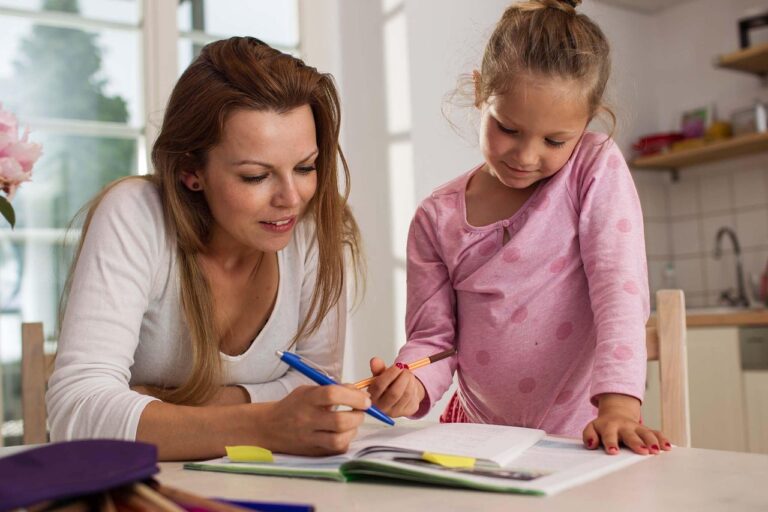
It’s 5.40pm, the reading record is still blank, and someone at the table is crying (it may not be the child). If this scene is familiar, you are not doing anything wrong, and you are not alone — homework is one of the most reliably contentious parts of family life with school-age children, in every kind of household, at every level of academic confidence. The good news is that the research on homework is more useful, and more forgiving, than either “homework is essential” or “homework is pointless” camps tend to admit. Understanding what the evidence actually shows — and where it doesn’t show much at all — makes it easier to stop treating every difficult evening as a verdict on your parenting.

What the evidence actually says about homework

The most-cited UK evidence on homework comes from the Education Endowment Foundation (EEF), a charity that reviews education research and summarises it as “months of additional progress” compared with pupils who didn’t get the intervention. Homework, overall, comes out as a positive but genuinely mixed picture — and the average hides an important age split that a lot of homework arguments (both the family kind and the online kind) skip over.

According to the EEF’s Teaching and Learning Toolkit, homework at secondary level is associated with a meaningfully larger effect — in the region of five months’ additional progress — while homework set in primary school shows a much smaller effect, closer to two months. The EEF rates the underlying evidence as moderate: reasonably substantial, but not the strongest tier of evidence it reviews, and full of caveats about how homework is designed rather than simply whether it exists.

That caveat matters more than the headline number. The EEF is explicit that the quality of the task — how cognitively demanding it is, whether it involves genuine retrieval practice, and how directly it connects to what was just taught in class — appears to matter far more than the quantity of homework set. Some of the studies with the strongest results involved short, focused tasks set only a couple of times a week in a given subject, not nightly worksheets. There’s also evidence that impact can plateau or even worsen as the time spent on homework increases past a sensible point — more hours does not reliably mean more learning. And homework that’s bolted on with no clear link to that day’s lesson, marked with no feedback, tends to show much weaker effects than homework that’s treated as a genuine extension of classroom learning.

Put plainly: for a primary-age child, the evidence for homework’s academic payoff is real but modest, and a missed or rushed reading log is not derailing their education. For a secondary-age pupil, the case for homework — done well — is stronger, but “done well” is carrying a lot of weight in that sentence. A pile of repetitive, disconnected worksheets doesn’t automatically become effective just because a teenager, rather than a seven-year-old, is the one resenting it.

Why homework so often becomes a battleground

If homework’s academic case is real but bounded, why does it generate such disproportionate conflict? A few things are usually going on at once, and none of them are about your child being difficult or you being insufficiently firm.

First, timing works against everyone. Homework typically lands at the point in the day when a child (and often the adult supervising them) has the least self-regulation left. School already asks children to sit still, concentrate, manage frustration and follow instructions for six-plus hours; homework then asks for another round of exactly that, right when the tank is closest to empty. Adults recognise this pattern from their own working days — it’s much easier to be patient and focused at 9am than at 6pm.

Second, the relationship changes. At school, a teacher holds a certain kind of authority and a certain kind of emotional distance; getting something wrong in front of a teacher doesn’t carry the same weight as getting it wrong in front of a parent. At home, homework runs through the parent-child bond, which is loaded with love, worry, and — if we’re honest — some of our own hopes and anxieties about how our child is doing. That’s part of why a homework disagreement can escalate so much faster than the same disagreement would with a teaching assistant.

Third, there’s often a genuine mismatch between what’s being asked and what a parent can actually deliver. Methods change — the way long multiplication or phonics is taught today may not be the way you were taught it — and a well-meaning parent “helping” with the family’s own method can genuinely confuse a child, or leave both of you convinced the other is wrong. Research on parenting and homework backs this up: when parents feel anxious about their child falling behind, they tend to become more directive and controlling in the moment, which tends to increase resistance and lower the child’s own motivation rather than settle things down. A 2024 study on parental structure and homework anxiety in primary-age children found that structure — predictable routines and calm boundaries — reduced anxiety and supported motivation, while chaos in the home environment tended to do the opposite, regardless of how much time parents were putting in.

It’s also worth saying plainly, because it tends to relieve rather than add guilt: research reviewing decades of studies on parental involvement in homework has generally found that heavy, hands-on, correcting-every-line involvement doesn’t reliably raise grades, and can chip away at a child’s growing independence and confidence in their own ability to work things out. The instinct to lean in and fix it is a loving one. It’s just not, on the evidence, the thing doing the heavy lifting.

Practical ways to lower the temperature

None of this means giving up on homework altogether, or that structure doesn’t matter — quite the opposite. The strategies with the best track record are mostly about reducing the number of decisions and negotiations that happen in the moment, since decision fatigue is a big part of what turns a ten-minute task into a forty-minute row.

Same time, same place, most nights

A consistent slot and a consistent spot — even a modest one, like the kitchen table after a snack rather than straight off the school run — removes one whole layer of nightly negotiation. The predictability itself is doing work here: when “when do we do it” isn’t up for debate every evening, there’s less territory for a bigger argument to start on. It doesn’t need to be the same time every single day if your family’s rhythm doesn’t allow that, but a repeatable pattern — homework happens after tea, before screens, say — gives a child something to anticipate rather than resist.

Break it into chunks, and build in breaks

Long, undivided stretches of homework are hard for most children, and especially hard for children who find sustained attention effortful, including many children with SEN. Splitting a task into smaller visible steps, or using a simple timer for short focused bursts with a deliberate break in between, tends to make the work feel more manageable and less like an endless wall. This isn’t a trick to get more work out of a reluctant child — it’s a genuine accommodation for how attention actually works, and it’s worth using even for children who don’t have a diagnosed additional need.

Listen before you try to fix it

When a child is frustrated, naming what you’re seeing — “this is really annoying you” — before jumping to solve the maths problem tends to defuse things faster than problem-solving first. It sounds slow in the moment, but skipping it usually costs more time overall, because a child who feels unheard will keep escalating until they are heard, one way or another.

Help without taking over

Sit nearby rather than hovering over the page. Ask a question rather than supplying the answer — “what do you think the first step is?” rather than doing the first step for them. Let a few things stay imperfect. A piece of homework that’s slightly wrong but genuinely the child’s own work is more useful to the teacher, and to the child, than one that’s correct because a parent quietly took over.

Praise the effort, not just the right answer

How you respond to a wrong answer sets the tone for the next one. A child who expects a sigh or a correction the moment they get something wrong will start guarding against being wrong at all — which, in practice, often looks like refusing to start, or insisting they “don’t get it” before they’ve properly tried. Noticing the attempt (“you worked through the whole page even though it was tricky”) rather than only the accuracy tends to keep a child willing to have a go, which matters more over a school year than any single correct answer does.

For families who want a lower-friction way to get some structured practice done without the parent needing to know the exact method being taught this term, tools like Learnaroo Hub’s practice resources are built to let a child work at their own pace with feedback built in — which can take some of the “am I teaching this the wrong way” tension out of an evening.

When a note to the teacher beats a fight at the table

Sometimes the right response to a stuck child isn’t more effort, it’s a full stop and a note. If you’ve had a genuine go — using the strategies above, giving it a reasonable amount of time for your child’s age — and it’s still not landing, forcing it through to a “finished” state can actually work against the point of homework. Teachers use homework partly to see what a child can and can’t yet do independently; a page that’s technically complete because a parent supplied the method or the answers gives a misleading picture of where that child actually is.

A short, factual note does the job better than either battling on or quietly abandoning the task: something like “We spent 20 minutes on this and got stuck at question 4 — could you go over long division with her again?” is genuinely useful information for a teacher, not an admission of failure. Most teachers would rather have that note than a suspiciously perfect page, or a page with tear stains on it.

When it’s the load itself, not one bad night

One difficult evening is normal. A pattern is worth raising with the school. It’s worth getting in touch if homework is regularly taking far longer than it reasonably should for your child’s age and stage, if instructions are consistently unclear or the work is genuinely inaccessible to your child even with support, or if it’s repeatedly costing sleep, confidence, or family peace rather than the occasional bad night.

Before you raise it, a short written record helps enormously — a rough note of what’s been set and how long it actually took over a week or two turns a vague impression (“homework is a nightmare at the moment”) into something concrete a teacher can actually act on. Start with the class teacher or form tutor, since they set the work and can adjust it fastest; if your child has an additional need, the SENCO is often the better first port of call, since reasonable adjustments to homework are a normal and expected part of SEN support, not a special favour. If a first conversation doesn’t shift anything, a head of year is a reasonable next step for older pupils.

You’re not being difficult by raising it, and you don’t need to arrive with a complaint — a genuine question (“is 45 minutes normal for this, because it’s taking closer to 90 most nights”) is exactly the kind of thing schools want to hear before a small mismatch turns into a child who dreads school itself. Teachers generally can’t see how homework is landing at home; you’re often the only person with that information, which makes you the right person to share it.

It’s worth knowing, too, that England’s Department for Education dropped its old national homework-time guidance some years ago, which means individual schools now set their own homework policies rather than following one fixed national standard. In practice this means there genuinely isn’t one “correct” amount of homework your child should be doing — schools vary a good deal, and a policy that isn’t working for your particular child is a legitimate thing to query rather than something you have to assume is fixed and non-negotiable.

A rough homework night isn’t a parenting failure

Studies of family homework stress consistently find the same thing: conflict around homework is common, it shows up across income levels and education levels, and it tends to cluster on the evenings when everyone is already tired rather than reflecting anything stable about how well a family is doing overall. If tonight involved raised voices, a torn worksheet, or a child declaring they’re “the worst at maths in the entire world,” that’s a hard evening, not a verdict.

The evidence points somewhere genuinely reassuring: homework’s academic benefit, especially at primary age, is real but modest, which means the stakes of any single session are lower than they feel in the moment. What seems to help most isn’t more hours or more parental correction — it’s calm, predictable structure, tasks broken into a manageable size, permission to stop and write a note when something isn’t working, and knowing when a pattern is worth a conversation with school rather than another week of gritting your teeth. Reset tomorrow. The relationship carries far more weight, over time, than any single spelling test.

There’s a particular kind of tired that comes from a Sunday evening spent triple-marking thirty exercise books, writing a comment, leaving space for a pupil response, then writing a second comment underneath their response, in a different colour pen, because that’s what the policy says. If you’ve done it, you’ll know it rarely felt like the thing that was actually going to move a Year 8 class forward in fractions or a Year 10 group forward in their essay structure. It felt like proof. Proof for someone else that you’d done your job.

That feeling wasn’t imagined, and it wasn’t just you being inefficient. It was, for a long stretch of the last fifteen years, genuinely what a lot of schools expected, and it grew from a fairly thin evidence base. Here’s what the research actually says works, where deep and triple marking came from, and how to give feedback that helps pupils improve without quietly wrecking your evenings.

How triple marking became “what good teachers do”

Deep marking, triple marking, dialogic marking, the purple pen of progress: different schools gave it different names, but the shape was similar. A teacher marks the work in detail, often with a written comment against a success criterion. The pupil responds, sometimes correcting an error, sometimes answering a question the teacher has posed. The teacher then marks the response too, closing what got called the “feedback loop.”

None of this was ever a national requirement. But through the early 2010s, a mix of pressures pushed it from “something a few outstanding lessons did well” into “what every book scrutiny expected to see.” Senior leaders under pressure to demonstrate progress to inspectors pointed to visible, dated, colour-coded evidence in books as the easiest thing to show a visitor in thirty seconds. Some multi-academy trusts wrote it into whole-school policy as a way of standardising practice across dozens of schools at once. Individual examples of thorough marking, praised in specific lesson observations, got generalised into “this is what all marking should look like, in every subject, every week.” Once a few schools were doing it and being held up as exemplars, the practice spread through book scrutinies, learning walks and mock inspections, largely detached from any evidence that it actually helped pupils learn more than simpler approaches did.

By 2015, the government’s own workload surveys were showing that marking was one of the biggest single drivers of teachers’ unmanageable hours, and headteachers and unions were both raising it as a retention issue. In response, the Department for Education set up the Independent Teacher Workload Review Group, chaired by Dawn Copping, specifically to look at marking. Its 2016 report, Eliminating unnecessary workload around marking, is blunt about what it found: extensive, deep, or triple marking had little to no evidence behind it as a driver of pupil progress, and in many schools it had become, in the group’s words, a “time-wasting burden for teachers that has to stop.”

The report is also direct about where responsibility sat. It found that heavy marking regimes were frequently being driven not by pupils’ learning needs but by a wish to satisfy “other, mainly adult, audiences” — senior leaders, governors, inspectors — rather than to move a pupil’s understanding on. Crucially, the report traced this back to a misreading of what Ofsted actually required. Ofsted’s own position, restated clearly in the review, is that inspectors do not expect to see any specific frequency, type or volume of marking; how work is checked and responded to is for the school to decide through its own assessment policy, and inspectors are meant to judge only whether that policy is being followed, not whether it matches some unwritten gold standard of purple-penned dialogue.

That distinction matters enormously, because it means a great deal of the marking load teachers carried, and in some schools still carry, was never actually imposed from outside. It was a defensive practice, schools protecting themselves against an inspection expectation that didn’t exist in the form everyone assumed it did.

What the evidence says actually helps pupils improve

If triple marking wasn’t the answer, what is? The most useful single source here is the Education Endowment Foundation’s guidance report, Teacher Feedback to Improve Pupil Learning, published in 2021 after a systematic review of the international evidence combined with input from practising teachers and school leaders. It’s worth reading in full if you get the chance, because it deliberately avoids prescribing a single method, and instead sets out principles that hold regardless of whether the feedback ends up written, verbal, whole-class or one-to-one.

The report’s core message is that feedback only works when it sits on top of good teaching, not instead of it. Its recommendations, in broad terms, are:

  • Lay the foundations for effective feedback through high-quality initial instruction and careful formative assessment, so you actually know what a pupil has and hasn’t understood before you comment on it.
  • Deliver appropriately timed feedback that focuses on moving learning forward, rather than simply flagging what went wrong.
  • Plan for how pupils will receive and act on feedback, because feedback that nobody reads, understands or has time to apply doesn’t do anything.
  • Carefully consider how to give written feedback, choosing methods that are proportionate to what they add.
  • Carefully consider how to give purposeful verbal feedback, which the evidence treats as equally legitimate to written feedback, not a lesser substitute for it.
  • Design a school feedback policy that supports and exemplifies these principles, while leaving decisions about specific methods and timing to teachers’ own professional judgement.

Two things stand out from that list. First, specificity matters more than volume: feedback that tells a pupil exactly what to do next, tied to a clear learning goal, consistently outperforms generic praise or generic correction, however much of it there is. Second, the EEF is explicit that a policy should never mandate a single method of feedback delivery across every subject and every lesson, because what works for correcting a maths calculation is not the same as what works for developing an extended piece of historical writing.

It’s also worth knowing what feedback can achieve when it’s done well. The EEF’s wider Teaching and Learning Toolkit, which reviews evidence across dozens of classroom strategies, rates feedback as one of the highest-impact approaches available to teachers, associated with an average of around six additional months’ progress for pupils compared with those who don’t receive it, and at very low cost. That’s a genuinely strong effect. The catch, which the guidance report spends most of its length unpacking, is that the size of that effect depends entirely on the quality and specificity of the feedback, not on how many hours were spent producing it.

Whole-class feedback: the lower-workload alternative with evidence behind it

The practice that’s grown fastest in schools trying to follow both the DfE workload report and the EEF guidance is whole-class feedback, sometimes called WCF. Instead of writing an individual comment in every book, the teacher reads through a set of work, notes the common errors, misconceptions and standout examples of good practice on a single sheet or slide, and then delivers that feedback to the whole class at the start of the next lesson. Pupils then respond directly in their books: correcting a specific error, attempting a follow-up question, or redrafting a section, guided by what’s been shared.

Done well, this does several things that individual deep marking often doesn’t. It lets a teacher read a full set of books once, at a reasonable pace, rather than writing bespoke commentary thirty times over. It means every pupil gets feedback on the actual patterns in their own work, because the teacher has genuinely read it, rather than a rotating set of generic stock phrases. And because the feedback is delivered and then acted on in lesson time, pupils get a structured chance to do something with it immediately, which is exactly the “plan for how pupils receive and use feedback” principle the EEF guidance emphasises. Several secondary schools that have documented their move to whole-class feedback report a substantial cut in weekly marking time, without a corresponding drop in the quality of what pupils actually receive, and in some cases with clearer, more actionable comments than they were managing under a triple-marking regime.

None of this means whole-class feedback is automatically better in every context. A one-word spelling correction on a piece of extended writing might genuinely need an individual comment; a common misconception about equivalent fractions across an entire class is exactly what whole-class feedback is built for. The point isn’t to replace one rigid rule with another. It’s to match the method to what will actually help pupils improve, and to stop assuming that “individual and lengthy” automatically means “more effective.”

Verbal feedback has a real place, not a lesser one

Verbal feedback sometimes gets treated in school policies as the poor relation of written comments, something you do when you haven’t had time to “properly” mark. The evidence doesn’t support that hierarchy. Live, in-the-moment feedback, given while you’re circulating during independent work, has a real advantage that no written comment can match: it arrives while the pupil is still doing the task, which means they can act on it immediately rather than three days later when the exercise book comes back and the thinking behind their original answer has gone cold.

The EEF guidance treats verbal feedback as sitting on exactly the same footing as written feedback, subject to the same underlying principles. That means it needs to be specific rather than a passing “good work,” it needs to give the pupil something concrete to do next, and ideally it needs some form of record, even a quick tick, initial or annotation in the book, so there’s a trace that it happened and what it covered, both for the pupil’s own reference and for anyone checking books later. A quiet word to a pupil that says exactly what to change in their next paragraph, followed by thirty seconds watching them make that change, can do more for their learning than a lengthy written comment they skim and forget. What matters is the same thing that matters for written feedback: is it specific, is it timely, and does the pupil actually get a chance to use it.

Why more marking doesn’t equal more learning

It’s worth sitting with why the “more marking, more progress” assumption took hold, because the logic behind it feels intuitive even once you know the evidence doesn’t back it up. Marking is visible. It produces a physical artefact — a book full of comments — that can be shown to a line manager, a governor, a parent at parents’ evening. Progress in a pupil’s actual understanding is much harder to see directly, so schools reached for the thing they could see instead, and treated it as a proxy.

But a proxy is not the same as the thing itself, and the 2016 DfE review was explicit that quantity and quality had been conflated. Spending longer on a comment doesn’t make it more useful to the pupil reading it; if anything, very long comments are more likely to bury the one thing a pupil actually needs to act on under several things that don’t matter as much. There’s also a workload economics problem specific to deep marking: if the teacher is doing substantially more cognitive work on a piece than the pupil originally put into it, the incentives get skewed. Pupils learn that mistakes get quietly fixed for them, or that the “real” work happens in the second, teacher-guided pass, which can undercut the very independence and resilience that good feedback is supposed to build.

None of this is an argument for marking less carefully. It’s an argument for marking differently: reading pupils’ work closely enough to spot the pattern that matters, saying that clearly, and then getting out of the way so pupils have to do the thinking themselves. That’s harder to standardise into a tick-box policy than “write a comment in green pen every lesson,” which is probably part of why it took a national workload crisis to shift practice at scale.

Following your school’s marking policy without the guilt

Most schools have moved a long way from triple marking since 2016, but plenty of teachers still carry some residual guilt about not doing “enough,” particularly if they trained during the deep-marking years or moved from a school where it was still the norm. A few practical ways to reconcile a sensible policy with a clear conscience:

  • Read your actual policy, not the version in your head. Many marking policies were rewritten after 2016 to explicitly allow whole-class feedback, verbal feedback and simple codes, but the memory of the old expectations lingers longer than the policy itself. Check what’s actually written down before assuming you owe more.
  • Use a consistent shorthand for routine errors. A shared set of codes for spelling, punctuation or a recurring misconception lets pupils correct their own work with your guidance, which is often more useful for their learning than you writing the correction out in full.
  • Batch your close reading, then deliver feedback live. Skim a set of books to identify the two or three things worth addressing, then spend the follow-up lesson on those points with the whole class, rather than writing the same comment thirty separate times.
  • Keep a light evidence trail for verbal feedback. A quick initial, tick or one-line note in the margin is usually enough to show feedback happened and roughly what it covered, without needing a full written commentary to accompany it.
  • Push back, calmly, with the evidence. If a line manager or book scrutiny asks for something beyond what your policy requires, both the EEF guidance and the DfE workload review are freely available, citable documents. It’s entirely reasonable to reference them in a conversation about what’s proportionate.
  • Protect the time you save for the feedback that actually needs it. Whole-class and verbal feedback should free up time for the pieces of work — the mock exam, the extended essay, the piece going towards a moderated assessment — where detailed individual comment genuinely earns its keep.

One practical drag on all of this is how long it takes to create fresh checking material in the first place, whether that’s a quick low-stakes quiz to establish what’s actually gone in before you plan your next lesson, or a set of retrieval questions to structure a whole-class feedback session around. Having a ready-made bank of curriculum-aligned quizzes and checks, like the ones built into Learnaroo Hub, can take that particular piece of the workload off your plate, leaving more of your time for the feedback conversation itself rather than the business of assembling questions to have that conversation about.

The uncomfortable truth about the deep-marking years is that a huge amount of good, well-intentioned teacher time went into something the evidence never really supported, largely because it was easier to point at than to argue against. The upside is that the correction is now well established, evidenced from two directions at once: a government workload review that named the problem plainly, and an EEF guidance report that sets out what to do instead. You don’t need to choose between helping pupils improve and protecting your evenings. The evidence suggests that, done well, the first genuinely makes the second easier, not harder.

Say “remote learning” in a staffroom and watch the room’s mood shift. For most teachers it means 2021: badly lit laptop screens, muted mics, a Year 8 boy’s cat walking across the keyboard mid-explanation, and the slow realisation that shouting “can everyone see my screen?” into the void was now a permanent part of the job. It’s tempting to file the whole thing under “things we never have to do again.”

That would be a mistake, and not just a sentimental one. Strip away the emergency conditions of a national lockdown and there’s a smaller, more useful set of remote and blended techniques that still solve real problems: the pupil who’s off school for eight weeks with a broken leg, the maths class that never has enough lesson time for both new content and practice, the Year 11 group who need to revisit trigonometry at 9pm the night before a mock. The evidence base built up during and after the pandemic — mainly the Education Endowment Foundation’s rapid evidence assessment and the Department for Education’s ongoing guidance — is actually quite specific about what worked, what didn’t, and where the limits are. Worth revisiting with a clearer head.

What the evidence actually found

In April 2020, the EEF published a rapid evidence assessment on remote learning, drawing on around 60 existing systematic reviews and meta-analyses rather than waiting to generate new pandemic-specific data (there wasn’t time). It’s held up well as a reference point precisely because it wasn’t written in a panic — it was a synthesis of what research already showed about learning outside the classroom, applied to the situation schools were suddenly in.

A few findings are worth pulling out because they cut against what a lot of us assumed at the time.

Teaching quality mattered more than delivery method. The EEF’s conclusion was blunt: how you deliver a lesson matters far less than whether the core elements of good teaching are present — clear explanations that build on what pupils already know, well-designed scaffolding, and feedback pupils can act on. A brilliantly explained concept on a recorded video beats a rushed, unstructured live lesson every time, and vice versa. The medium isn’t the thing to obsess over.

Live lessons weren’t the automatic winner they felt like. This one surprised a lot of schools that poured effort into replicating a live timetable online. The EEF’s own follow-up commentary on this is worth quoting directly: schools “should not necessarily assume that live lessons are intrinsically better than pre-recorded alternatives,” because live delivery makes it genuinely hard to build in real interaction and flexibility, and feedback can end up worse than a well-designed sequence of a recorded segment followed by a task and a proper check for understanding. The evidence on live-versus-recorded was mixed, not a clean win for either — and the EEF’s practical suggestion was that a mix of both, used deliberately, tends to capture the benefits of each rather than forcing everything through one format.

Technology access was the single biggest determinant of whether any of this worked at all. Every other finding is somewhat academic if a pupil can’t get online reliably. The review flagged access to technology — devices, connectivity, a workable space to use them — as the precondition for everything else, and specifically called out disadvantaged pupils as most likely to be locked out.

Peer interaction still mattered, even at a distance. Structured opportunities for pupils to interact — peer marking, peer feedback, live discussion slots — supported motivation and helped pupils get unstuck. Remote learning that isolated pupils entirely from each other tended to lose them faster.

Independent learning skills can’t be assumed. A recurring theme was that remote approaches only work if pupils can regulate their own learning: start a task without someone standing over them, notice when they’re stuck, ask for help. Younger pupils and pupils with SEND typically need this taught and scaffolded explicitly rather than assumed as a given, which is exactly why remote learning hit some year groups far harder than others.

Put together, the picture isn’t “remote learning doesn’t work” or “remote learning works fine.” It’s closer to: remote learning is a delivery mechanism, and it inherits all the strengths and weaknesses of whatever teaching gets poured into it, minus a fair amount of the structure, social contact and easy monitoring a classroom gives you for free.

Where blended and remote approaches still earn their keep

The pupil who’s off long-term

This is the clearest current use case, and it’s the one the Department for Education has actually written guidance on. The DfE’s Providing Remote Education guidance for schools (first published in 2022, last updated August 2024) is explicit that remote education is a last resort, for pupils who are well enough to learn but unable to attend in person — the guidance specifically mentions short-term infectious illness, recovery from an operation, or recovery from an injury. It also allows for remote provision on a case-by-case basis as part of a structured reintegration plan for pupils with SEND or mental health needs who are working back up to full attendance.

Two things in that guidance are worth teachers actually reading rather than assuming. First, it’s framed around short-term absence, not an alternative to attendance — the DfE is clear that remote education should never be treated as equivalent to being in school. Second, it puts responsibility on schools to check what a family can actually manage before setting expectations: auditing device and internet access, thinking about the home study environment, and not creating unreasonable workload for either staff or families. A pupil off for six weeks with glandular fever doesn’t need a recreated version of their full timetable delivered live; they need a proportionate, well-sequenced set of core content they can work through, with a clear point of contact for questions. The DfE also points schools toward ready-made content — Oak National Academy is the example it names — rather than expecting every teacher to build a parallel curriculum from scratch on top of their normal workload.

Flipped-classroom homework

The flipped model — pupils watch a short explainer covering new content at home, then use lesson time for practice, application and the bits that actually need a teacher in the room — has aged well precisely because it matches the EEF’s finding about live versus recorded delivery. The straightforward explanation of a new method (how to balance an equation, how to structure a topic sentence, the steps of a titration) doesn’t need a teacher live in the room; it needs to be clear, well-sequenced, and rewatchable. What does need a teacher in the room is watching pupils apply it, catching the misconception in real time, and adjusting on the spot — which is exactly the kind of live, responsive teaching that’s hardest to replicate on a screen.

It only works, though, if pupils actually watch the thing. Build in a very short accountability check — three questions, submitted before the lesson — so you know who engaged and who didn’t, and plan the first ten minutes of the lesson to work for both groups.

Revision resources

This is the least controversial use of recorded content and arguably the best return on the time it takes to make it. A bank of short, focused clips — one method, one concept, five minutes — lets pupils revisit exactly the thing they’re stuck on, at the point they’re stuck on it, rather than waiting for the next lesson or flicking through an exercise book looking for the page. It’s self-paced by design, which sidesteps the independent-learning problem the EEF flagged, because pupils are choosing to use it to solve a specific problem rather than being expected to sustain a whole lesson’s worth of attention alone. If your department is building a shared library like this, it’s worth keeping it somewhere pupils and parents can find without you re-explaining the same method over email every March — a shared home-learning space like Learnaroo Hub is one way to do that without adding to your own admin.

The access gap hasn’t closed — it’s just less visible

It’s easy to assume the digital divide was a 2020 problem that’s since been solved by three years of everyone buying more devices. Ofcom’s data doesn’t support that. In March 2020, 11% of UK homes had no internet access at all; by March 2021 that had fallen to 6% — still around 1.5 million homes offline. Exclusion wasn’t evenly spread: households aged 65+ had the highest rate at 18%, and lower-income and financially vulnerable households were also disproportionately affected. Separately, roughly a quarter of vulnerable children faced difficulty accessing a device for remote learning during lockdown — not no access at all, necessarily, but not reliable access either: a shared laptop with three siblings and a working parent also needing it isn’t the same as having one.

The overall improvement is real, but it flatters the picture. A household can be “connected” and still be a phone with a data cap, a single ageing laptop split between children, or a signal that drops every time it rains. None of that shows up in a headline connectivity percentage, and none of it makes a two-page written homework task, sent home assuming a printer and a quiet desk, a safe assumption anymore than it was in 2021. Any teacher setting remote or blended work now is still setting it into that gap, even if it’s narrower and less visible than it used to be. The safest default is to check rather than assume — a quick, non-judgemental audit of what a class actually has at home before you build a unit around them having it.

Recording an explainer video pupils will actually watch

If flipped homework or a revision library is genuinely useful for your subject, the return on a well-made short video is high and the barrier to making one is lower than it feels. A few things that actually make a difference:

  • Keep it short. Four to six minutes for one clear idea. A twenty-minute recorded lesson gets abandoned at minute six; a five-minute video on “solving two-step equations” gets watched and rewatched.
  • Plan the structure before you press record. You don’t need a script, but you do need to know your three or four points in order. Rambling into a recording wastes your evening and your pupils’ attention.
  • Prioritise audio over video. Pupils will forgive a wobbly camera or a plain background. They won’t forgive audio they have to strain to hear. A £20 clip-on mic does more for watchability than any amount of lighting.
  • Show your working, not your face. For anything procedural — a maths method, an experiment, an essay structure — a screen recording with your voice over the worked example beats a talking head. It’s the clear explanation and scaffolding the EEF review flagged as the thing that actually matters, not the production value.
  • Build in a pause. Stop, set a step for pupils to try themselves, then reveal the answer. It’s a small thing, but it’s the difference between passive viewing and something closer to the interaction a live lesson gives you for free.
  • Caption it. For SEN pupils, EAL pupils, and pupils watching on a bus with the sound off, captions aren’t a nice-to-have. Most recording and hosting tools now auto-generate them; it takes minutes to check and correct.
  • Don’t chase a perfect take. Pupils are used to imperfect video. A stumble with a laugh and a “let me just say that again” is fine and, if anything, makes it easier to watch. Endless re-recording is not a good use of a Tuesday evening.

Why it can’t replace the classroom for most pupils, most of the time

The DfE’s own guidance is unambiguous on this, and it’s worth having the line to hand for the parent who suggests their child would “just do better at home on the laptop”: remote education should never be treated as equivalent to attending school in person, and it isn’t a substitute for a school’s normal attendance or, separately, its suspension procedures — a suspended pupil must still have work set and marked, but that’s not the same provision as a pupil learning remotely by agreement.

The reasons line up with what the evidence review found. A teacher in the room is doing constant, low-stakes formative assessment — reading the room, spotting the pupil who’s nodded along but clearly hasn’t got it, adjusting the next five minutes in response. That’s very hard to replicate at a distance, live or recorded. Peer interaction, which the EEF found genuinely supported motivation and learning, happens naturally in a classroom and has to be deliberately engineered online, which most schools don’t have the capacity to do well at scale. And there’s a simpler point underneath all of it: school is also where a lot of pupils get seen. A form tutor noticing a change in mood, a TA noticing a pupil hasn’t eaten, a teacher noticing a bruise — that daily in-person contact carries a safeguarding function that no amount of well-designed video content replaces, which is part of why the DfE frames remote provision as a bounded, last-resort exception rather than a parallel option.

None of that makes remote and blended approaches useless — quite the opposite, used in the right place they solve real problems well. But the evidence points the same direction from every angle: they’re a supplement for specific situations, not a substitute for the everyday work of teaching a room full of pupils who can see you, ask you something at the moment they’re confused, and be noticed if something’s wrong.

Understanding what “practical support” actually means

If mornings in your house involve at least one lost shoe, a half-eaten breakfast and a countdown that started too late, you are not doing anything wrong. NICE guidance, as summarised by NHS Digital, estimates that around 5% of children and young people have ADHD, which means most primary and secondary schools have several pupils living with it, whether or not they have a diagnosis yet. Some children are identified early. Some, particularly girls, are missed for longer, because the NHS notes that ADHD “is thought to be recognised less often in girls than boys,” who more often show the quieter, inattentive pattern rather than obvious hyperactivity. Some families are still in the middle of an assessment process that, as the NHS is upfront about, can mean waiting “several months or years” for a specialist appointment.

This article will not tell you anything about diagnosis or medication. Those conversations belong with your GP, paediatrician or specialist team, and nobody else. What follows instead is a set of practical, everyday strategies for home life: the kind of small, repeatable changes that tend to make daily life calmer for a child with ADHD, whether diagnosed or suspected, at any age from early primary through to secondary school.

Start with structure: visual routines that do the remembering

A child with ADHD often knows the rules perfectly well. What’s harder is holding those rules in mind at the exact moment they’re needed. That’s the gap a visual routine closes: it puts the information outside the child’s head, somewhere they can see it, so nobody has to rely on working memory alone in the middle of a rushed morning.

For younger children, this might be a photo-based chart on the fridge or bedroom door: get dressed, eat breakfast, brush teeth, shoes on, bag packed. For older children and teenagers, it’s more likely to be a written checklist, a whiteboard, or reminders on a phone. The children’s mental health charity Young Minds specifically points parents toward checklists, visual timetables, sticky-note reminders and phone alarms as tools that help children manage ADHD day to day.

The exact format matters less than two underlying principles: the same sequence happens in roughly the same order most days, and the child can check their own progress without asking an adult. Ticking something off or crossing an item off a list gives a small, visible sense of completion that a purely verbal reminder can’t match. It’s worth building in flexibility too. A routine that falls apart the moment plans change can create more stress than it solves, so treat it as scaffolding rather than a rulebook.

Give warning before transitions, not surprises

Many of the moments that spiral into a meltdown or a standoff aren’t really about the activity itself. They’re about the sudden stop. A child deeply absorbed in a game, a screen or even a piece of homework can experience an abrupt “right, that’s it now” as genuinely jarring rather than wilful defiance.

Warning a transition in advance gives the brain time to disengage. “Five more minutes, then we’re getting shoes on,” said clearly and followed by an actual timer rather than a vague estimate, works far better than one instruction delivered at the point of change. Young Minds’ guidance points to the same tools here: phone alarms and visual timers, used not just for organising tasks but for signalling that a change is coming.

Some families find a physical or visual cue helps alongside the verbal warning: a sand timer for a young child, a countdown on a tablet, or a simple card held up a few minutes before a switch happens. The aim is predictability rather than control. Your child should be able to answer “what happens after this?” without having to ask.

Break tasks into smaller steps

NHS guidance on managing ADHD in children recommends breaking tasks into 15 to 20 minute chunks, alongside clear instructions and reward charts, rather than presenting a task as one large, open-ended block. “Tidy your room” is vague and overwhelming. “Put the books on the shelf” is a single, finishable action.

This matters because a task that feels endless is often harder for an ADHD brain to start than to finish. Breaking a piece of homework, a chore or a getting-ready routine into small, named steps, written down or spoken one at a time, reduces the mental load of working out what to do next. That’s frequently the actual barrier, more than motivation or effort.

Where possible, let your child see the steps rather than just hear them, so they don’t have to hold the whole sequence in memory while also doing the task. And notice each completed step, not just the finished job. A tick, a reward chart square, or simply “that bit’s done” keeps momentum going instead of saving all the encouragement for the very end.

Movement breaks and sensory considerations

Why movement helps

Occupational therapists who work with children with ADHD often talk about movement breaks in terms of managing arousal levels, essentially how alert or activated a child’s nervous system is. According to GriffinOT, a UK paediatric occupational therapy service, short sensory or movement breaks support self-regulation and help maintain attention, and are particularly useful for children who are “seeking” extra movement, including many children with ADHD.

The type of movement matters. Faster, more vigorous activity such as star jumps, jogging on the spot or trampolining tends to be energising, while slower, rhythmic activity like swinging or stretching tends to be calming. “Heavy work,” pushing, pulling or carrying something with a bit of weight to it, such as a full laundry basket, can help some children feel more organised and settled in their body. GriffinOT is clear that these strategies need to be individualised: what settles one child might over-stimulate another, so it’s worth watching what actually helps yours rather than assuming one approach fits all. Building short, regular movement breaks into homework time, or the run-up to a transition like bedtime, tends to work better than waiting until a child is already dysregulated and trying to calm them down from there.

The sensory environment at home

It’s also worth paying attention to the sensory environment your child is working or relaxing in: noise, lighting, clothing textures and general visual clutter can all affect how settled a child feels. This doesn’t require overhauling your whole house. It might mean noticing that homework goes better with a fidget toy in hand, that a scratchy school jumper is a genuine daily battle worth solving, or that a chaotic, brightly lit kitchen table is harder to concentrate at than a quieter corner. If sensory issues seem to be a significant, ongoing barrier rather than an occasional preference, that’s worth raising with your GP or school SENCo, who may be able to involve an occupational therapist for a more tailored look.

Homework strategies built for an ADHD brain

Homework is often where ADHD-related friction shows up most visibly, partly because it asks a tired child to do effortful, unstimulating work after a full day of concentrating and self-managing at school. A few adjustments can make a real difference:

  • Break the work into the same 15 to 20 minute chunks the NHS recommends for tasks generally, with a short movement or sensory break in between rather than one long uninterrupted sitting.
  • Use a visible checklist of what needs doing, so your child can see progress rather than facing an open-ended pile of “homework.”
  • Keep the same time and place where possible, not because ADHD requires rigid rules, but because deciding when and where to start is itself a task, and removing that decision saves energy for the actual work.
  • Reduce competing sensory input: a cleared table, the TV off, a specific pencil case rather than a hunt for a working pen, so your child isn’t expected to filter out distraction through willpower alone.
  • Praise effort and the completion of small steps, not only the finished piece, in line with the positive-reinforcement approach Young Minds recommends to parents of children with ADHD.

If homework is consistently taking far longer than it reasonably should, or is causing daily distress, it’s worth raising this directly with school. The amount and type of homework set can often be adjusted as part of the support already available.

Talking to school: SENCo, one-page profiles and the graduated approach

Home strategies work better when school is pulling in the same direction. NHS guidance points parents who are concerned about ADHD toward their child’s teacher first, who “will usually make a referral to the school’s special educational needs co-ordinator (SENCO),” a role that exists in every school and is worth getting to know early, whether or not your child has a formal diagnosis.

Schools in England work within the SEND Code of Practice, statutory guidance published by the Department for Education setting out how schools, local authorities and other bodies should identify and support children with special educational needs. In practice, this often takes the shape of what’s commonly called a graduated approach, summarised as assess, plan, do, review: the class or subject teacher and SENCo work with you to identify what support your child needs, put it in place, and check regularly whether it’s working, with parents kept informed at each stage.

Many schools also use a one-page profile: a short, accessible summary of a child’s strengths, what they find difficult and what helps, meant to be quickly readable by any adult working with them, from a supply teacher to a swimming instructor. It’s meant to be built with you, and with your child where appropriate, rather than written about them from a distance. It’s worth asking whether your child’s school already has one in place, and asking to contribute to it if not.

A few habits make this relationship easier to sustain: keep a simple written or digital record of what’s been agreed with school and when it’s due for review, ask specifically what support is being tried and tracked rather than just what behaviour is being logged, and don’t assume that the absence of a formal diagnosis rules out help. Schools can and often do put support in place for children who are still going through assessment.

Sibling dynamics: keeping the whole family in the picture

ADHD in one child inevitably shapes life for everyone else in the house, and it’s easy for that to go unaddressed simply because there’s less time and energy left over by the end of most days. Family Action, a UK charity that supports siblings of children with additional needs, suggests a few concrete ways to keep that relationship healthy:

  • Give siblings a trusted adult to talk to honestly about frustration or embarrassment, even if that’s a grandparent, aunt or uncle rather than you.
  • Let school know about a sibling’s circumstances too, so a child who is late or tired because of a difficult morning at home isn’t blamed for something outside their control.
  • Protect one-to-one time, even a short, regular slot, and try to be at the events that matter to them, arranging cover for their sibling if needed.
  • Explain ADHD to siblings in age-appropriate terms, so confusion doesn’t curdle into resentment.
  • If an older sibling is taking on a significant caring or supervisory role, look into young carers’ support in your area. Siblings in this position may be entitled to a young carer’s needs assessment in their own right.

None of this requires perfect fairness, which isn’t a realistic goal in any family with more than one child. It requires siblings knowing they haven’t been forgotten.

Celebrating strengths, not just managing difficulties

It’s easy for a home built around managing ADHD to end up entirely focused on what goes wrong: the missed instruction, the lost book bag, the meltdown at pickup. Young Minds’ guidance for parents is explicit that noticing and praising the moments when a child listens, completes a task or handles a hard situation well matters just as much as addressing the moments when things go differently, and that highlighting strengths alongside difficulties is part of effective support, not an optional extra.

In practice, that might mean naming specific things you notice: the creativity behind an unconventional solution, the energy your child brings to something they love, the empathy they show a friend, the persistence it takes to keep trying at something that’s genuinely hard for them. Many of the traits that cause friction in a structured classroom, high energy, quick thinking, a strong sense of fairness, the ability to hyperfocus on something they care about, are also real strengths in the right context. Your child benefits from hearing that from you, not only from professionals filling in forms about what needs fixing.

This isn’t about pretending difficult days aren’t difficult. It’s about making sure your child’s overall picture of themselves isn’t built entirely out of correction.

Looking after yourself

Parenting a child with ADHD is genuinely more demanding, day to day, than parenting often is: more repetition, more advocacy, more decisions made under pressure with too little sleep. Young Minds acknowledges directly that this can feel “overwhelming,” and encourages parents to seek support rather than treating exhaustion as something to simply push through.

Practical support does exist. ADDISS, the National Attention Deficit Disorder Information and Support Service, runs a helpline, parent training courses and a network of local support groups specifically for families affected by ADHD. Contact, the charity for families with disabled or additional-needs children, offers a freephone helpline on 0808 808 3555 and a listening service for parents who need to talk something through, alongside closed online groups where families compare notes with others who don’t need ADHD explained to them from scratch.

If you take nothing else from this article, take this: needing support doesn’t mean you’re managing things badly. It means you’re managing something genuinely demanding, and that’s worth having help with.

When to ask for more help

Everything above sits firmly in the category of everyday, practical support. None of it is a substitute for professional advice, and none of it is a way of working out whether your child has ADHD in the first place. The NHS is clear that there’s no single test for ADHD: diagnosis comes from a specialist looking at patterns of behaviour across different settings over time, informed by reports from both home and school.

If you’re concerned your child may have undiagnosed ADHD, the usual first step is a conversation with your GP or your child’s teacher, who can involve the school SENCo and, where appropriate, refer on for specialist assessment. If your child already has a diagnosis and you have questions about medication, side effects or changes to treatment, those questions belong with the prescribing paediatrician, psychiatrist or specialist nurse, not with strategies from an article like this one.

And if you’re looking for structured learning resources to sit alongside the strategies here, Learnaroo Hub’s library includes SEN-aware materials designed with additional needs in mind, which some families use alongside the support already in place at home and school.

The “maths person” myth doesn’t hold up

Most of us have heard someone say it about themselves, maybe even said it ourselves: “I was never a maths person.” It sounds like a simple fact, the way someone might say they’re not a morning person. But it’s worth pausing on, because it isn’t really about ability. It’s about how a subject made you feel.

Researchers at the University of Cambridge’s Centre for Neuroscience in Education looked into this directly, working with more than 2,700 primary and secondary pupils in the UK and Italy for a study funded by the Nuffield Foundation. One of their clearest findings was that most children who experience maths anxiety have normal to high maths ability. The anxiety wasn’t a sign they couldn’t do it. It was usually triggered by things like poor test results or being compared unfavourably to a sibling or classmate, and once that anxious feeling took hold, it started getting in the way of the very performance it was supposedly a response to.

That matters for parents, because it means “my child struggles with maths” and “my child is anxious about maths” are often two different problems wearing the same coat. Confidence and ability get tangled up early, and untangling them is often the single most useful thing you can do at home.

What maths anxiety actually looks like in a child

It rarely announces itself as “I’m anxious about maths.” It tends to show up sideways, and it’s easy to mistake for laziness, distraction, or a sudden dislike of a perfectly nice subject. Look out for:

  • A sudden slump, sigh, or “I can’t do this” the moment a maths book comes out, before they’ve even read the question
  • Getting unusually upset, tearful or angry over a maths task compared with other homework
  • Physical complaints, a sore tummy, feeling sick, at the mention of a times tables practice or test
  • Rushing through answers just to be finished, or the opposite, freezing and staring blankly at a page they’d normally manage
  • Avoidance tactics: needing the toilet, suddenly remembering something urgent, or picking a fight to derail the whole session
  • Comparing themselves harshly to siblings or friends (“Everyone else gets this except me”)

None of this means your child “can’t do maths.” It usually means maths has become linked, somewhere along the way, to a feeling of being watched, judged or timed. Once you can see it as an emotional response rather than an academic one, it changes what kind of help actually works.

Where it comes from, and why your own reaction matters

A 2025 study led by researchers at the University of Bologna, working with Loughborough University and the universities of Trieste and Macerata, followed nearly 130 children over five years, from age three to age eight, tracking their parents’ maths anxiety alongside the children’s developing numeracy skills. Children whose parents reported higher maths anxiety when the child was three had weaker early numeracy skills, and that gap was still visible at age eight. Interestingly, the researchers found no evidence that children directly “caught” their parents’ anxious feelings about maths. The link seemed to run through something more practical: how anxious parents engaged with maths day to day, which shaped how much confident number talk the child was getting at home.

Separate research from Mumsnet and the charity National Numeracy found something similar in how families actually spend their time. On average, parents surveyed spent 46 minutes a week reading with their children at bedtime, against just 23 minutes a week on maths-based activities like number games or homework help. The same research found mothers were less likely than fathers to feel confident supporting maths homework, 69% compared with 83%, often because they worried the methods being taught now were different from what they’d learned at school themselves.

None of this is about blame. It’s genuinely reassuring, in a way: you don’t need to have loved maths at school, and you don’t need to become an expert overnight. What seems to matter more is simply not avoiding it, and not letting your own discomfort become the only maths model your child sees.

What “number sense” actually means

“Number sense” gets used loosely, but there’s a fairly precise idea behind it, and it’s central to how maths is now taught in English primary schools. The National Centre for Excellence in the Teaching of Mathematics (NCETM), which runs the Mastering Number programme used in many Reception, Year 1 and Year 2 classrooms, describes good number sense as being able to:

  • Subitise, recognise small quantities at a glance without counting one by one (seeing five dots on a die and knowing it’s five, not counting each dot)
  • Understand how numbers are composed and decomposed (that 7 is 5 and 2, or 4 and 3, or 6 and 1)
  • Compare quantities (knowing which of two groups is more, without needing to count both fully)
  • See relationships between numbers (that 8 is close to 10, or that doubling 4 gets you most of the way to 9)

This is quite different from simply knowing that “5 + 2 = 7” as a memorised fact. A child with strong number sense can pull that fact apart and rebuild it in different ways, which is exactly what makes later maths, fractions, place value, algebra, manageable rather than a wall of things to memorise.

You can build this at home without any worksheets at all. Dice and dominoes are genuinely useful here: covering a few dots and asking “how many is that, without counting?” is literally subitising practice. Asking “how many ways can you make 10 with your fingers?” is decomposition practice. Comparing two handfuls of pasta and asking which is more, and how do you know, is comparison practice. None of it needs to be labelled as maths to your child. It mostly just needs to happen often, in short bursts, without pressure.

Real everyday maths that doesn’t feel like a worksheet

In the kitchen

Cooking and baking are close to perfect for this because the maths has a real, tasty consequence if it goes wrong. Let your child measure out ingredients on scales and read the numbers themselves. Ask them to halve a recipe that serves four, or double one for a bigger batch, which brings fractions and multiplication into a context they can taste-test. Setting a timer and asking “how many minutes left?” partway through is a live subtraction problem. Even something as simple as sharing out biscuits between family members equally, and dealing with the awkward leftover one, is division and remainders in action.

With money

Handling real money, even small amounts, teaches things a worksheet can’t. Let them pay in a shop and work out the change before the cashier tells them. Give pocket money and help them work out how many weeks of saving get them to something they want. On a supermarket trip, ask which of two similar products is better value, comparing prices per item or per weight is genuinely tricky reasoning that adults often skip over on autopilot.

Measuring, building and getting about

DIY and gardening jobs are full of real measuring: how much paint for this wall, how many tiles for this floor, whether the shelf will actually fit in the gap. On a car or bus journey, working out how many minutes until arrival, or how many miles left, keeps number sense ticking over. Even rearranging furniture and asking whether the sofa will fit through the door is estimation and spatial reasoning, both mathematical skills that rarely get called maths.

Games worth keeping around

Card games, dominoes, darts, and board games that involve counting spaces or keeping score are all doing quiet, repeated number work without any of the pressure of “sit down, we’re doing maths now.” NRICH, the free maths resource site run by the University of Cambridge’s Millennium Mathematics Project, has a whole “Maths at Home” collection of games and activities designed for exactly this, built to be used without needing a teacher in the room. Their “Solving Together” project goes further, offering guidance for parents and children to work through problems side by side rather than one teaching the other.

Times tables: when drilling helps, and when it backfires

Times tables carry a lot of emotional weight in UK primary schools, partly because of the Multiplication Tables Check (MTC), a statutory online assessment all state-funded schools must give to Year 4 pupils, usually in June. It’s worth knowing exactly what it involves, because the reality is less brutal than the reputation: pupils answer 25 questions on-screen, with 6 seconds to answer each and a 3-second pause between questions, covering the 2 to 12 times tables with extra weight given to the trickier 6, 7, 8, 9 and 12 times tables. Crucially, the Department for Education is explicit that there is no pass mark. It’s designed to help teachers see who needs more support, not to sort children into winners and losers.

That six-second window is exactly why blind repetition only gets you so far. The NCETM’s mastery approach, which underpins how maths is taught in most English primary schools, describes fluency as the combination of strong conceptual understanding with rapid, accurate recall, not recall on its own. In practice, that means a child who understands that 7 x 8 is “seven lots of 8” or “double 7 x 4” will cope far better under time pressure than one who has only ever chanted the sequence and loses their place under stress.

So drilling helps when it’s short, frequent and built on understanding: little five-minute bursts in the car, over breakfast, or as a game, once a child already grasps what multiplication means. It backfires when it becomes the main way maths shows up at home, when it turns into a timed test atmosphere every evening, or when a wrong answer gets treated as a failure rather than information. If times tables practice is the thing your child dreads most in the week, that’s worth dialling back before it does more harm to their confidence than good to their recall.

How you talk about mistakes matters more than the answer

The Cambridge/Nuffield research found that maths anxiety in children was often triggered by poor marks and unfavourable comparisons to peers or siblings. That points to something parents have real influence over: the tone around getting things wrong.

It’s worth catching yourself before saying “I was never any good at maths either.” It’s meant to be reassuring, but it quietly hands your child permission to give up in the same way you did. Nicol Winfield-Murray, who developed a parent maths programme profiled by the NCETM, put it plainly: “So many of our children have a belief that they can’t do maths, and because that attitude is often shared by their parents it’s incredibly difficult to overcome.” The same NCETM feature notes that when parents work on their own confidence alongside their child, the effect can be striking, in one programme, 80% of children said their improved confidence in maths came specifically from doing maths together with a parent at home.

A few small shifts in language do a lot of work:

  • Swap “that’s wrong” for “how did you get to that? Let’s look at it together”
  • Swap “you should know this by now” for “this bit’s tricky, lots of people find it tricky”
  • Add “yet” onto struggles: “I can’t do this” becomes “I can’t do this yet”
  • Notice effort and thinking out loud, not just correct answers: “I liked how you tried that a different way”

Mistakes in maths are genuinely useful information, they show you exactly where the misunderstanding sits, far more clearly than a correct answer does. Treating an error as data rather than a verdict is one of the most protective things you can model.

Supporting without doing it for them

It’s tempting, when a child is stuck and frustrated, to just show them how to do it so everyone can move on. But the more useful habit is holding back slightly and asking questions instead of supplying answers. The NCETM’s parent programme trains adults to ask themselves “what would you say to your child here?” before jumping in with the method, which nudges the conversation towards reflection rather than instruction.

Useful questions to keep in your back pocket:

  • “What do you already know that might help here?”
  • “Can you show me using something, counters, coins, your fingers, rather than just numbers on paper?”
  • “Is there another way you could check that?”
  • “What would happen if the numbers were smaller? Would that help you see the pattern?”

If you genuinely don’t know how to help with a method they’ve been taught at school, it’s completely fine to say so. “I don’t know this way, show me how your teacher explained it” hands the explaining role to your child, which is one of the strongest ways to check and cement their own understanding. You’re not required to be the expert in the room.

If maths makes you anxious too

You’re in good company. National Numeracy, a UK charity focused on everyday numeracy, has found that 35% of adults feel anxious about maths, with one in five saying it makes them feel physically sick, and 29% saying they actively avoid anything involving numbers or data. If that’s you, the Loughborough-led research is worth holding onto: it found no evidence that children directly absorb their parents’ anxious feelings about maths. What seems to matter is engagement, not expertise. A parent who says “I find this hard too, let’s work it out together” is giving their child something valuable: proof that struggling with maths and being capable are not opposites.

You don’t need to relearn long division to help your child feel confident. You need to show up for the twenty-three minutes a week, keep your tone steady when a wrong answer appears, and let your child see you treat numbers as something you use rather than something you fear.

Where to find more support

NRICH (nrich.maths.org) offers free, genuinely well-designed maths activities and games for home use, organised by age, with no login or teaching background required. National Numeracy’s family pages have short, practical tips for building number confidence without turning the kitchen table into a classroom. If your child wants extra structured practice alongside all of this, Learnaroo Hub’s library also includes a mix of free and paid maths resources for home use, worth a browse if you want something ready-made to sit alongside the everyday maths you’re already doing.

The goal was never to raise a child who never gets a maths question wrong. It’s to raise one who isn’t afraid to try.

Ready to make learning click?

Create a free account in under a minute. No card required, no ads, ever.

🚀 Start free today Explore the library