EYFS Mathematics — Module 5: 2D shapes
Module 5 of 7 in the EYFS Mathematics (Reception) — Gated Series series — EYFS Maths / shape. Interactive teaching, f…
Early Years (EYFS) Mathematics ⏱ 20m
E-Learning Module
· 20m
FREE
Open resource →
Vocabulary and FactsFree to use
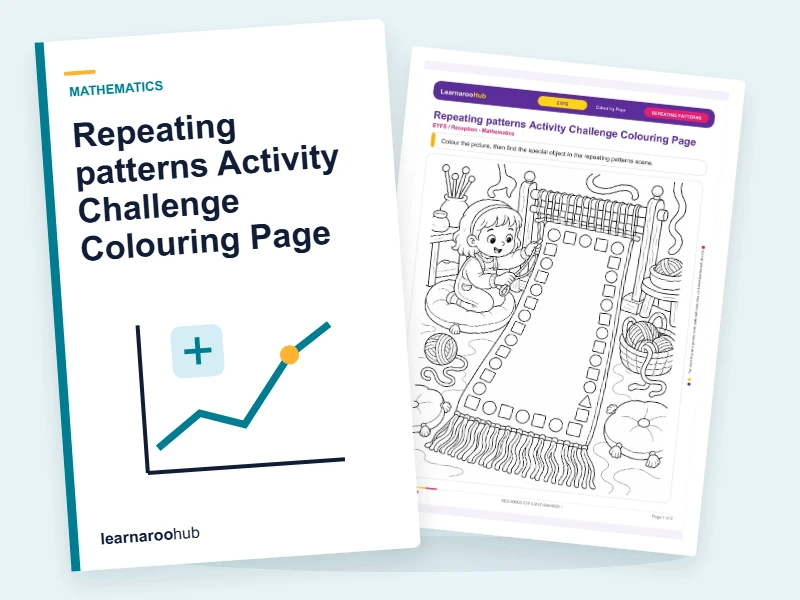
Repeating patterns Vocabulary And Facts Colouring Page
Colour the picture and name three shapes or objects you can see.
Not tracking — create a free account to save your progress.Create free account →
Loading your PDF…
Sign in to mark this as complete and track it on your dashboard.Sign in →
Related modules
EYFS Mathematics — Module 5: 2D shapes
Module 5 of 7 in the EYFS Mathematics (Reception) — Gated Series series — EYFS Maths / shape. Interactive teaching, f…
Early Years (EYFS) Mathematics ⏱ 20m
E-Learning Module
· 20m
FREE
Open resource →
 Where Is It? Position & Direction (EYFS)
A gentle, parent-led Reception (EYFS) maths activity book — position words like on, under, behind and between, direct…
Early Years (EYFS) Mathematics ⏱ 20m
Activity Book
· 20m
FREE
Open resource →
 Adding & taking away — Quiz Game
A fun, interactive quiz game on Adding & taking away. Solo to track progress, or pass-and-play with up to 6 playe…
Early Years (EYFS) Mathematics ⏱ 15m
Quiz
· 15m
FREE
Open resource →
 Shapes All Around (EYFS)
A gentle, parent-led Reception (EYFS) maths activity book exploring flat shapes, solid shapes, shapes all around us, …
Early Years (EYFS) Mathematics ⏱ 60m
Activity Book
· 60m
FREE
Open resource →