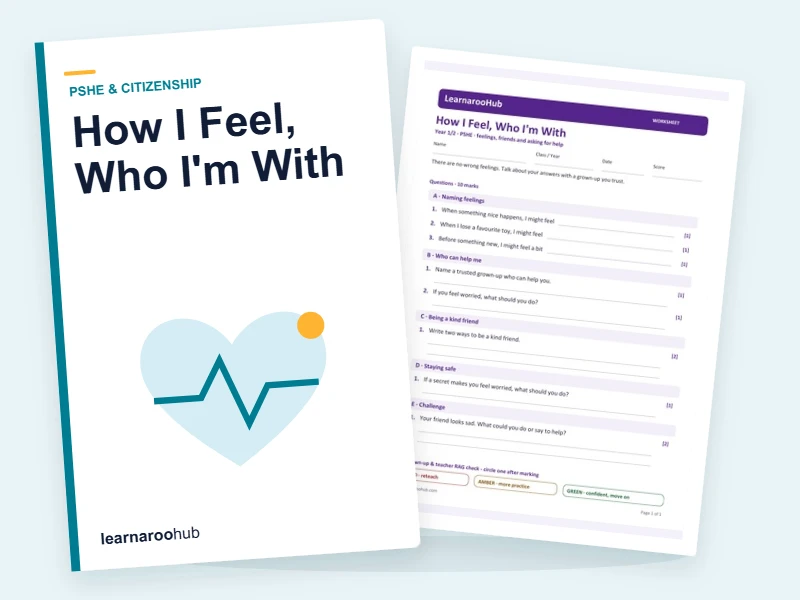
 How I Feel, Who I’m With
One-page KS1 PSHE question sheet: name feelings, identify a trusted grown-up, think of kind actions and ask for help …
Key Stage 1 PSHE & Citizenship ⏱ 15m
Printable / PDF
· 15m
PAID
Open resource →
How I Feel, Who I’m With
One-page KS1 PSHE question sheet: name feelings, identify a trusted grown-up, think of kind actions and ask for help …
Key Stage 1 PSHE & Citizenship ⏱ 15m
Printable / PDF
· 15m
PAID
Open resource →
E-Learning ModulePaid subscription
PSHE at Home: A Guide for Grown-Ups
Prefer not to join? Buy just this resource
One-off price: £1.29
This resource is also included with eligible paid plans.
Buy this resource — £1.29Create a free Learning Locker first; the exact resource and price are confirmed before payment.
Related modules
How I Feel, Who I’m With
One-page KS1 PSHE question sheet: name feelings, identify a trusted grown-up, think of kind actions and ask for help …
Key Stage 1 PSHE & Citizenship ⏱ 15m
Printable / PDF
· 15m
PAID
Open resource →
 Big Feelings, Trusted Grown-Ups
7 slides on naming feelings, what to do when a feeling is too big, asking for help, and the difference between a secr…
Key Stage 1 PSHE & Citizenship ⏱ 10m
E-Learning Module
· 10m
PAID
Open resource →
Big Feelings, Trusted Grown-Ups
7 slides on naming feelings, what to do when a feeling is too big, asking for help, and the difference between a secr…
Key Stage 1 PSHE & Citizenship ⏱ 10m
E-Learning Module
· 10m
PAID
Open resource →
 PSHE Quiz: Kindness, Safety & Healthy Habits
10 questions on feelings, friendships, family diversity, online safety, healthy habits and asking trusted grown-ups f…
Key Stage 1 PSHE & Citizenship ⏱ 20m
Quiz
· 20m
PAID
Open resource →
PSHE Quiz: Kindness, Safety & Healthy Habits
10 questions on feelings, friendships, family diversity, online safety, healthy habits and asking trusted grown-ups f…
Key Stage 1 PSHE & Citizenship ⏱ 20m
Quiz
· 20m
PAID
Open resource →
 PSHE Words: Flashcards
12 flip cards covering feelings vocabulary, friendship words, family words, safety words and healthy-habit words.
Key Stage 1 PSHE & Citizenship ⏱ 15m
Flashcard Deck
· 15m
PAID
Open resource →
PSHE Words: Flashcards
12 flip cards covering feelings vocabulary, friendship words, family words, safety words and healthy-habit words.
Key Stage 1 PSHE & Citizenship ⏱ 15m
Flashcard Deck
· 15m
PAID
Open resource →
 My Wellbeing Book: A Five-Page Journey
A gentle five-page KS1 wellbeing activity book on feelings, friendships, healthy routines and keeping safe, with a fe…
Key Stage 1 PSHE & Citizenship ⏱ 60m
Activity Book
· 60m
PAID
Open resource →
My Wellbeing Book: A Five-Page Journey
A gentle five-page KS1 wellbeing activity book on feelings, friendships, healthy routines and keeping safe, with a fe…
Key Stage 1 PSHE & Citizenship ⏱ 60m
Activity Book
· 60m
PAID
Open resource →
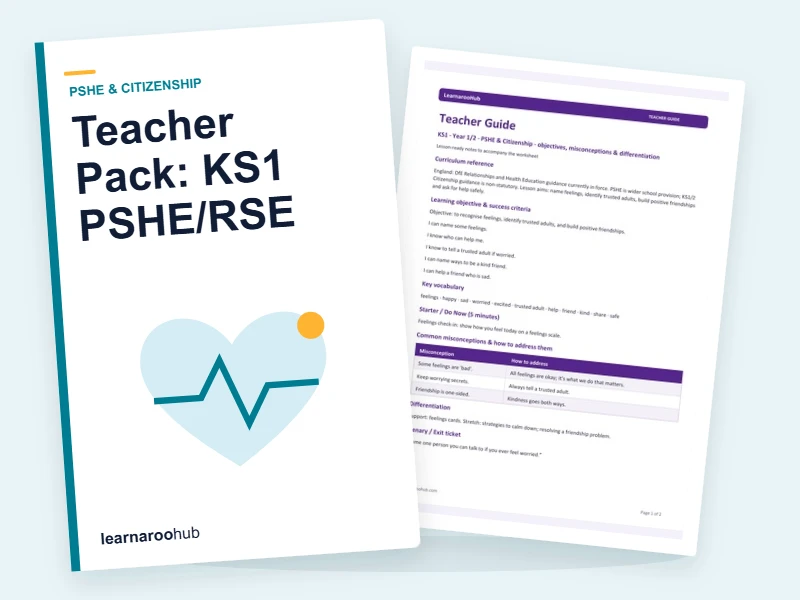 Teacher Pack: KS1 PSHE/RSE
DfE 2020 RSHE mapping, withdrawal rights, safeguarding flow, what KS1 covers (and what it doesn't), and a 6-lesson sc…
Key Stage 1 PSHE & Citizenship ⏱ 30m
Printable / PDF
· 30m
PAID
Open resource →
Teacher Pack: KS1 PSHE/RSE
DfE 2020 RSHE mapping, withdrawal rights, safeguarding flow, what KS1 covers (and what it doesn't), and a 6-lesson sc…
Key Stage 1 PSHE & Citizenship ⏱ 30m
Printable / PDF
· 30m
PAID
Open resource →
