Why Play Is Essential for Learning (Not Just a Break From It)
If you’ve ever felt a flicker of guilt watching your four-year-old spend forty minutes lining up toy cars instead of doing “something educational,” you’re not alone, and you’re also not right to feel guilty. That flicker is worth examining, because it says a lot about how differently most of us were taught to think about learning versus how young children actually learn. For a four-year-old, lining up those cars by colour, then by size, then knocking them all over and starting again, is the educational thing. It’s just not dressed up to look like it.
This is the heart of what’s called play-based learning, and it’s not a soft option or a filler activity for the bits of the day before “real” learning starts. It’s the foundation the entire early years curriculum in England is legally built on, and it’s backed by a genuinely substantial body of developmental research, not just a comforting slogan for tired parents. Understanding what that research actually says, and what different kinds of play are doing for your child’s brain, makes it a lot easier to protect play time without the nagging sense that you’re letting your child fall behind.
What “play-based learning” actually means
Play-based learning isn’t simply “children having fun while adults aren’t teaching them anything.” The more accurate description, drawn from the research base the LEGO Foundation has built up over the past decade, is that meaningful play tends to be child-led, hands-on, and genuinely engaging, often with an adult nearby who’s scaffolding rather than directing. The Foundation’s own research describes it as “purposeful play”: a blend of child-directed exploration, moments where an adult joins in and gently extends what’s happening, and occasional adult-led activity, rather than one or the other in isolation.
What makes this different from just letting a child amuse themselves is what’s happening underneath. When a child invents a game, negotiates its rules with a sibling, changes the rules halfway through, and talks themselves through a problem out loud, they’re doing something close to what researchers call executive function training: testing ideas, holding several pieces of information in mind at once, adjusting when something doesn’t work, and managing their own frustration when it doesn’t. None of that requires a worksheet. It requires time, some loose materials, and a fairly high tolerance from the adults nearby for mess and repetition.
There’s a striking piece of research from the University of Cambridge that captures this well. Dr David Whitebread, whose work is affiliated with Cambridge’s Play in Education, Development and Learning (PEDAL) research centre, found that children aged around four to six frequently talk to themselves while playing constructively, working through a building challenge, say, by narrating their own thinking out loud. That “private speech” isn’t a quirk. Whitebread’s research treats it as a visible stepping stone towards the kind of silent, internal thinking that typically develops around age seven or eight. In other words, play isn’t just where children practise what they already know. It’s where the machinery for thinking itself gets built.
Why the EYFS builds the whole early curriculum around it
This is why the Early Years Foundation Stage, the statutory framework every registered nursery, preschool, childminder and Reception class in England has to follow, doesn’t treat play as an add-on to “proper” learning. It’s written into the framework as the delivery method itself. The current EYFS statutory framework is explicit that each of the seven areas of learning and development, whether that’s early literacy, maths, or personal and social development, “must be implemented through planned, purposeful play, and through a mix of adult-led and child-initiated activity.” That’s not guidance settings can take or leave. It’s a requirement.
The framework organises learning into three prime areas, communication and language, physical development, and personal, social and emotional development, which come first because they’re what everything else depends on, plus four specific areas: literacy, mathematics, understanding the world, and expressive arts and design. Crucially, it also names three “characteristics of effective learning” that practitioners are expected to nurture in every child, regardless of subject: playing and exploring, active learning, and creating and thinking critically. Those aren’t separate from the curriculum content. They’re treated as the actual mechanism by which any of it sticks.
It’s also one of the things Ofsted inspectors are trained to look for when they visit an early years setting. They’re not assessing whether four-year-olds can sit still and recite facts. They’re assessing whether children are playing and exploring, concentrating and persisting when something’s tricky, and developing their own ideas, because those are the same three characteristics sitting inside the statutory framework. When a good nursery talks about “provision” rather than “lessons,” this is why. The environment itself, what’s on the shelves, what’s outside, what’s left invitingly half-finished, is treated as a teaching tool.
Different kinds of play, doing genuinely different jobs
One of the more useful shifts for parents is realising that “play” isn’t one thing. A child stacking blocks, a child riding a bike round the garden, and a child pretending to be a vet treating a teddy bear are exercising quite different parts of their development. None of them is more valuable than the others. They’re complementary, and a week with a healthy mix of all three tends to serve a child better than a week dominated by just one, however much they beg for it.
Imaginative and role play: language and social understanding
When your child sets up a pretend shop, assigns you the role of customer, and insists you say the “right” thing before they’ll hand over the pretend bread, they’re doing serious cognitive work. Role play requires holding a shared fiction in mind with another person, which is a genuine feat of what psychologists call theory of mind: understanding that other people have thoughts, intentions and knowledge that differ from your own. It’s also one of the richest, most naturally occurring contexts for vocabulary growth, because pretend scenarios pull in language a child wouldn’t otherwise use, from “prescription” and “customer” to negotiating tenses and hypotheticals (“what if the shop was closed”). PEDAL’s research strand on social play looks specifically at this link between play and children’s communication skills, peer relationships and friendships through the primary years, not just in the toddler and preschool stage.
Physical play: movement, coordination and self-regulation
Running, climbing, balancing, rough-and-tumble play with a sibling or friend: this kind of play builds obvious things like gross motor skills and coordination, but it’s doing quieter work too. Physical play, particularly the kind that involves some risk and unpredictability (a wobbly branch, a game that gets a bit boisterous), asks children to regulate their own arousal and impulses in real time. They have to judge how hard to push, when to stop, how to recover when they fall over or lose a race. That’s self-regulation practice with real stakes, which is very different from being told to “calm down” by an adult. It’s also worth remembering that fine motor skills, the ones needed later for handwriting and using scissors, are built through physical play too: gripping, throwing, threading, digging.
Constructive play: problem-solving and sustained focus
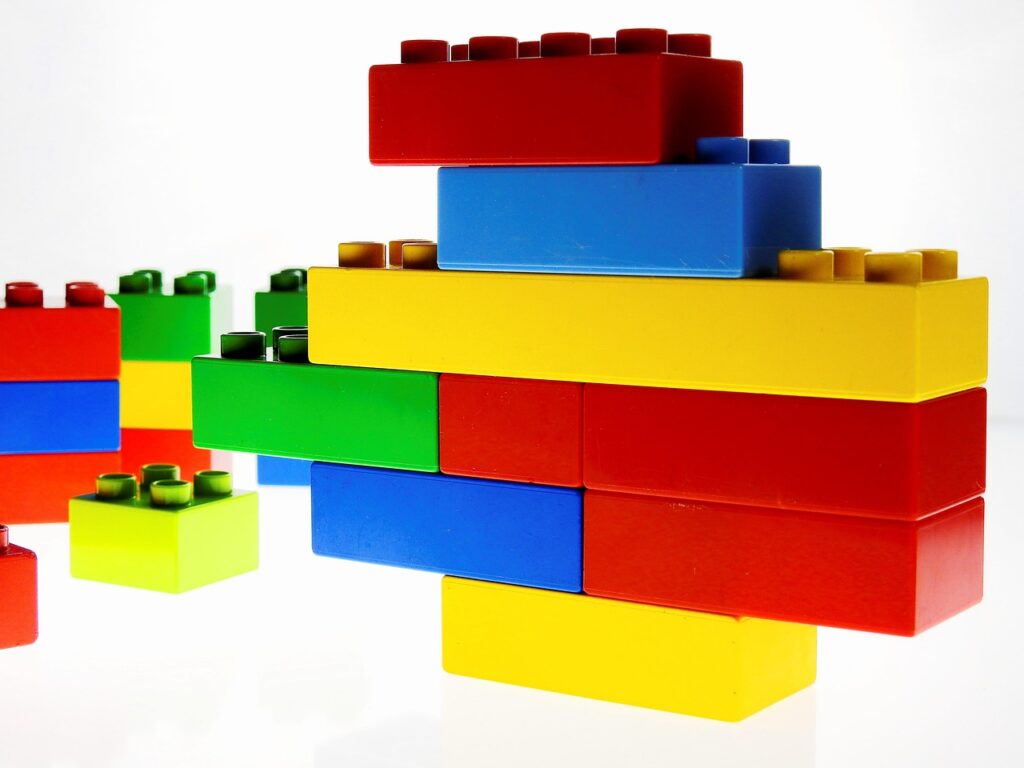
This is the building-blocks, LEGO, sandcastle, den-building category, and it’s where some of the clearest research on cognitive benefits sits. Constructive play asks a child to hold a goal in mind (build a tower, make a den that doesn’t collapse), test an approach, notice it isn’t working, and adjust, which is essentially the scientific method in miniature. It’s also the category where Whitebread’s Cambridge research found children narrating their own problem-solving out loud most often, which is part of why unstructured building play is so strongly associated with later self-regulation and independent thinking. As the Cambridge Enterprise case study summarising this research puts it, “free play, or play which is open, experimental and with little apparent educational content, has been shown to be one of the best ways to stimulate learning and creativity.”
How much of it should be unstructured?
This is the bit parents tend to worry about most, especially once children start school and the pull towards flashcards, phonics apps and structured “enrichment” gets stronger. The honest answer, based on the evidence, is that both structured and unstructured play matter, but genuinely child-led, unstructured play is doing something that adult-directed activities can’t replicate, however good those activities are.
The research on this tends to focus on executive function: the mental skills involved in inhibitory control (stopping yourself doing the first thing that comes to mind), working memory (holding information in mind while you use it), and cognitive flexibility (switching between ways of thinking about a problem). Repeated, high-quality opportunities for open-ended play have been linked with stronger development in exactly these areas, likely because unstructured play is the one context where a child is constantly setting their own goals, changing their own rules, and managing their own frustration without an adult stepping in to solve it for them. A structured phonics session teaches phonics. Unstructured play teaches a child how to think, adapt and recover, skills that then support everything else, including the phonics.
This is also, notably, not just an early-years issue. Play England, the national organisation advocating for children’s play, has been vocal about the fact that the drop-off in play once children leave Reception and move into Year 1 is often abrupt: a child who spent a full EYFS year learning almost entirely through planned, purposeful play suddenly faces a much more formal, desk-based day. Play England has actively supported calls to make learning through play statutory in Key Stage 1 too, precisely because the developmental case for it doesn’t switch off on a child’s fifth birthday. That transition point, from a play-rich Reception year to a more structured Year 1, is worth being aware of if you have a child approaching it: it’s a genuine adjustment, and a bit of continued play-based practice at home can smooth it considerably.
None of this is an argument against structured activities. Phonics practice, times tables, a well-run swimming lesson: these all have their place, and plenty of children enjoy them. The point is that structured input and unstructured play aren’t competing for the same slot in a child’s development. They’re doing different jobs, and a childhood that’s almost entirely structured, however enriching each individual activity looks on paper, tends to squeeze out exactly the kind of self-directed problem-solving that free play uniquely provides.
Protecting real play time without feeling like you’re wasting it
Knowing the research is one thing. Actually holding the line on unscheduled time when the calendar is full and every other parent seems to be signing their child up for another club is a different challenge entirely. A few things genuinely help.
- Let boredom run its course before you rescue it. The ten minutes before a child invents their own game are usually the ten minutes a parent is most tempted to intervene. That gap is often where the best play starts.
- Keep the toy box a bit boring, on purpose. Open-ended materials, blocks, boxes, fabric, art supplies, outdoor space, generate far more imaginative and constructive play than anything with a single correct way to use it. A cardboard box has out-performed plenty of expensive toys for a reason.
- Follow, don’t redirect. If your child is deep into pretend-vet or building a wobbly tower, resist turning it into a counting lesson. You can extend their play gently, asking a question that fits their story, rather than steering it toward something you’ve decided is more educational. The learning is already happening.
- Treat unstructured time as a genuine line item, not a gap to be filled. If every after-school and weekend slot has a named activity, unstructured play doesn’t get “extra” time when things are quiet, it doesn’t get any time. Protecting an hour or two a day, even in small chunks, matters more than protecting one long stretch occasionally.
- Mix the categories across a week, not a day. You don’t need imaginative, physical and constructive play every single afternoon. Over a week, aim for a reasonable spread rather than agonising over any single day’s balance.
If you like having a bit of structure to lean on for the more formal side of things, so the unstructured time doesn’t have to carry the whole curriculum on its own, Learnaroo Hub’s resources for parents include short, game-based practice activities you can drop into the structured half of the week, leaving play itself properly, unapologetically free.
The reassurance worth holding onto is this: when your child is deep in a game, muttering to themselves as they figure out how to stop a tower falling over, or deep in negotiation with a sibling about who’s the customer and who’s the shopkeeper, they are not taking a break from learning. That is what learning looks like, for a child that age. The EYFS was built around this on purpose, the research from Cambridge and the LEGO Foundation backs it up in detail, and every long, chaotic, mess-generating hour of it is doing real work.
