 KS1 Science: Working Scientifically — Deep Revision
A thorough, self-marking KS1 working scientifically revision book: questioning, observing and testing skills, then pl…
Key Stage 1 Science ⏱ 45m
Activity Book
· 45m
FREE
Open resource →
KS1 Science: Working Scientifically — Deep Revision
A thorough, self-marking KS1 working scientifically revision book: questioning, observing and testing skills, then pl…
Key Stage 1 Science ⏱ 45m
Activity Book
· 45m
FREE
Open resource →
Activity BookFree to use
KS1 Science: Working Scientifically — Challenge
KS1 Science: Working Scientifically — Challenge is a greater-depth activity book mapped to the DfE National Curriculum enquiry skills for Years 1 and 2.
Not tracking — create a free account to save your progress.Create free account →
Tip: pinch to zoom on mobile, or use the + / − buttons.
Sign in to mark this as complete and track it on your dashboard.Sign in →
Related modules
KS1 Science: Working Scientifically — Deep Revision
A thorough, self-marking KS1 working scientifically revision book: questioning, observing and testing skills, then pl…
Key Stage 1 Science ⏱ 45m
Activity Book
· 45m
FREE
Open resource →
 KS1 Science: Working Scientifically — Quick Burst
A fast, self-marking KS1 working scientifically warm-up: asking good questions, observing with equipment, fair testin…
Key Stage 1 Science ⏱ 20m
Activity Book
· 20m
FREE
Open resource →
KS1 Science: Working Scientifically — Quick Burst
A fast, self-marking KS1 working scientifically warm-up: asking good questions, observing with equipment, fair testin…
Key Stage 1 Science ⏱ 20m
Activity Book
· 20m
FREE
Open resource →
 KS1 Science: Working Scientifically — Support
A gentle, scaffolded, self-marking KS1 working scientifically book: asking questions, observing, fair testing, classi…
Key Stage 1 Science ⏱ 20m
Activity Book
· 20m
FREE
Open resource →
KS1 Science: Working Scientifically — Support
A gentle, scaffolded, self-marking KS1 working scientifically book: asking questions, observing, fair testing, classi…
Key Stage 1 Science ⏱ 20m
Activity Book
· 20m
FREE
Open resource →
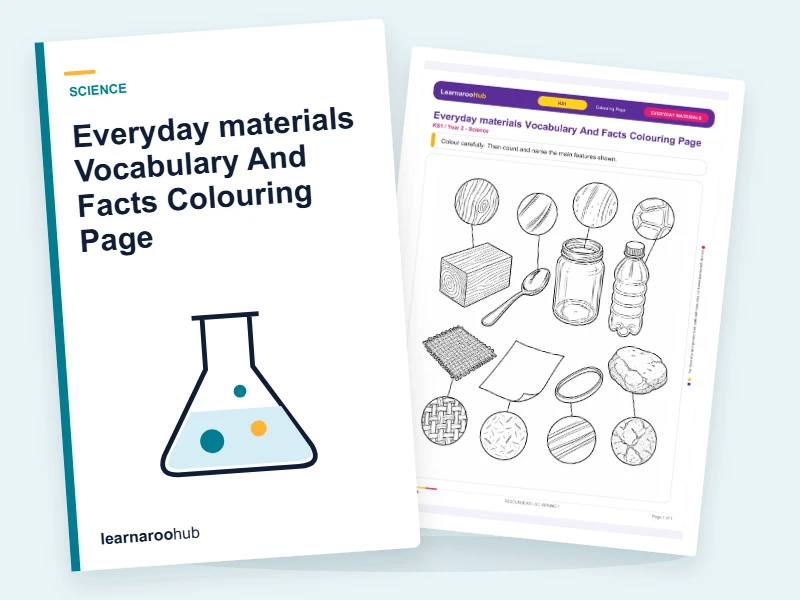 Everyday materials Vocabulary And Facts Colouring Page
A Key Stage 1 Science vocabulary and facts sheet on Everyday materials for use at home or in class.
Key Stage 1 Science ⏱ 5m
Vocabulary and Facts
· 5m
PAID
Open resource →
Everyday materials Vocabulary And Facts Colouring Page
A Key Stage 1 Science vocabulary and facts sheet on Everyday materials for use at home or in class.
Key Stage 1 Science ⏱ 5m
Vocabulary and Facts
· 5m
PAID
Open resource →
 KS1 Science — Module 6: Working scientifically
Module 6 of 7 in the KS1 Science (Years 1-2) — Gated Series series — KS1 · working scientifically. Interactive teachi…
Key Stage 1 Science ⏱ 15m
E-Learning Module
· 15m
PAID
Open resource →
KS1 Science — Module 6: Working scientifically
Module 6 of 7 in the KS1 Science (Years 1-2) — Gated Series series — KS1 · working scientifically. Interactive teachi…
Key Stage 1 Science ⏱ 15m
E-Learning Module
· 15m
PAID
Open resource →
 KS1 Science (Years 1-2) — Gated Series — Module 7: Consolidation Test (timed)
The final timed, mixed test drawing on all six modules — 16 fresh questions with full answer review. Unlocks after Mo…
Key Stage 1 Science ⏱ 20m
Quiz
· 20m
PAID
Open resource →
KS1 Science (Years 1-2) — Gated Series — Module 7: Consolidation Test (timed)
The final timed, mixed test drawing on all six modules — 16 fresh questions with full answer review. Unlocks after Mo…
Key Stage 1 Science ⏱ 20m
Quiz
· 20m
PAID
Open resource →
 Materials Investigator: 5-Page Lab Book
A self-marking Year 2 science activity book — name everyday materials, sort their properties, match them to the right…
Key Stage 1 Science ⏱ 60m
Activity Book
· 60m
PAID
Open resource →
Materials Investigator: 5-Page Lab Book
A self-marking Year 2 science activity book — name everyday materials, sort their properties, match them to the right…
Key Stage 1 Science ⏱ 60m
Activity Book
· 60m
PAID
Open resource →
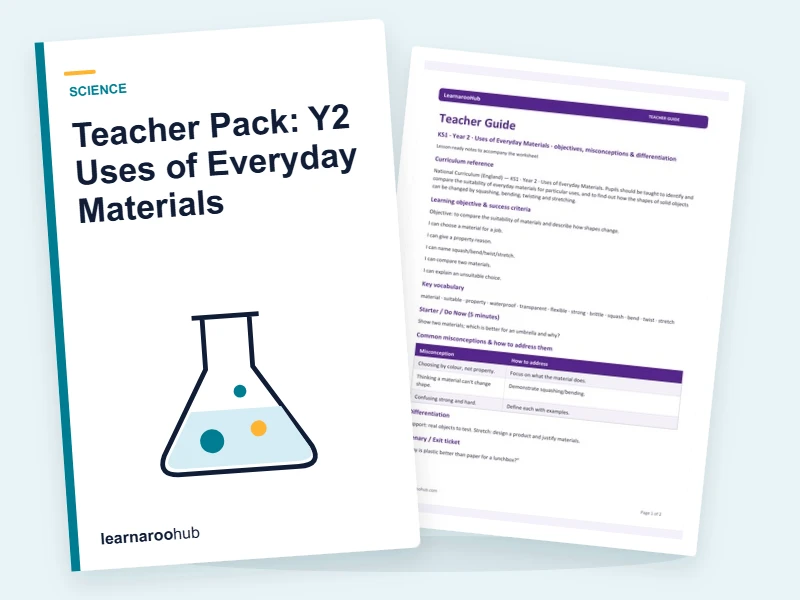 Teacher Pack: Y2 Uses of Everyday Materials
NC mapping (both Y2 statutory requirements + working scientifically links), misconceptions to pre-empt, key vocabular…
Key Stage 1 Science ⏱ 25m
Printable / PDF
· 25m
PAID
Open resource →
Teacher Pack: Y2 Uses of Everyday Materials
NC mapping (both Y2 statutory requirements + working scientifically links), misconceptions to pre-empt, key vocabular…
Key Stage 1 Science ⏱ 25m
Printable / PDF
· 25m
PAID
Open resource →
