 GCSE Maths: Number — Topic Revision Workbook
A self-marking GCSE Maths Number revision workbook covering standard form and BIDMAS, HCF/LCM and primes, fractions, …
GCSE Mathematics ⏱ 30m
Activity Book
· 30m
PAID
Open resource →
GCSE Maths: Number — Topic Revision Workbook
A self-marking GCSE Maths Number revision workbook covering standard form and BIDMAS, HCF/LCM and primes, fractions, …
GCSE Mathematics ⏱ 30m
Activity Book
· 30m
PAID
Open resource →
Subject
Mathematics
- 1 Choose a module Filter by subject or year
- 2 Pick a resource Printables, quizzes, games
- 3 Start learning Play, print or download
908 resources
Sort:
GCSE Maths: Number — Topic Revision Workbook
A self-marking GCSE Maths Number revision workbook covering standard form and BIDMAS, HCF/LCM and primes, fractions, …
GCSE Mathematics ⏱ 30m
Activity Book
· 30m
PAID
Open resource →
 GCSE Maths: Algebra — Topic Revision Workbook
A self-marking GCSE Maths Algebra topic workbook covering simplifying and brackets, factorising, equations and inequa…
GCSE Mathematics ⏱ 30m
Activity Book
· 30m
PAID
Open resource →
GCSE Maths: Algebra — Topic Revision Workbook
A self-marking GCSE Maths Algebra topic workbook covering simplifying and brackets, factorising, equations and inequa…
GCSE Mathematics ⏱ 30m
Activity Book
· 30m
PAID
Open resource →
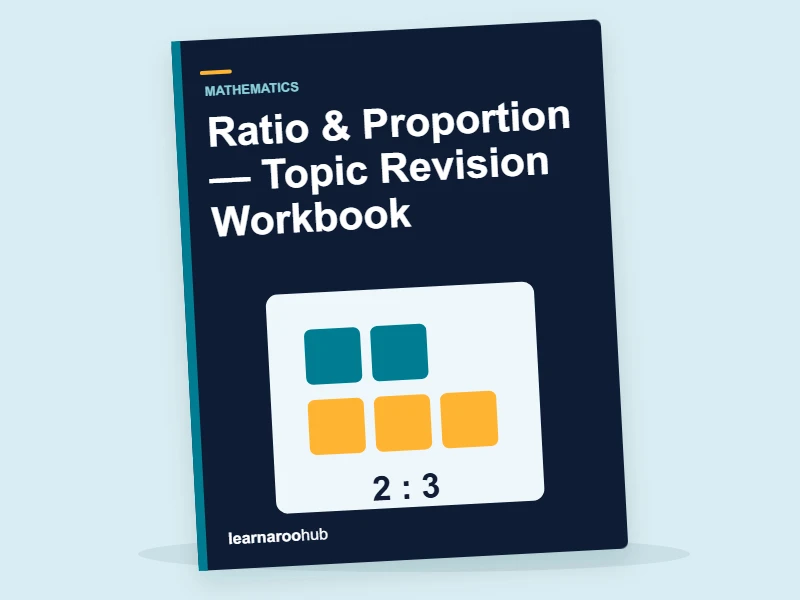 GCSE Maths: Ratio & Proportion — Topic Revision Workbook
A self-marking AQA GCSE Maths workbook on the whole Ratio, Proportion & Rates of Change strand: simplifying and shari…
GCSE Mathematics ⏱ 30m
Activity Book
· 30m
PAID
Open resource →
GCSE Maths: Ratio & Proportion — Topic Revision Workbook
A self-marking AQA GCSE Maths workbook on the whole Ratio, Proportion & Rates of Change strand: simplifying and shari…
GCSE Mathematics ⏱ 30m
Activity Book
· 30m
PAID
Open resource →
 GCSE Maths: Geometry & Measures — Revision Workbook
A self-marking GCSE Geometry & Measures revision workbook covering angle rules, polygons, area, perimeter, circles, v…
GCSE Mathematics ⏱ 30m
Activity Book
· 30m
PAID
Open resource →
GCSE Maths: Geometry & Measures — Revision Workbook
A self-marking GCSE Geometry & Measures revision workbook covering angle rules, polygons, area, perimeter, circles, v…
GCSE Mathematics ⏱ 30m
Activity Book
· 30m
PAID
Open resource →
 GCSE Maths: Probability — Topic Revision Workbook
A self-marking GCSE Probability revision workbook covering the probability scale, experimental probability and expect…
GCSE Mathematics ⏱ 30m
Activity Book
· 30m
PAID
Open resource →
GCSE Maths: Probability — Topic Revision Workbook
A self-marking GCSE Probability revision workbook covering the probability scale, experimental probability and expect…
GCSE Mathematics ⏱ 30m
Activity Book
· 30m
PAID
Open resource →
 GCSE Maths: Statistics — Topic Revision Workbook
A self-marking GCSE Statistics revision workbook covering types of data, mean/median/mode/range from lists and freque…
GCSE Mathematics ⏱ 30m
Activity Book
· 30m
PAID
Open resource →
GCSE Maths: Statistics — Topic Revision Workbook
A self-marking GCSE Statistics revision workbook covering types of data, mean/median/mode/range from lists and freque…
GCSE Mathematics ⏱ 30m
Activity Book
· 30m
PAID
Open resource →
 Numbers to 10 (EYFS)
A gentle, parent-led Reception (EYFS) maths activity book — counting to 10 forwards and backwards, numerals, one more…
Early Years (EYFS) Mathematics ⏱ 20m
Activity Book
· 20m
FREE
Open resource →
Numbers to 10 (EYFS)
A gentle, parent-led Reception (EYFS) maths activity book — counting to 10 forwards and backwards, numerals, one more…
Early Years (EYFS) Mathematics ⏱ 20m
Activity Book
· 20m
FREE
Open resource →
 Patterns & Numbers to 20 (EYFS)
A gentle, parent-led Reception (EYFS) summer-term maths activity book — counting to 20, teen numbers as 10 and some m…
Early Years (EYFS) Mathematics ⏱ 20m
Activity Book
· 20m
FREE
Open resource →
Patterns & Numbers to 20 (EYFS)
A gentle, parent-led Reception (EYFS) summer-term maths activity book — counting to 20, teen numbers as 10 and some m…
Early Years (EYFS) Mathematics ⏱ 20m
Activity Book
· 20m
FREE
Open resource →
 Where Is It? Position & Direction (EYFS)
A gentle, parent-led Reception (EYFS) maths activity book — position words like on, under, behind and between, direct…
Early Years (EYFS) Mathematics ⏱ 20m
Activity Book
· 20m
FREE
Open resource →
Where Is It? Position & Direction (EYFS)
A gentle, parent-led Reception (EYFS) maths activity book — position words like on, under, behind and between, direct…
Early Years (EYFS) Mathematics ⏱ 20m
Activity Book
· 20m
FREE
Open resource →
 More, Fewer or the Same? (EYFS)
A gentle, parent-led Reception (EYFS) maths activity book — comparing which group has more or fewer, spotting the sam…
Early Years (EYFS) Mathematics ⏱ 20m
Activity Book
· 20m
FREE
Open resource →
More, Fewer or the Same? (EYFS)
A gentle, parent-led Reception (EYFS) maths activity book — comparing which group has more or fewer, spotting the sam…
Early Years (EYFS) Mathematics ⏱ 20m
Activity Book
· 20m
FREE
Open resource →
 Numbers to 5 (EYFS)
A gentle, parent-led Reception (EYFS) maths activity book — counting and subitising to 5, matching numerals, one more…
Early Years (EYFS) Mathematics ⏱ 20m
Activity Book
· 20m
FREE
Open resource →
Numbers to 5 (EYFS)
A gentle, parent-led Reception (EYFS) maths activity book — counting and subitising to 5, matching numerals, one more…
Early Years (EYFS) Mathematics ⏱ 20m
Activity Book
· 20m
FREE
Open resource →
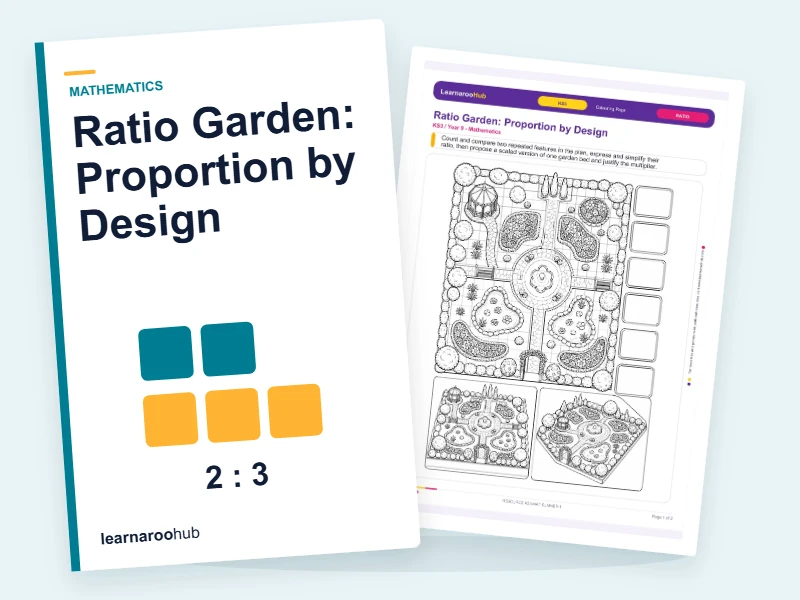 Ratio Garden: Proportion by Design
A Key Stage 3 Mathematics activity challenge on Ratio Garden: Proportion by Design for use at home or in class.
Key Stage 3 Mathematics ⏱ 5m
Activity Challenge
· 5m
PAID
Open resource →
Ratio Garden: Proportion by Design
A Key Stage 3 Mathematics activity challenge on Ratio Garden: Proportion by Design for use at home or in class.
Key Stage 3 Mathematics ⏱ 5m
Activity Challenge
· 5m
PAID
Open resource →
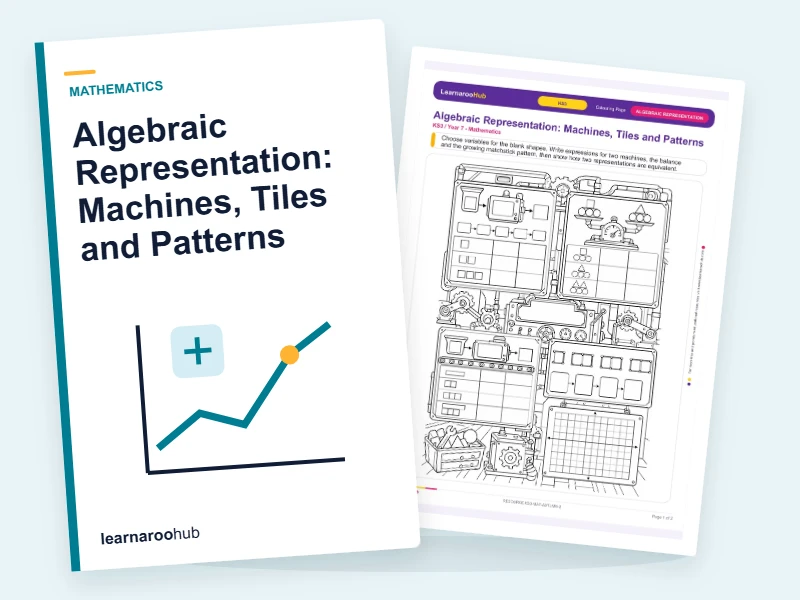 Algebraic Representation: Machines, Tiles and Patterns
A Key Stage 3 Mathematics activity challenge on Algebraic Representation: Machines, Tiles and Patterns for use at hom…
Key Stage 3 Mathematics ⏱ 5m
Activity Challenge
· 5m
PAID
Open resource →
Algebraic Representation: Machines, Tiles and Patterns
A Key Stage 3 Mathematics activity challenge on Algebraic Representation: Machines, Tiles and Patterns for use at hom…
Key Stage 3 Mathematics ⏱ 5m
Activity Challenge
· 5m
PAID
Open resource →
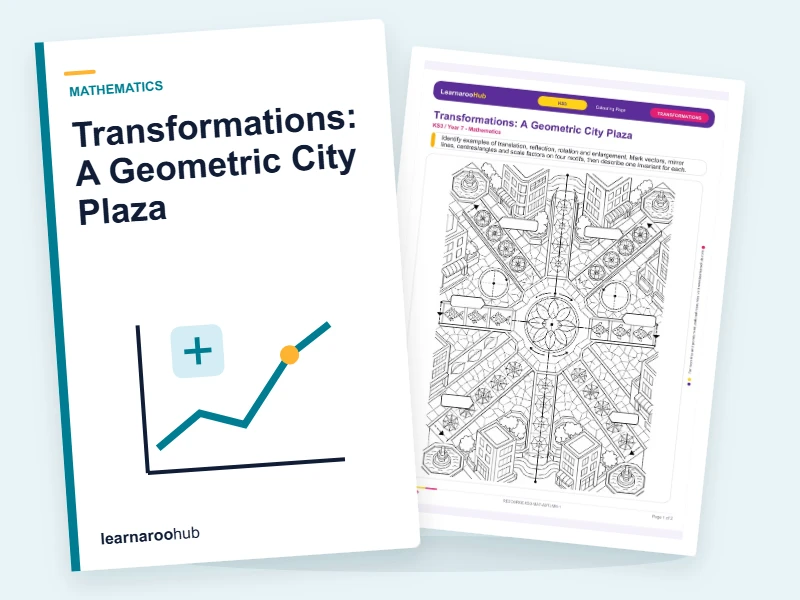 Transformations: A Geometric City Plaza
A Key Stage 3 Mathematics colour-and-observe sheet on Transformations: A Geometric City Plaza for use at home or in c…
Key Stage 3 Mathematics ⏱ 5m
Colour and Observe
· 5m
PAID
Open resource →
Transformations: A Geometric City Plaza
A Key Stage 3 Mathematics colour-and-observe sheet on Transformations: A Geometric City Plaza for use at home or in c…
Key Stage 3 Mathematics ⏱ 5m
Colour and Observe
· 5m
PAID
Open resource →
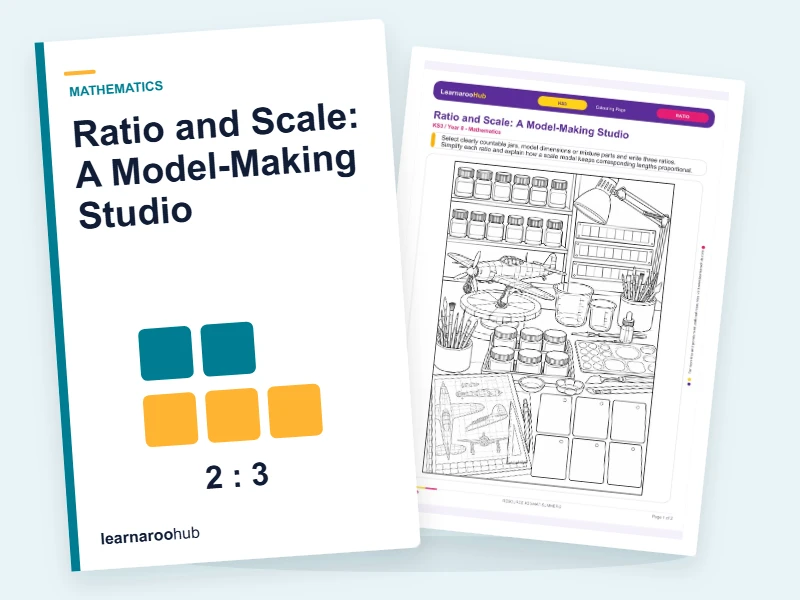 Ratio and Scale: A Model-Making Studio
A Key Stage 3 Mathematics vocabulary and facts sheet on Ratio and Scale: A Model-Making Studio for use at home or in …
Key Stage 3 Mathematics ⏱ 5m
Vocabulary and Facts
· 5m
PAID
Open resource →
Ratio and Scale: A Model-Making Studio
A Key Stage 3 Mathematics vocabulary and facts sheet on Ratio and Scale: A Model-Making Studio for use at home or in …
Key Stage 3 Mathematics ⏱ 5m
Vocabulary and Facts
· 5m
PAID
Open resource →
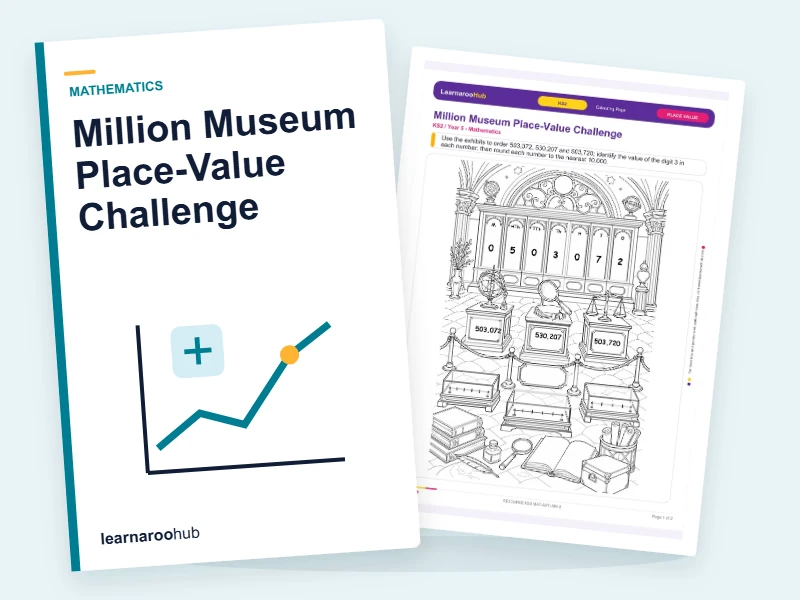 Million Museum Place-Value Challenge
A Key Stage 2 Mathematics activity challenge on Million Museum Place-Value Challenge for use at home or in class.
Key Stage 2 Mathematics ⏱ 5m
Activity Challenge
· 5m
PAID
Open resource →
Million Museum Place-Value Challenge
A Key Stage 2 Mathematics activity challenge on Million Museum Place-Value Challenge for use at home or in class.
Key Stage 2 Mathematics ⏱ 5m
Activity Challenge
· 5m
PAID
Open resource →
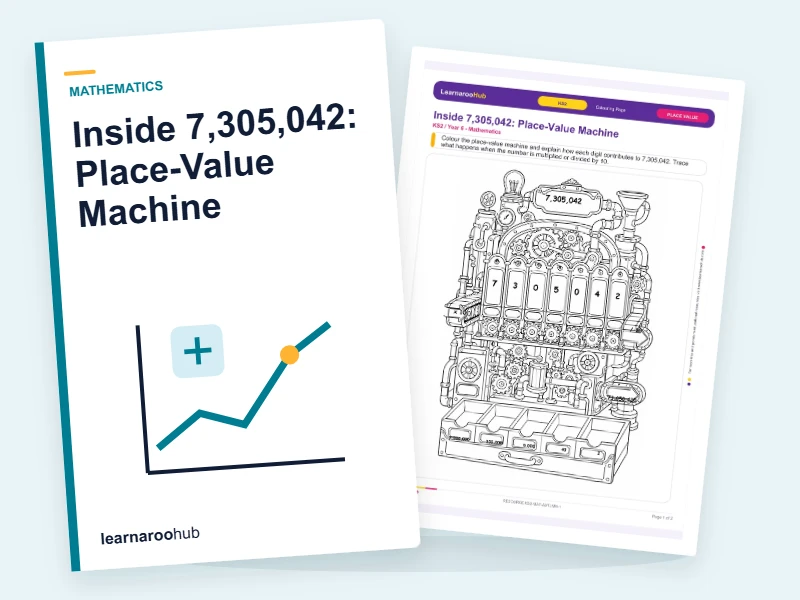 Inside 7,305,042: Place-Value Machine
A Key Stage 2 Mathematics colour-and-observe sheet on Inside 7,305,042: Place-Value Machine for use at home or in class.
Key Stage 2 Mathematics ⏱ 5m
Colour and Observe
· 5m
PAID
Open resource →
Inside 7,305,042: Place-Value Machine
A Key Stage 2 Mathematics colour-and-observe sheet on Inside 7,305,042: Place-Value Machine for use at home or in class.
Key Stage 2 Mathematics ⏱ 5m
Colour and Observe
· 5m
PAID
Open resource →
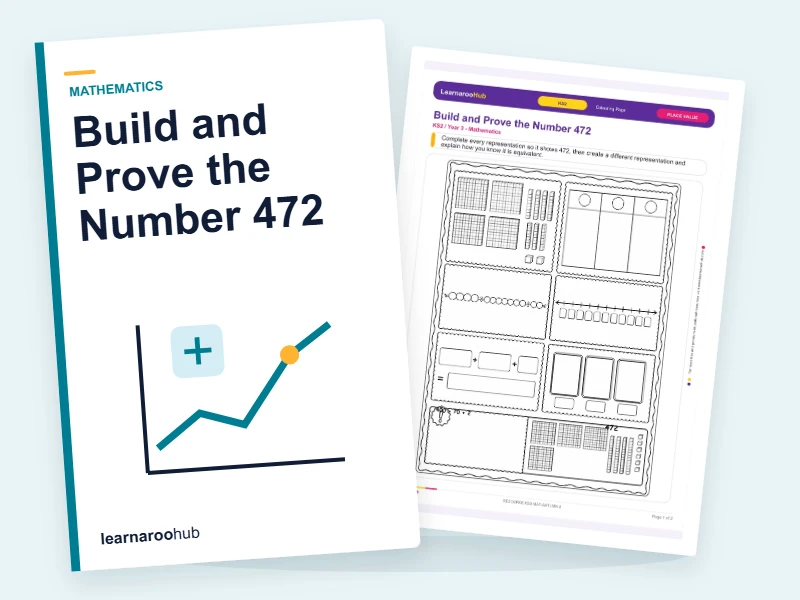 Build and Prove the Number 472
A Key Stage 2 Mathematics activity challenge on Build and Prove the Number 472 for use at home or in class.
Key Stage 2 Mathematics ⏱ 5m
Activity Challenge
· 5m
PAID
Open resource →
Build and Prove the Number 472
A Key Stage 2 Mathematics activity challenge on Build and Prove the Number 472 for use at home or in class.
Key Stage 2 Mathematics ⏱ 5m
Activity Challenge
· 5m
PAID
Open resource →
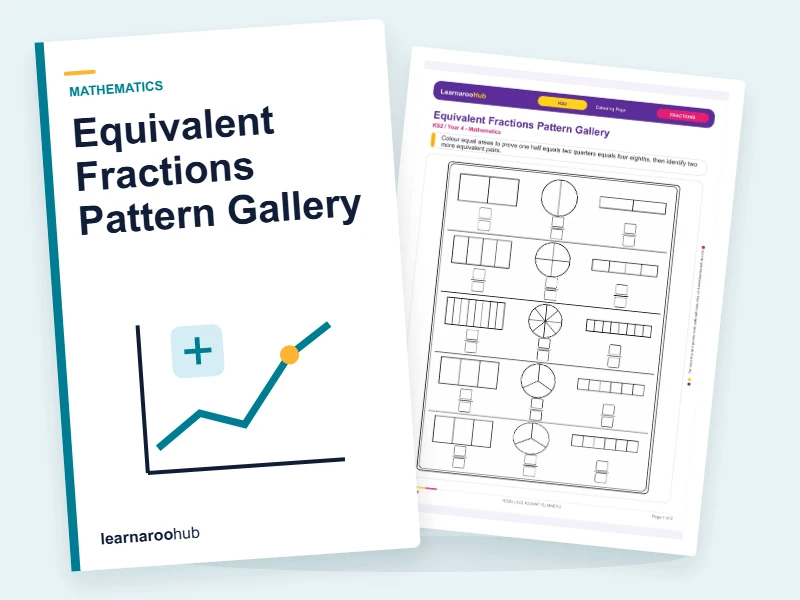 Equivalent Fractions Pattern Gallery
A Key Stage 2 Mathematics vocabulary and facts sheet on Equivalent Fractions Pattern Gallery for use at home or in cl…
Key Stage 2 Mathematics ⏱ 5m
Vocabulary and Facts
· 5m
PAID
Open resource →
Equivalent Fractions Pattern Gallery
A Key Stage 2 Mathematics vocabulary and facts sheet on Equivalent Fractions Pattern Gallery for use at home or in cl…
Key Stage 2 Mathematics ⏱ 5m
Vocabulary and Facts
· 5m
PAID
Open resource →
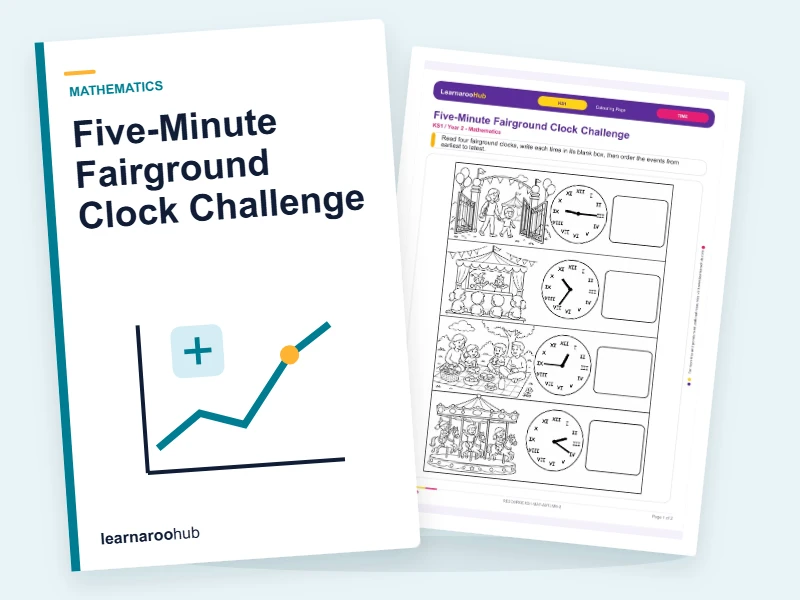 Five-Minute Fairground Clock Challenge
A Key Stage 1 Mathematics activity challenge on Five-Minute Fairground Clock Challenge for use at home or in class.
Key Stage 1 Mathematics ⏱ 5m
Activity Challenge
· 5m
PAID
Open resource →
Five-Minute Fairground Clock Challenge
A Key Stage 1 Mathematics activity challenge on Five-Minute Fairground Clock Challenge for use at home or in class.
Key Stage 1 Mathematics ⏱ 5m
Activity Challenge
· 5m
PAID
Open resource →
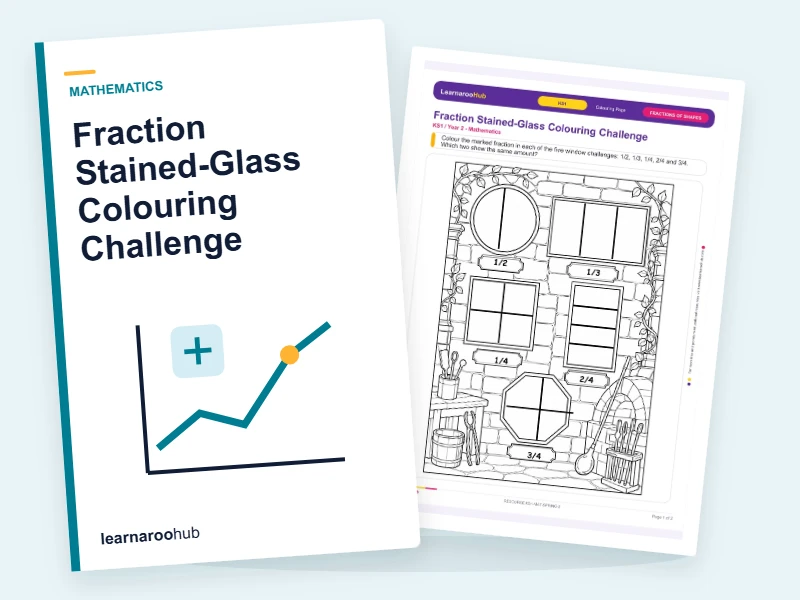 Fraction Stained-Glass Colouring Challenge
A Key Stage 1 Mathematics colour-and-observe sheet on Fraction Stained-Glass Colouring Challenge for use at home or i…
Key Stage 1 Mathematics ⏱ 5m
Colour and Observe
· 5m
PAID
Open resource →
Fraction Stained-Glass Colouring Challenge
A Key Stage 1 Mathematics colour-and-observe sheet on Fraction Stained-Glass Colouring Challenge for use at home or i…
Key Stage 1 Mathematics ⏱ 5m
Colour and Observe
· 5m
PAID
Open resource →
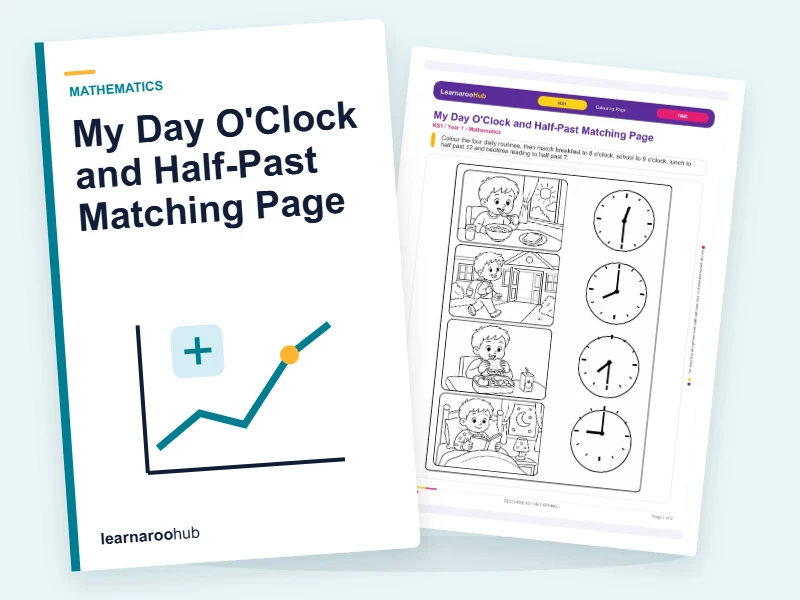 My Day O’Clock and Half-Past Matching Page
A Key Stage 1 Mathematics vocabulary and facts sheet on My Day O'Clock and Half-Past Matching Page for use at home or…
Key Stage 1 Mathematics ⏱ 5m
Vocabulary and Facts
· 5m
PAID
Open resource →
My Day O’Clock and Half-Past Matching Page
A Key Stage 1 Mathematics vocabulary and facts sheet on My Day O'Clock and Half-Past Matching Page for use at home or…
Key Stage 1 Mathematics ⏱ 5m
Vocabulary and Facts
· 5m
PAID
Open resource →
 Equal Groups Market Colouring Challenge
A Key Stage 1 Mathematics activity challenge on Equal Groups Market Colouring Challenge for use at home or in class.
Key Stage 1 Mathematics ⏱ 5m
Activity Challenge
· 5m
PAID
Open resource →
Equal Groups Market Colouring Challenge
A Key Stage 1 Mathematics activity challenge on Equal Groups Market Colouring Challenge for use at home or in class.
Key Stage 1 Mathematics ⏱ 5m
Activity Challenge
· 5m
PAID
Open resource →
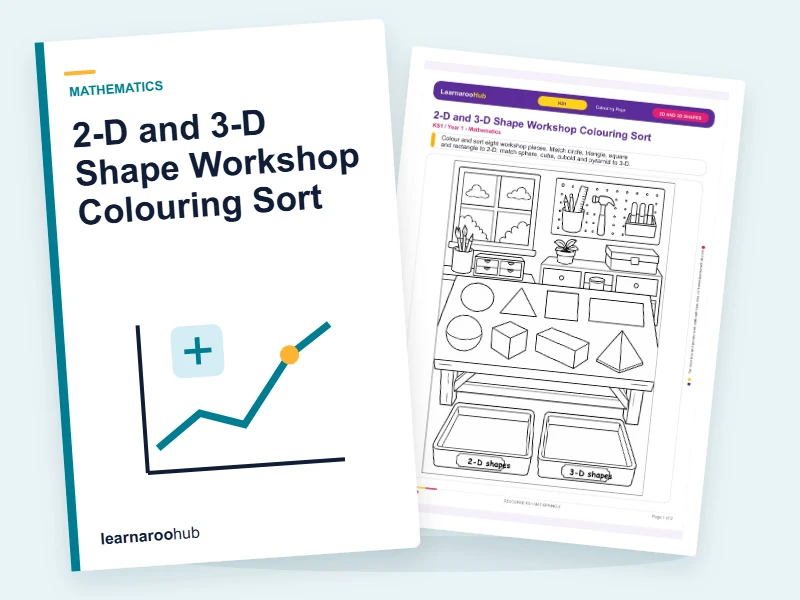 2-D and 3-D Shape Workshop Colouring Sort
A Key Stage 1 Mathematics colour-and-observe sheet on 2-D and 3-D Shape Workshop Colouring Sort for use at home or in…
Key Stage 1 Mathematics ⏱ 5m
Colour and Observe
· 5m
PAID
Open resource →
2-D and 3-D Shape Workshop Colouring Sort
A Key Stage 1 Mathematics colour-and-observe sheet on 2-D and 3-D Shape Workshop Colouring Sort for use at home or in…
Key Stage 1 Mathematics ⏱ 5m
Colour and Observe
· 5m
PAID
Open resource →
Browse by topic
Everything in Mathematics
Each topic below is mapped to the DfE Programmes of Study. Tap one to jump straight to its resources.
Addition & Subtraction
36 resources →
Addition & Subtraction
11 resources →
Algebra
18 resources →
Fractions
19 resources →
Fractions, Decimals & Percentages
26 resources →
Fractions, Decimals & Percentages
20 resources →
Geometry — Position and Direction
12 resources →
Geometry — Position and Direction
16 resources →
Geometry — Position and Direction
6 resources →
Geometry — Shape
20 resources →
Geometry — Shape
14 resources →
Geometry — Shape
6 resources →
Measurement
48 resources →
Measurement
21 resources →
Measurement
15 resources →
Help & guidance
Great for everyone
🎒
For students
Work through mathematics at your own pace — quizzes, games and lessons that show exactly what to revise next.
👪
For parents
Support mathematics at home with printables, answer keys and plain-English guides — no teaching background needed.
🍎
For teachers
Assign mathematics resources to a class or pupil, track progress, and print packs with mark schemes.
Good to know
Mathematics FAQs
Is Mathematics mapped to the UK National Curriculum?
Yes. Every mathematics resource is tagged to the DfE Programmes of Study, so it matches what is taught in UK classrooms — with GCSE content aligned to AQA, Edexcel, OCR and WJEC.
Are the mathematics resources free?
Many are free with no login. Premium unlocks the full library across every key stage and format, including mock papers.
Which year groups does Mathematics cover?
Our mathematics resources span the stages where it is taught — filter by key stage or year above to see exactly what fits your child or class.
How is progress in Mathematics tracked?
When a child completes a quiz, lesson or game it is recorded automatically in the parent or teacher dashboard — no manual marking required.
